


In 1839, Commissioner Lin Zexu of Humen, China, made a daring move that would change the course of history. He ordered the destruction of 1.2 million kilograms of opium, confiscated from British merchants, on the shores of Humen, China. This bold act was a defiant stand against the British opium trade, which had ravaged China's people and economy.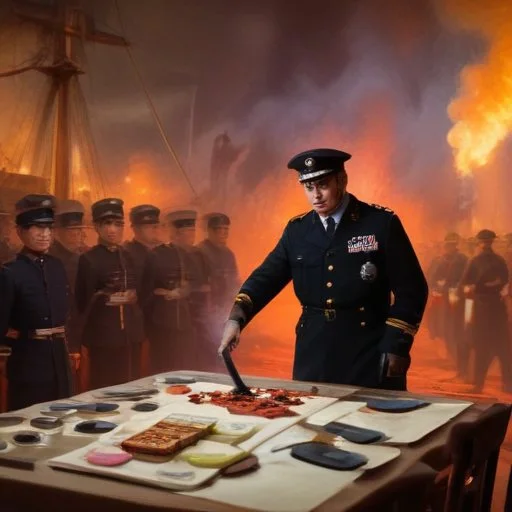
By the early 19th century, China was grappling with a devastating opium epidemic. British traders had been smuggling opium into China, leading to widespread addiction and social unrest. The Chinese government, determined to curb this crisis, had banned opium imports in 1800. However, the British continued to smuggle the drug, despite the ban.
Commissioner Lin Zexu was a dedicated and principled official, known for his strong stance against corruption and his commitment to preserving Chinese sovereignty. Appointed by the Daoguang Emperor to tackle the opium crisis, Lin was determined to take drastic measures to stop the influx of opium.
The Humen opium destruction had far-reaching consequences, both immediate and long-term. The British, determined to protect their economic interests, declared war on China, marking the beginning of the First Opium War. This conflict would ultimately lead to the forced opening of Chinese ports to European trade and the cession of Hong Kong to Britain.
The opium destruction also had significant cultural and social implications. The event galvanized anti-opium sentiment in China, leading to widespread support for the government's efforts to eradicate the drug. Additionally, it marked a turning point in Sino-British relations, as China began to assert its sovereignty in the face of foreign interference.
Lin Zexu's famous letter to Queen Victoria, written in 1839, is a testament to his unwavering commitment to his cause: "I, the Minister, in virtue of the high trust reposed in me by his Celestial Majesty, do hereby express my sentiments forthwith, and assuredly, without the slightest hesitation."
The Humen opium destruction set a precedent for future Chinese efforts to resist foreign imperialism and protect its sovereignty. It also paved the way for the development of modern China, as the country began to engage with the world on its own terms.
Lin Zexu's courageous stand against the opium trade serves as a powerful inspiration to individuals and nations alike. His unwavering commitment to his principles and his country's sovereignty is a testament to the enduring power of conviction and determination.
The historiography of the Humen opium destruction is a complex and multifaceted field of study. Different historians have interpreted the event in varying ways, reflecting the complexities of the time period. Some have seen Lin Zexu as a hero who dared to challenge the British Empire, while others have viewed him as a reactionary who failed to understand the changing global landscape.
Recent studies have emphasized the importance of understanding the opium trade within the context of global imperialism. This perspective highlights the ways in which European powers, including Britain, sought to expand their empires and impose their will on non-Western nations.
In contrast, earlier accounts of the event often portrayed the opium trade as a moral issue, with the British seen as corrupt and decadent, and the Chinese as victims of foreign aggression. This binary approach has been challenged by more nuanced interpretations that recognize the complexities of the opium trade and the agency of Chinese actors.

Commissioner Lin Zexu's character has been the subject of much scrutiny and admiration. Born into a humble family, Lin rose through the ranks of the Chinese bureaucracy through his intelligence, diligence, and strong sense of justice.
Despite his principled stance against the opium trade, Lin was not without his flaws. Some historians have noted his arrogance and stubbornness, which often led him to clash with his contemporaries.
Lin's commitment to his country and his people, however, is undeniable. His famous letter to Queen Victoria, in which he passionately argued against the opium trade, is a testament to his unwavering dedication to his principles.
The Humen opium destruction has been compared to other acts of resistance against imperialism throughout history. One notable parallel is the Boston Tea Party, in which American colonists protested British taxation by dumping tea into the harbor.
Both events share a common thread of resistance against foreign oppression, but they differ in their motivations and outcomes. While the Boston Tea Party was a key event in the American Revolution, the Humen opium destruction marked the beginning of a century of foreign domination in China.
Despite these differences, both events highlight the importance of national sovereignty and the need for nations to assert their independence in the face of foreign interference.
The Humen opium destruction had a profound impact on Chinese culture and society. The event galvanized anti-opium sentiment, leading to widespread support for the government's efforts to eradicate the drug.
The destruction of the opium also led to a renewed emphasis on traditional Chinese values, such as Confucianism and nationalism. These values would play a significant role in shaping Chinese identity and informing the country's response to foreign imperialism.
In addition, the event inspired a wave of anti-opium literature and art, which helped to raise awareness about the dangers of the drug and the importance of national resistance.
The economic impact of the Humen opium destruction was significant, both in the short and long term. The destruction of the opium cargo led to a significant loss of revenue for British traders, who had invested heavily in the opium trade.
In the long term, the event marked the beginning of a period of economic domination by European powers, who forced open Chinese ports to trade and imposed unequal treaties on the Chinese government.
The opium trade also had a devastating impact on the Chinese economy, leading to widespread poverty and instability. The event highlighted the need for China to modernize and industrialize in order to resist foreign domination.