


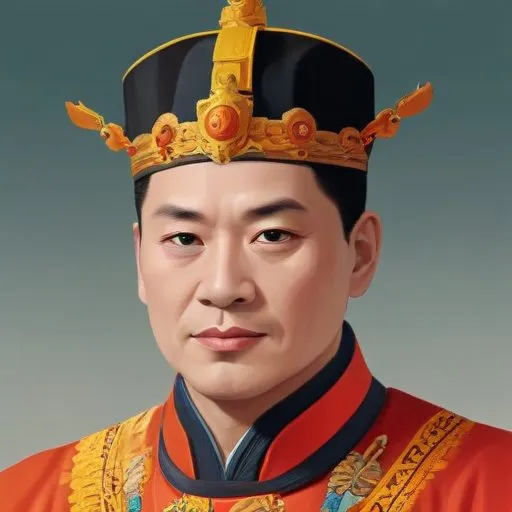
Ruling China from 1820 to 1850, this emperor oversaw a period of decline, marked by the Opium Wars and the cession of Hong Kong to Britain. He's also known for his efforts to reform the government and economy.
The Daoguang Emperor, also known as Emperor Xuanzong of Qing, is remembered as the seventh emperor of the Qing dynasty, ruling over China proper from 1820 to 1850. His reign was marked by paradoxes, simultaneously exhibiting weak leadership and well-intentioned policies, which ultimately led to internal rebellion and external defeats.
Born in the Forbidden City, Beijing, in 1782, the Daoguang Emperor, originally named Mianning, was the second son of Prince Yongyan, the 15th son and heir of the Qianlong Emperor. As the first in line to the throne, Mianning was favored by his grandfather, who appreciated his accompaniment on hunting trips.
The Daoguang Emperor's reign was marked by the First Opium War, which led to the Treaty of Nanking, forcing China to open up to foreign trade, and the beginning of the Taiping Rebellion, a devastating civil war that nearly toppled the dynasty. Despite his well-meaning policies, historians have characterized him as ineffective, often promoting officials with a purist view who failed to address the pressing domestic and foreign issues.
The Daoguang Emperor was a strong advocate for Confucian values and believed in the importance of education, promoting the study of Confucian classics and history. He also supported the preservation of traditional Chinese arts, commissioning the compilation of a comprehensive encyclopedia of Chinese painting.
The Daoguang Emperor's reign marked a turning point in the Qing dynasty, as China began to face the challenges of modernization and foreign encroachment. Despite his weaknesses, he played a significant role in shaping China's response to these challenges, leaving behind a legacy of contrasts – a mix of traditional values and ineffective leadership.
The Daoguang Emperor's reign had far-reaching consequences for modern Chinese society, including the formation of the Treaty of Nanking, which opened up China to foreign trade and influence, and the Taiping Rebellion, which paved the way for the fall of the Qing dynasty and the rise of modern China.
As a leader of contrasts, the Daoguang Emperor's legacy serves as a reminder of the complexities of China's past, influencing the nation's development and shaping its response to the challenges of the modern world.
Born in 1711
Ruling China from 1735 to 1796, this emperor oversaw a golden age of prosperity, territorial expansion, and cultural achievements, leaving a lasting legacy in Chinese history.
Born in 1507
Ruling China from 1521 to 1566, this emperor oversaw a period of cultural and economic growth, while also being known for his tyrannical behavior and persecution of officials.
Born in 1831
The ninth emperor of the Qing dynasty, ruling from 1850 to 1861, is known for his attempts to reform the government and military, but ultimately failing to prevent the decline of the dynasty. He is also infamous for his opium addiction and seclusion from state affairs.
Born in 1871
The last emperor of the Qing dynasty, ruling China from 1875 to 1908, known for his attempts to modernize and reform the country, but ultimately failing to prevent its downfall.
Born in 1811
A prominent Qing dynasty military leader and statesman who played a crucial role in suppressing the Taiping Rebellion and modernizing China's military and economy. He's also known for his literary and philosophical works.
