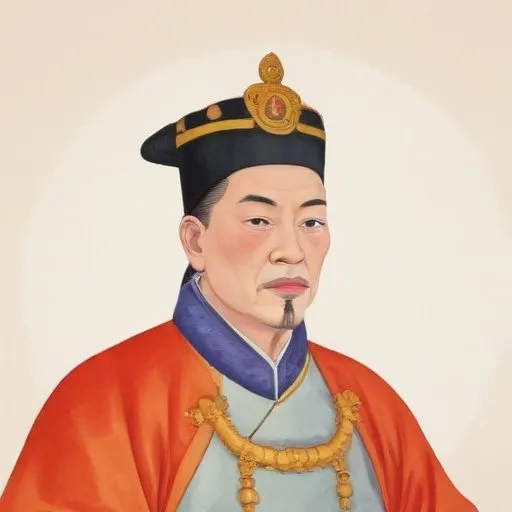
The Jiaqing Emperor: A Period of Reform and Moderation
A Legacy of Justice and Pragmatism
The Jiaqing Emperor, also known by his temple name Emperor Renzong of Qing, is remembered for his efforts to restore order and curb corruption within the Qing dynasty during his reign from 1796 to 1820. He is particularly notable for prosecuting Heshen, the corrupt favorite of his father, the
Qianlong Emperor, and attempting to prevent the smuggling of opium into China.
Early Life and Accession
Born on November 13, 1760, in the Old Summer Palace, 8 km northwest of Beijing, the Jiaqing Emperor was the 15th son of the Qianlong Emperor. His personal name, Yongyan, was later changed to Yongyan
when he became the emperor. The Chinese character for
yongin his name was changed from the more common
to the less common
, a novelty introduced by the Qianlong Emperor to avoid the use of common characters in imperial names.
The Qianlong Emperor originally had two other sons in mind for succeeding him, but both died early from diseases. In December 1773, he secretly chose Yongyan as his successor. In 1789, the Qianlong Emperor instated Yongyan as Prince Jia of the First Rank
, or simply Prince Jia.
Reign and Reforms
In October 1795, the 60th year of his reign, the Qianlong Emperor announced his intention to abdicate in favor of Prince Jia. The Jiaqing Emperor ascended to the throne in 1796, marking the beginning of a new era in the Qing dynasty. During his reign, he implemented several reforms aimed at curbing corruption and restoring order within the empire.
- Prosecution of Heshen: The Jiaqing Emperor took bold action against Heshen, his father's corrupt favorite, who had amassed vast wealth and power. Heshen was tried and executed, and his wealth was confiscated.
- Anti-opium efforts: The Jiaqing Emperor attempted to prevent the smuggling of opium into China, which had become a major problem during his father's reign.
- Administrative reforms: The emperor implemented reforms aimed at improving the efficiency of the government and reducing corruption.
Assessment and Legacy
The Jiaqing Emperor's reign is viewed as a period of moderate reform, which paved the way for the intellectual movements of the 1860s. However, some historians also see his reign as the beginning of the end of the Qing dynasty, marked by a decline in the empire's power and influence.
Despite this, the Jiaqing Emperor's efforts to restore order and curb corruption within the empire remain an important part of his legacy. His reign serves as a reminder of the importance of justice, pragmatism, and responsible leadership in maintaining the stability of a nation.
Personal Life and Family
The Jiaqing Emperor was the son of the Qianlong Emperor and Noble Consort Ling, the daughter of Wei Qingtai, an ethnic Han Chinese official. He had several wives and concubines, and fathered several sons and daughters.
Impact on Modern Society
The Jiaqing Emperor's reign had a significant impact on modern society, particularly in the areas of justice and governance. His efforts to curb corruption and promote reforms serve as an inspiration to leaders and policymakers today.
In conclusion, the Jiaqing Emperor's legacy is that of a just and pragmatic leader who attempted to restore order and curb corruption within the Qing dynasty. His reign serves as a reminder of the importance of responsible leadership and the need for reforms to maintain the stability of a nation.
FAQ
What were the key achievements of the Jiaqing Emperor?
The Jiaqing Emperors reign saw significant achievements, including the suppression of the White Lotus Rebellion, the consolidation of the Qing dynastys borders, and the implementation of fiscal reforms.
How did the Jiaqing Emperor consolidate power?
The Jiaqing Emperor consolidates power by removing corrupt officials, reforming the imperial examination system, and strengthening the central governments control over provincial administrations.
What was the Jiaqing Emperors foreign policy like?
The Jiaqing Emperors foreign policy was marked by a focus on maintaining isolationism, rejecting European trade and diplomatic overtures, and emphasizing tributary relationships with neighboring countries.
What were the cultural contributions of the Jiaqing Emperor?
The Jiaqing Emperor was a patron of the arts, and his reign saw a flourishing of poetry, calligraphy, and painting, as well as the compilation of the Complete Library of the Four Treasuries.
How did the Jiaqing Emperor respond to European influence?
The Jiaqing Emperor responded to European influence by restricting trade and limiting diplomatic contact, while also seeking to learn from European technology and ideas through secret agents and translators.