


August 15, 1947, marked a watershed moment in Indian history as the country shook off the shackles of British colonial rule, becoming an independent nation after nearly 190 years of subjugation. This momentous occasion saw India declare its sovereignty and join the Commonwealth of Nations as a dominion, paving the way for a new era of self-governance and nation-building.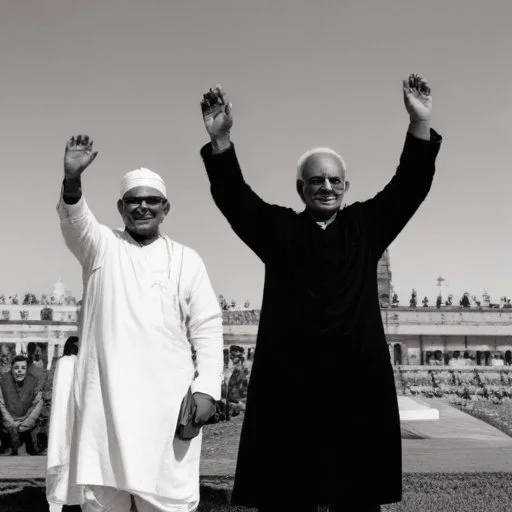
The British East India Company's arrival in India in the early 17th century marked the beginning of a long and tumultuous period of colonial rule. Over time, the company's commercial exploits gave way to territorial ambitions, and by the mid-19th century, the British Crown had asserting its dominance over the subcontinent. The Indian independence movement, which began to take shape in the late 19th century, was characterized by waves of protests, uprisings, and non-violent resistance.
Mahatma Gandhi, a charismatic leader and advocate of non-violent resistance, emerged as a key figure in the Indian independence movement. Jawaharlal Nehru, a Western-educated intellectual and politician, played a crucial role in shaping India's nationalist aspirations. Other prominent figures, such as Subhash Chandra Bose, Bhagat Singh, and Lala Lajpat Rai, contributed significantly to the freedom struggle.
India's independence had far-reaching consequences, both domestically and internationally. The country's transition to a sovereign state marked a significant shift in the global balance of power, while also setting a precedent for other colonized nations to strive for independence. The formation of Pakistan, a separate Muslim-majority nation, was a direct result of the Indian independence movement.
The Indian independence movement had a profound impact on the country's cultural and social fabric. The struggle for freedom inspired a sense of national pride and identity, which continues to shape India's collective consciousness. The movement also led to significant social reforms, including the abolition of untouchability and the promotion of women's rights.
"At the stroke of the midnight hour, when the world sleeps, India will awake to life and freedom." - Jawaharlal Nehru
"Be the change you wish to see in the world." - Mahatma Gandhi
The Indian independence movement is replete with tales of courage, sacrifice, and perseverance. From the bravery of freedom fighters like Bhagat Singh to the unwavering commitment of Mahatma Gandhi, these stories continue to inspire generations of Indians. The movement serves as a powerful reminder of the transformative potential of collective action and the importance of standing up against injustice.
India's independence paved the way for other anti-colonial movements across the world. The country's transition to a sovereign state also led to significant geopolitical shifts, including the formation of the Non-Aligned Movement during the Cold War era. Today, India's emergence as a major economic power is a testament to the resilience and determination of its people.
Subhash Chandra Bose, a prominent figure in the Indian independence movement, is often overshadowed by the likes of Gandhi and Nehru. However, his contribution to the freedom struggle cannot be overstated. Bose was a charismatic leader who believed in armed resistance against the British, differing from Gandhi's philosophy of non-violent resistance.
A member of the Indian National Congress, Bose was twice elected as the party's president, but his radical views led to a rift with Gandhi and other leaders. Bose formed the Indian National Army (INA) in 1942, which comprised Indian soldiers who had defected from the British Indian Army. The INA fought alongside the Japanese Army during World War II, with the goal of liberating India from British rule.
Although Bose's efforts ultimately failed, his bravery and sacrifice inspired a generation of Indians to take up the fight for independence. His mysterious disappearance in 1945, reportedly in a plane crash, has become a topic of speculation and intrigue, with many theories surrounding his death.

The traditional narrative of the Indian independence movement often pits Mahatma Gandhi and Jawaharlal Nehru as two opposing forces, with Gandhi representing the masses and Nehru embodying the ideals of modernity and Westernization. However, recent historiographical perspectives have challenged this dichotomy, highlighting the complex and nuanced relationship between the two leaders.
In reality, Gandhi and Nehru shared a deep respect for each other, despite their differences in ideology and approach. Nehru often acted as a bridge between Gandhi's mass appeal and the realities of modern politics, while Gandhi's influence helped shape Nehru's vision for a independent India.
This reevaluation of the Gandhi-Nehru relationship offers a more comprehensive understanding of the Indian independence movement, revealing a complex web of alliances, rivalries, and ideological debates that shaped the country's journey to freedom.
The Indian national anthem, "Jana Gana Mana", is a powerful symbol of the country's rich cultural heritage. Written by Rabindranath Tagore, the song's lyrics reflect the poet's vision of a united India, where people from diverse backgrounds come together to celebrate their shared identity.
The anthem's adoption in 1950 marked a significant moment in India's nation-building process, as it helped create a sense of shared citizenship and collective pride. The song's melody, composed by Tagore himself, is a testament to the country's rich musical traditions, blending elements of classical and folk music.
Today, "Jana Gana Mana" is an integral part of Indian cultural identity, played on national occasions and events, and is a powerful reminder of the country's struggle for freedom and its commitment to unity and diversity.

The Indian independence movement was not an isolated event, but was deeply embedded in the global geopolitical context of the mid-20th century. The decline of the British Empire, the rise of the United States and the Soviet Union, and the looming shadow of World War II all played a significant role in shaping India's journey to freedom.
In the aftermath of World War II, the British Empire was severely weakened, creating an opportunity for India to assert its independence. The Cold War era saw a rivalry between the United States and the Soviet Union, with India navigating a delicate balance between the two superpowers, while maintaining its commitment to non-alignment.
India's independence was thus not only a domestic triumph but also a significant event in the global arena, marking a major shift in the balance of power and paving the way for other anti-colonial movements across the world.
The Indian independence movement was deeply rooted in a complex web of philosophical and ideological debates. Mahatma Gandhi's philosophy of non-violent resistance drew heavily from Henry David Thoreau's ideas on civil disobedience, while Jawaharlal Nehru's vision of modern India was influenced by Western liberal thought.
The movement also drew inspiration from Indian philosophical traditions, such as the concept of swaraj (self-rule) and the idea of dharma (righteousness). The freedom fighters saw their struggle as a moral imperative, driven by a desire to reclaim India's lost dignity and self-respect.
Understanding the philosophical underpinnings of the Indian independence movement offers valuable insights into the country's ongoing struggle to balance tradition and modernity, as well as its continued quest for social justice and human rights.