


In a daring and provocative move, Saddam Hussein's Iraq invaded its oil-rich neighbor Kuwait on August 2, 1990, claiming it as its 19th province. This brazen act of aggression would set off a chain reaction of events, culminating in the Gulf War, a conflict that would change the course of history forever.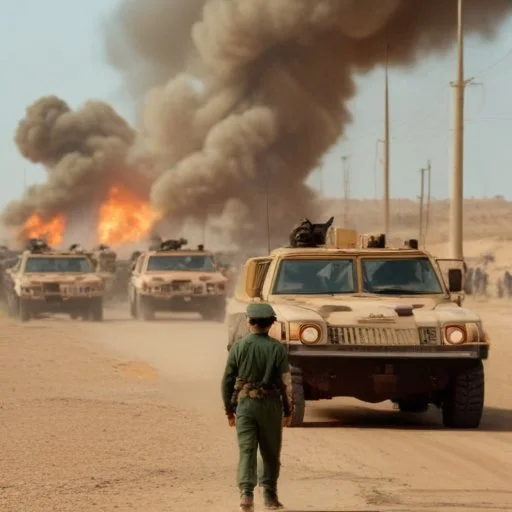
For decades, tensions had been simmering between Iraq and Kuwait over border disputes, oil reserves, and unpaid debts. Saddam Hussein, fueled by his own ambition and desire for regional supremacy, began to view Kuwait as a strategic prize to be won. The stage was set for a perfect storm of conflict.
The Gulf War marked a significant shift in global politics, leading to:
The invasion and subsequent war had a profound impact on the cultural and social fabric of the region, with:
The Gulf War remains a topic of intense debate, with controversy surrounding:
Amidst the chaos and destruction, stories of bravery and resilience emerged, inspiring:
The Iraqi occupation of Kuwait and the subsequent Gulf War serve as a poignant reminder of the devastating consequences of unchecked aggression and the importance of international cooperation in the face of tyranny. As we reflect on this pivotal moment in history, we are reminded that even in the darkest of hours, humanity can find a way to persevere and emerge stronger than ever.
Saddam Hussein's rise to power was marked by a combination of cunning, ruthlessness, and charisma. Born in 1937, Saddam was drawn to politics from an early age, joining the Iraqi Ba'ath Party in 1957. He quickly rose through the ranks, becoming a key figure in the 1968 coup that brought the party to power.
Saddam's leadership style was marked by a blend of authoritarianism and populism. He used his charm and intelligence to build alliances and crush opponents, often through brutal means. Despite his repressive tactics, Saddam maintained a level of popularity among the Iraqi people, who saw him as a strong leader capable of restoring national pride.

The Gulf War sparked a cultural maelstrom, with artists, writers, and musicians responding to the conflict in various ways. In the Arab world, Saddam Hussein was often portrayed as a hero, while in the West, he was vilified as a dangerous despot.
The war also saw the rise of " embedded journalism," where reporters were attached to military units, providing a unique perspective on the conflict. This new style of reporting was both praised and criticized, with some arguing it provided a more immersive experience, while others saw it as a form of propaganda.
The Gulf War had a devastating impact on the economies of both Iraq and Kuwait. The conflict destroyed much of Kuwait's infrastructure, including oil fields, ports, and factories, causing an estimated $100 billion in damages.
Iraq, meanwhile, faced severe economic sanctions, which hindered its ability to recover from the war. The sanctions, imposed by the United Nations, led to widespread poverty, hunger, and disease, affecting millions of Iraqi civilians.

The Gulf War marked a significant shift in global politics, with the United States emerging as the dominant military power. The conflict demonstrated the effectiveness of international cooperation, with a coalition of 34 nations contributing to the war effort.
In the aftermath of the war, the United States continued to play a key role in the region, with a significant military presence remaining in the Gulf. This new era of U.S. involvement in the Middle East would have far-reaching consequences, shaping the course of regional politics for decades to come.
The Gulf War took place within a complex web of regional and international relationships. Iraq's invasion of Kuwait was influenced by a range of factors, including the Iran-Iraq War, the Palestinian-Israeli conflict, and the Cold War.
In the aftermath of the war, the Middle East underwent a significant transformation, with the rise of new powers and the decline of others. The conflict marked the beginning of a new era of U.S. involvement in the region, which would shape the course of regional politics for decades to come.