


On June 10, 1977, James Earl Ray, the infamous assassin of Martin Luther King Jr., pulled off a daring escape from Brushy Mountain State Penitentiary in Petros, Tennessee. His freedom was short-lived, as he was re-captured just three days later, on June 13, 1977.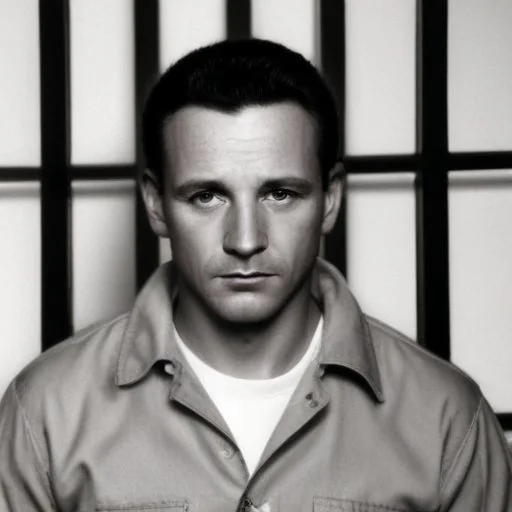
Ray, serving a 99-year sentence for King's murder, had been plotting his escape for months. He used a homemade ladder to scale the prison walls, showcasing his resourcefulness and determination to evade justice.
The breakout sparked a massive manhunt, involving hundreds of law enforcement officers and a flurry of media attention. The FBI, Tennessee Highway Patrol, and local authorities scoured the countryside, searching for any sign of the fugitive.
The escape attempt was met with widespread panic and concern. The authorities were under immense pressure to re-capture Ray, and the public was on high alert, fearing for their safety. The media frenzy surrounding the event brought international attention to the small town of Petros, Tennessee.
After an intense three-day search, Ray was finally re-captured in a wooded area near the prison. He was found hiding in a small cabin, exhausted and hungry. The re-capture was a relief to the authorities and the public, bringing an end to the tense standoff.
The escape attempt and subsequent re-capture raised questions about the security of the prison system and the ability of the authorities to contain dangerous criminals. It also highlighted the determination and resourcefulness of James Earl Ray, who would stop at nothing to achieve his goals.
The escape and re-capture of James Earl Ray serves as a reminder of the importance of prison security and the determination of those who seek to evade justice. It also highlights the sacrifices made by law enforcement officers who risk their lives to bring dangerous criminals to justice.
The event will forever be etched in American history, serving as a poignant reminder of the dark underbelly of society and the importance of justice and punishment.
The escape of James Earl Ray was a significant event in the history of Brushy Mountain State Penitentiary. The prison, which operated from 1896 to 2009, was notorious for its harsh conditions and violent riots. Despite its reputation, the prison had a relatively low escape rate, making Ray's daring breakout all the more remarkable.
Prior to Ray's escape, there had only been a handful of successful breakouts from the prison. The most notable of these was the escape of 15 inmates in 1938, which was orchestrated by a group of prisoners who tunneled their way out of the prison.
Ray's escape was significant not only because of its daring nature but also because it highlighted the need for prison reform. The event led to a thorough investigation of the prison's security measures, resulting in the implementation of new protocols to prevent future escapes.

James Earl Ray: A Mastermind of Deception
James Earl Ray was a man of many faces. To the authorities, he was a dangerous criminal, guilty of one of the most heinous crimes in American history. But to those who knew him, Ray was a complex individual, driven by a combination of motivations and desires.
Ray's childhood was marked by poverty and instability, and he was often forced to rely on his wits to survive. This resourcefulness would serve him well in his later life, as he navigated the criminal underworld and eventually planned the assassination of Martin Luther King Jr.
Despite his intelligence and cunning, Ray was also known to be reckless and impulsive, often acting on instinct rather than careful consideration. This impulsiveness led to his downfall, as he was caught and arrested numerous times throughout his life.
The Cultural Significance of James Earl Ray's Escape
The escape of James Earl Ray sent shockwaves through American society, sparking a national conversation about prison reform and the treatment of criminals. The event also highlighted the ongoing struggle for racial equality, as many saw Ray's escape as a symbol of the systemic failures that had allowed him to commit his crime in the first place.
The media frenzy surrounding the event was intense, with newspapers and television stations devoting extensive coverage to the manhunt and recapture. The public was fascinated by the idea of a notorious criminal on the loose, and the event captivated the nation's attention.
The escape also had a lasting impact on popular culture, with numerous books, films, and songs referencing the event. Ray's daring breakout has become an iconic symbol of rebellion and defiance, inspiring countless works of fiction and nonfiction.

The Economic Cost of James Earl Ray's Escape
The escape of James Earl Ray had significant economic implications for the state of Tennessee and the surrounding community. The massive manhunt and subsequent recapture effort required a substantial investment of resources, including personnel, equipment, and infrastructure.
The estimated cost of the manhunt was in the millions of dollars, with some estimates suggesting that the total cost may have been as high as $10 million. This figure includes the costs of personnel, transportation, and equipment, as well as the lost revenue from interrupted economic activity.
The event also had a lasting impact on the local economy, as the prison and surrounding community were forced to adapt to new security protocols and procedures. The increased security measures implemented in the wake of the escape have had a lasting impact on the region's economy, affecting everything from tourism to local businesses.
The Geopolitical Context of James Earl Ray's Escape
The escape of James Earl Ray took place against the backdrop of a tumultuous period in American history. The late 1970s were marked by widespread social unrest, political upheaval, and economic instability, and the event was seen by many as a symptom of deeper societal problems.
The event also coincided with a period of increased criticism of the prison system, with many arguing that the facilities were overcrowded, understaffed, and poorly equipped. The escape of Ray, a high-profile inmate, highlighted these concerns and sparked a national conversation about prison reform.
The geopolitical context of the event also influenced the response to the escape, with the FBI and other law enforcement agencies under pressure to capture Ray quickly and quietly. The event was seen as a test of the government's ability to maintain order and control, and the subsequent recapture of Ray was hailed as a triumph of law enforcement.