


The Battle of Ramillies, fought on May 23, 1706, is renowned as one of the most decisive victories of the War of the Spanish Succession, with John Churchill, 1st Duke of Marlborough, outmaneuvering and defeating a larger French army under Marshal Franois de Neufville, duc de Villeroy. This pivotal battle cemented Marlborough's reputation as a brilliant military strategist and secured a crucial triumph for the Grand Alliance.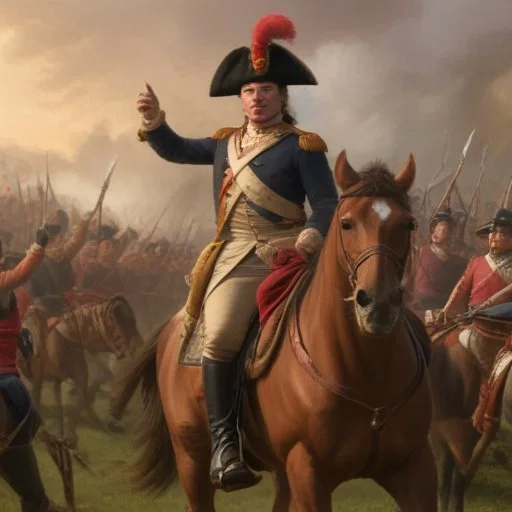
The War of the Spanish Succession, sparked by the death of Charles II of Spain in 1700, pitted the Grand Alliance – comprising England, the Holy Roman Empire, and the Dutch Republic – against France and Spain. The conflict revolved around control of the Spanish throne and the fate of European balance of power.
As the war raged on, Marlborough and Villeroy engaged in a series of skirmishes, with the French army numerically superior. However, Marlborough's keen eye for terrain and troop deployment allowed him to exploit French weaknesses. He cleverly divided his forces, using a series of feints and diversions to create chaos among the French ranks.
Villeroy, confident in his army's strength, failed to respond effectively to Marlborough's tactics. As the French lines grew increasingly disorganized, Marlborough seized the moment, launching a decisive attack that shattered the enemy's defenses. The French army was forced to retreat, leaving behind thousands of casualties and prisoners.
The Battle of Ramillies had far-reaching consequences, including:
Marlborough's victory at Ramillies serves as a testament to his exceptional leadership and tactical prowess. His ability to adapt to changing circumstances, combined with his deep understanding of the battlefield, allowed him to outmaneuver his opponents and secure a crushing defeat.
As the war continued, Marlborough's legacy as a master strategist only grew, inspiring generations of military leaders to come.
The Battle of Ramillies remains an integral part of military history, studied by strategists and historians alike. Marlborough's triumph serves as a powerful reminder of the importance of adaptability, cunning, and bold leadership in the face of adversity.
As we reflect on this pivotal battle, we honor the memory of John Churchill, 1st Duke of Marlborough, and the bravery of the soldiers who fought alongside him, secured a vital victory that shaped the course of European history.
The buildup to the Battle of Ramillies was marked by a series of strategic maneuvers by both the French and the Grand Alliance. Marlborough, determined to counter French dominance, led a daring march across the Low Countries, bypassing French strongholds and gathering allies along the way.
In the weeks leading up to the battle, Marlborough's forces had been probing the French defenses, testing their resolve and identifying weaknesses. Meanwhile, Villeroy's army had been stationed near Ramillies, awaiting the opportunity to strike.
The stage was set for a clash of titans, with the fate of Europe hanging in the balance.
François de Neufville, duc de Villeroy, was a seasoned military commander and Marshal of France. Born into a noble family, Villeroy had risen through the ranks of the French army, earning a reputation for bravery and tactical acumen.
However, Villeroy's arrogance and overconfidence ultimately proved to be his downfall. Despite being outmaneuvered by Marlborough at Ramillies, Villeroy continued to underestimate his opponent, leading to a series of costly mistakes.
Despite his defeat, Villeroy remained a respected figure in French military circles, and his legacy continues to be studied by historians and strategists today.
The French and Grand Alliance armies that clashed at Ramillies were vastly different in terms of organization, tactics, and leadership style. The French army was characterized by its rigid hierarchy and strict adherence to traditional military protocol.
In contrast, the Grand Alliance army, led by Marlborough, was a more fluid and adaptable force, with a greater emphasis on flexibility and initiative. This divergence in approach would ultimately prove decisive in the outcome of the battle.
The contrast between the two armies serves as a fascinating case study in the evolution of military doctrine and the importance of innovative leadership.
The Battle of Ramillies had a profound impact on European culture, shaping the course of art, literature, and politics in the decades that followed.
The triumph of the Grand Alliance sparked a wave of patriotic fervor, inspiring artists and writers to create works that celebrated the heroism and glory of the British and their allies.
In the years that followed, Ramillies became a byword for military heroism, inspiring countless works of art, literature, and music that continue to captivate audiences to this day.
The Battle of Ramillies took place against the backdrop of a continent in flux. The War of the Spanish Succession had set in motion a complex web of alliances and rivalries that spanned the length and breadth of Europe.
In this treacherous landscape, the fate of Ramillies held implications far beyond the battlefield, shaping the course of European politics and diplomacy for generations to come.
As the Grand Alliance and France jockeyed for position, the outcome of Ramillies would ultimately tip the balance of power in favor of the British and their allies.