Indian Army defeats Pakistani intruders in Kargil conflict
The Kargil war's bitter standoff finally came to an end when the Indian Army announced the eviction of Pakistani intruders from Indian territory, marking a hard-won victory for the troops. After months of intense fighting, the Pakistani army's covert operation to infiltrate and occupy key Indian positions in the Kargil sector was foiled, restoring India's sovereignty over the region. The conflict, which had threatened to escalate into a full-blown war between the two nuclear-armed nations, was eventually resolved through a combination of military might and diplomatic pressure.
The Triumphant End of the Kargil Conflict: A Testament to Indian Resolve
Victory Asserts India's Sovereignty Over Disputed Territory
The Kargil conflict, a perilous standoff that jeopardized regional stability, finally came to an end on July 26, 1999, as the Indian Army declared the successful eviction of Pakistani intruders from Indian territory. This hard-won victory marked a significant milestone in India's pursuit of territorial integrity, restoring its sovereignty over the disputed Kargil sector.
Historical Background: The Anatomy of a Conflict
The Kargil conflict was the culmination of a long-standing territorial dispute between India and Pakistan, fueled by the unresolved Kashmir issue. In the winter of 1998-1999, Pakistani forces, disguised as mujahideen, infiltrated and occupied key Indian positions in the Kargil sector, sparking a high-altitude war. The Indian Army responded swiftly, launching a series of operations to reclaim the occupied territories.
Key Figures Involved: The Architects of Victory
- General Ved Prakash Malik: The Indian Army Chief who played a crucial role in devising the military strategy to evict Pakistani forces.
- General Pervez Musharraf: The Pakistani General and later President, who orchestrated the covert operation to infiltrate Indian territory.
- Atal Bihari Vajpayee: The Indian Prime Minister who demonstrated diplomatic acumen in resolving the conflict through a combination of military might and diplomatic pressure.
Timeline of Events: The Ebb and Flow of the Conflict
- May 1999: Pakistani forces infiltrate and occupy key Indian positions in the Kargil sector.
- June 1999: The Indian Army launches Operation Vijay to reclaim occupied territories.
- July 1999: The Indian Army gains momentum, recapturing key positions and pushing Pakistani forces back.
- July 26, 1999: The Indian Army declares the complete eviction of Pakistani intruders from Indian territory.
Major Outcomes and Impacts: A New Era of Deterrence
The Kargil conflict had far-reaching consequences, shaping the trajectory of India-Pakistan relations and regional dynamics.
- Restoration of Indian sovereignty over the Kargil sector.
- Deterrence effect: The conflict demonstrated India's military capability and resolve, serving as a deterrent to future conflicts.
- Shift in regional dynamics: The Kargil conflict underscored the importance of diplomatic engagement and dialogue in resolving disputes.
Quotes and Memorable Sayings: Echoes of Resolve
"I would like to assure the nation that the Indian Army is fully prepared to meet any challenge and will not let the country down." - General Ved Prakash Malik
Cultural and Social Influences: A Nation United
The Kargil conflict galvanized the Indian nation, fostering a sense of unity and patriotism. The conflict inspired a new generation of Indians, reigniting a sense of national pride and purpose.
The Kargil conflict stands as a testament to Indian resolve, a shining example of the nation's ability to assert its sovereignty and defend its territorial integrity. As we reflect on this pivotal moment in Indian history, we are reminded of the importance of vigilance, diplomacy, and the unwavering commitment to national security.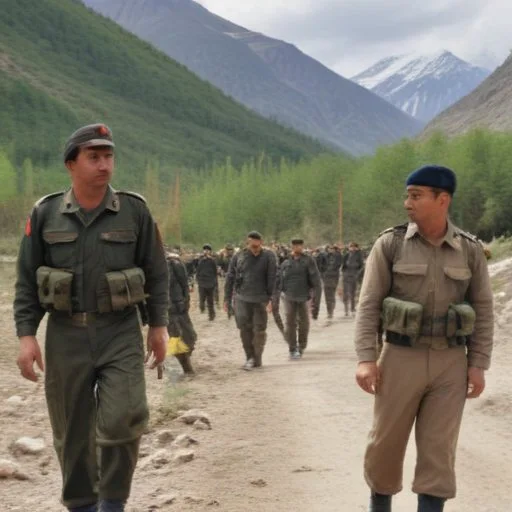
Trivia and Fun Facts: The Human Face of the Conflict
- The Kargil conflict was fought at altitudes ranging from 15,000 to 20,000 feet above sea level.
- The Indian Army employed a unique strategy, leveraging the terrain to its advantage by using artillery and air power to devastating effect.
Thorough Historical Narrative
The Origins of the Kargil Dispute
The Kargil conflict has its roots in the partition of India in 1947, when the British created the Line of Control (LoC) to separate India and Pakistan. The LoC was meant to be a temporary arrangement, but it became a de facto border, leading to a long-standing territorial dispute between the two nations.
In the 1990s, Pakistan's military leadership, led by General Pervez Musharraf, began to explore ways to evict Indian forces from the Siachen Glacier, a strategic location in the Karakoram range. This led to a series of skirmishes and artillery duels along the LoC, creating an environment conducive to the Kargil conflict.
The Kargil dispute was further complicated by the Shimla Agreement of 1972, which called for a peaceful resolution of the Kashmir issue. However, Pakistan's failure to implement the agreement led to a sense of mistrust and resentment among Indian policymakers, paving the way for the Kargil conflict.

Character Examination
General Ved Prakash Malik: A Life of Service and Courage
General Ved Prakash Malik was a decorated Indian Army officer who played a crucial role in the Kargil conflict. Born on November 1, 1939, in a small town in Punjab, Malik was commissioned into the Regiment of Artillery in 1960.
Throughout his illustrious career, Malik demonstrated exceptional leadership and strategic thinking, earning him numerous accolades, including the Param Vishisht Seva Medal (PVSM) and the Ati Vishisht Seva Medal (AVSM).
In 1999, Malik was appointed as the Chief of Army Staff, a position he held until 2000. As the Army Chief, he played a crucial role in devising and executing the military strategy to evict Pakistani forces from Kargil.
Malik's unwavering commitment to national security and his unshakeable resolve earned him the respect and admiration of his peers and the nation.
Study of Cultural Impact
The Cultural Significance of the Kargil War
The Kargil conflict had a profound impact on Indian popular culture, inspiring a new wave of patriotic sentiment among the Indian people.
In the aftermath of the conflict, Bollywood films and television shows began to glorify the Indian Army, portraying its bravery and sacrifice on the big and small screens.
The Kargil conflict also led to a resurgence of interest in patriotic songs and poetry, with many artists and musicians composing tributes to the Indian Army.
The conflict galvanized the Indian people, fostering a sense of national pride and unity that continues to shape Indian cultural identity to this day.

Study of Geopolitical Factors
The Geopolitical Context of the Kargil Conflict
The Kargil conflict took place against the backdrop of a rapidly changing global landscape, marked by the end of the Cold War and the rise of new global powers.
In the 1990s, the United States was increasingly focused on containing the threat of terrorism, while Pakistan was grappling with its own internal security challenges.
The Kargil conflict presented an opportunity for India to assert its sovereignty and defend its territorial integrity, while also showcasing its military capabilities to the international community.
The conflict underscored the importance of regional cooperation and dialogue in resolving disputes, paving the way for future diplomatic engagements between India and Pakistan.
Political Examination
The Diplomatic Dimensions of the Kargil Conflict
The Kargil conflict was as much a diplomatic battle as it was a military one, with both India and Pakistan employing a range of diplomatic tactics to gain an upper hand.
In the aftermath of the conflict, India's diplomatic efforts focused on isolating Pakistan internationally, while Pakistan sought to internationalize the Kashmir issue.
Atal Bihari Vajpayee's government employed a nuanced approach, combining military pressure with diplomatic engagement to resolve the conflict.
The Kargil conflict highlighted the importance of diplomatic diplomacy in preventing and resolving conflicts, underscoring the need for sustained engagement between India and Pakistan.


