


On a momentous day in March 1940, the All-India Muslim League gathered at Minto Park in Lahore, Punjab, British India, to adopt a resolution that would forever alter the destiny of the Indian subcontinent. This landmark resolution, popularly known as the Lahore Resolution or QarardadePakistan, declared that the Muslim-majority regions of British India should be constituted into a separate and independent state, marking a significant milestone in the struggle for Pakistan's independence.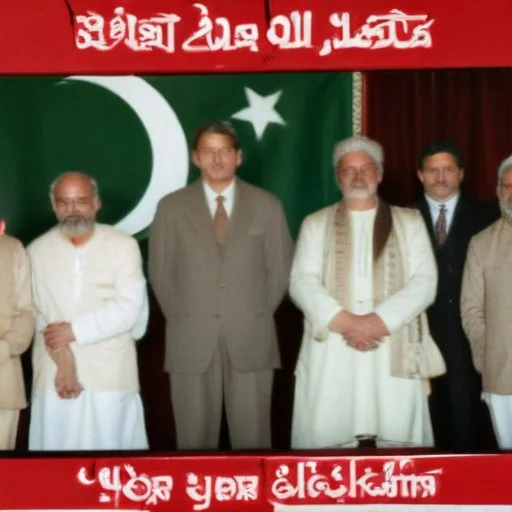
The Lahore Resolution was more than just a statement of intent; it was a bold assertion of the Muslim community's right to self-determination. The resolution's adoption was a testament to the growing frustration among Indian Muslims, who felt that their rights and interests were being marginalized within the British Raj. This sentiment was fueled by the League's charismatic leader, Muhammad Ali Jinnah, who had been advocating for a separate homeland for Muslims since the mid-1930s.
The events leading up to the Lahore Resolution were a culmination of years of political mobilization and grassroots activism. The following timeline highlights the key milestones that paved the way for this historic declaration:
The Lahore Resolution was a collective effort, with several key figures playing pivotal roles in its adoption. Among them were:
The Lahore Resolution not only paved the way for Pakistan's creation but also shaped the nation's identity and cultural ethos. The resolution's emphasis on a separate homeland for Muslims resonated deeply with the community, fostering a sense of shared purpose and belonging.
The Lahore Resolution's adoption had far-reaching cultural and social implications, influencing art, literature, and music across the Indian subcontinent. The resolution's message of freedom and self-determination inspired a generation of artists, writers, and intellectuals, who saw themselves as being part of a larger struggle for national liberation.
The Lahore Resolution was not without its critics, with some viewing it as a divisive and separatist move. However, for many Indian Muslims, the resolution represented a beacon of hope, offering a chance to break free from the shackles of colonial rule and forge their own destiny.
The Lahore Resolution has been immortalized in the annals of history through the words of its principal architects. Here are a few memorable quotes that capture the essence of this momentous event:
The Lahore Resolution's significance extends beyond the Indian subcontinent, serving as a powerful symbol of national self-determination and the struggle for independence. Today, the resolution remains a proud moment in Pakistan's history, inspiring future generations to strive for a brighter, more prosperous future.
The Lahore Resolution marked a significant turning point in the Indian independence movement. Prior to 1940, the All-India Muslim League had been advocating for greater provincial autonomy and representation for Muslims within the British Raj. However, the resolution's call for a separate homeland marked a bold departure from this earlier stance, signaling a more radical approach to achieving Muslim self-determination.
This shift in approach was driven in part by the perceived threats to Muslim identity and culture under British rule. The League's leadership believed that a separate homeland would provide a safe haven for Muslims to preserve their cultural heritage and practice their religion free from persecution.
The resolution's adoption was also influenced by the global political climate of the time. The rise of fascist and nationalist movements in Europe had created a sense of urgency among Indian Muslims, who feared being relegated to minority status within a Hindu-dominated independent India.
Mohammad Iqbal: The Poet-Philosopher Behind the Lahore Resolution
Mohammad Iqbal, a renowned poet-philosopher and writer, played a significant role in shaping the intellectual and philosophical foundations of the Lahore Resolution. Through his works, Iqbal articulated a vision of a Muslim homeland that would be rooted in Islamic principles and values.
Iqbal's concept of a separate Muslim state was not limited to the Indian subcontinent alone. He envisioned a global Islamic revival, in which Indian Muslims would play a leading role in promoting Islamic values and culture.Iqbal's influence on the Lahore Resolution can be seen in the resolution's emphasis on the importance of Islam in shaping the identity and culture of the proposed Muslim homeland.
The Lahore Resolution had a profound impact on the cultural landscape of British India. The resolution's call for a separate homeland for Muslims created a sense of shared identity and belonging among Indian Muslims, who had hitherto been fragmented along regional and linguistic lines.
This new cultural identity was reflected in the emergence of Urdu as a lingua franca for Indian Muslims. The language, which had previously been confined to literary and intellectual circles, became a symbol of Muslim identity and solidarity.
The Lahore Resolution also inspired a new generation of Muslim artists, writers, and intellectuals, who saw themselves as part of a larger cultural and nationalist movement.
The Lahore Resolution marked a significant shift in the trajectory of Muslim politics in India. Prior to 1940, Muslim politicians had focused on negotiating greater provincial autonomy and representation within the British Raj.
The resolution's adoption, however, signaled a more radical approach to achieving Muslim self-determination. The All-India Muslim League, under Jinnah's leadership, began to mobilize support for a separate homeland among Indian Muslims.
This shift in approach was driven in part by the perceived failure of earlier attempts at negotiation and accommodation with the British and Hindu-dominated Indian National Congress.The Lahore Resolution was adopted at a time of great geopolitical upheaval. The Second World War had created new rivalries and alliances among global powers, and the Indian subcontinent was caught in the midst of these rivalries.
The British government, facing the threat of Nazi Germany and Imperial Japan, was keen to maintain its hold on India as a strategic hub in the region.
The Lahore Resolution's call for a separate Muslim homeland posed a significant challenge to British authority, as it threatened to disrupt the Empire's dominance over the region.