


The Maastricht Treaty, signed on February 7, 1992, marked a pivotal moment in European history, birthing the European Union (EU) as we know it today. This monumental agreement brought together 12 European nations, creating a single market, a single currency, and a cohesive foreign policy, paving the way for a unified Europe.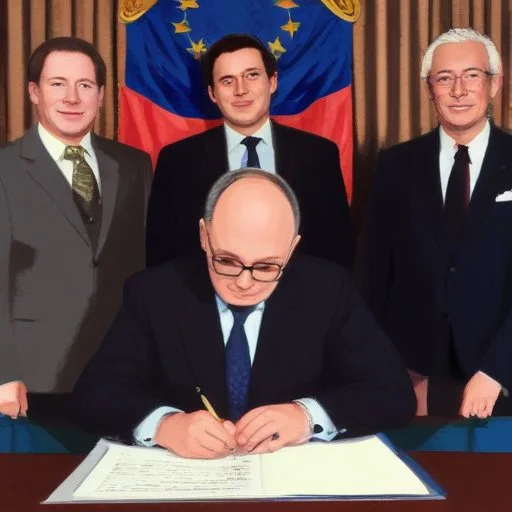
In the aftermath of World War II, European leaders recognized the need for greater economic and political cooperation to prevent future conflicts. The European Coal and Steel Community (ECSC), established in 1951, was the first step towards integration. The Treaty of Rome (1957) created the European Economic Community (EEC), expanding the ECSC's scope.
The Maastricht Summit, held in the Netherlands from December 9 to 11, 1991, was a critical juncture. After months of tough negotiations, European leaders finally agreed on the Treaty on European Union, also known as the Maastricht Treaty.
The Maastricht Treaty's key provisions included:
The Maastricht Treaty marked a significant shift in European cooperation, fostering a sense of shared identity and shared responsibility.
Quote: "The Maastricht Treaty is not just a treaty, it's a symbol of our commitment to a united Europe." - Jacques Delors
The treaty faced opposition from those concerned about national sovereignty and the potential costs of integration.
The Maastricht Treaty set the stage for the EU's expansion, with the addition of 13 new member states between 2004 and 2013.
The creation of the European Union has had a profound impact on European politics, economy, and society, shaping the continent's future for generations to come.
As the German Chancellor from 1982 to 1998, Helmut Kohl was a driving force behind the Maastricht Treaty. His vision for a united Europe was rooted in his experiences during World War II, and he worked tirelessly to promote European integration. Kohl's relationship with French President François Mitterrand was instrumental in shaping the treaty, and their partnership became known as the "Mitterrand-Kohl axis."
Kohl's leadership style was characterized by his ability to build consensus and forge alliances. He was a skilled negotiator who could find common ground among disparate parties, a trait that served him well during the Maastricht negotiations.
Despite facing opposition from within his own party, Kohl remained committed to the treaty, recognizing its potential to bring peace and prosperity to Europe. His legacy as a champion of European integration continues to shape the continent's politics and economy.

The Maastricht Treaty's impact on European culture extends far beyond the realm of politics and economics. By creating a single market and promoting the free movement of goods, services, and people, the treaty has facilitated the exchange of ideas, art, and culture across national borders.
The treaty has also led to the development of a shared European identity, with citizens from different countries coming together to celebrate their common heritage. The European Capital of Culture program, established in 1985, has promoted cultural exchange and cooperation among European cities.
The Maastricht Treaty has also had a profound impact on education, with the establishment of the Erasmus program in 1987. This program has enabled millions of students to study abroad, fostering greater understanding and cooperation among European nations.
The Maastricht Treaty has had a profound impact on the European economy, creating a single market with over 500 million consumers. By removing trade barriers and promoting economic integration, the treaty has increased economic efficiency, encouraged competition, and attracted foreign investment.
The single currency, introduced in 1999, has reduced transaction costs and made it easier to conduct cross-border business. The European Central Bank, established in 1998, has played a crucial role in maintaining price stability and promoting economic growth.
The treaty has also led to increased economic convergence among European countries, with Member States working together to address economic challenges and promote sustainable growth.
The Maastricht Treaty was signed against the backdrop of a rapidly changing geopolitical landscape. The end of the Cold War had created a power vacuum in Europe, and the treaty was seen as a way to promote stability and security in the region.
The fall of the Berlin Wall in 1989 had marked the beginning of a new era in European history, and the Maastricht Treaty was seen as a key step in promoting European integration and cooperation. The treaty was also influenced by the Yugoslav Wars, which had highlighted the need for Europe to speak with one voice on foreign policy issues.
The Maastricht Treaty has also had implications for Europe's relationships with other regions, including the United States, Russia, and the Middle East. By promoting European integration and cooperation, the treaty has helped to create a more stable and prosperous global order.
The Maastricht Treaty has had significant political implications for Europe, creating a new system of governance and decision-making that is more integrated and cooperative. The treaty has established the European Union as a major player on the world stage, with a single voice on foreign policy issues.
The treaty has also led to a shift in power from national governments to the European institutions, with the European Commission, the European Parliament, and the Council of the European Union playing increasingly important roles in shaping European policy.
The Maastricht Treaty has also created new opportunities for European citizens to participate in the democratic process, with the establishment of the European Parliament as a directly elected body. This has helped to increase accountability and transparency in European decision-making.