


On April 4, 1980, Zimbabwe made history as Robert Mugabe, the charismatic leader of the Zimbabwe African National Union (ZANU), emerged victorious in the country's first democratic election, becoming the first black prime minister of the newly independent nation. This watershed moment marked the end of white minority rule and the dawn of a new era of self-determination for the African people.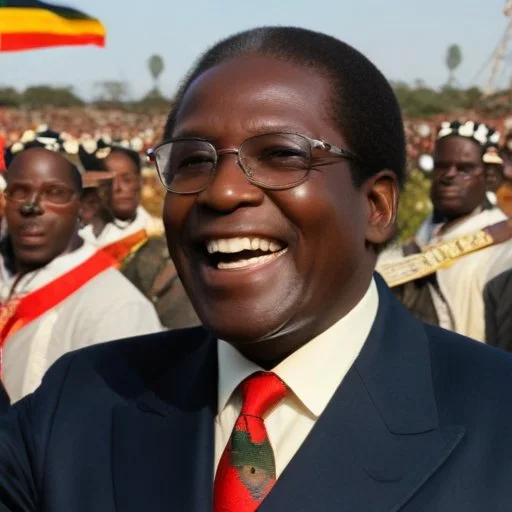
For nearly a century, Zimbabwe was a British colony, with the indigenous population subjected to apartheid-like policies and brutal suppression. In the 1960s, Mugabe, a former teacher and trade unionist, became involved in the nationalist movement, which sought to end colonial rule and establish a government representative of the black majority. Mugabe's ZANU party, along with the Zimbabwe African People's Union (ZAPU), led by Joshua Nkomo, formed the Patriotic Front, a coalition that waged a guerilla war against the Ian Smith-led white minority government.
In 1979, the Lancaster House Agreement was signed, paving the way for free and fair elections in Zimbabwe. The agreement brought an end to the Rhodesian Bush War and established a new constitution, which ensured universal suffrage and majority rule. Mugabe's ZANU party, now rebranded as ZANU-PF, was well-positioned to capitalize on the momentum of the nationalist movement, while Nkomo's ZAPU party also posed a significant threat.
On February 27, 1980, Zimbabweans went to the polls, with Mugabe's ZANU-PF party facing stiff competition from ZAPU and several other smaller parties. Despite fears of political violence and international scrutiny, the election was largely peaceful, with observers from the Commonwealth and the United States praising the process. When the results were announced, Mugabe's ZANU-PF had swept 57 out of 80 seats, securing a clear majority.
Mugabe's election victory sent shockwaves across Africa, marking a significant milestone in the continent's struggle for independence and self-determination. Internationally, the election was hailed as a triumph for democracy, with the United States and the United Kingdom extending congratulations to the new government.
Mugabe's victory had a profound impact on Zimbabwean society, symbolizing the end of colonial rule and the beginning of a new era of black empowerment. The election also marked a shift in cultural identity, as the country began to forge a new national identity that was no longer defined by colonialism.
While Mugabe's election victory was widely celebrated, concerns were raised about his authoritarian tendencies and the treatment of political opponents. However, in the early years of his rule, Mugabe's commitment to education and healthcare earned him widespread popularity, both domestically and internationally.
April 4, 1980: Robert Mugabe sworn in as Prime Minister of Zimbabwe
February 1981: ZANU-PF and ZAPU merge, creating a united front
1982: Mugabe declares his intention to create a one-party state
1985: Zimbabwe introduces a new constitution, solidifying Mugabe's grip on power
As Zimbabwe looked to the future, many wondered whether Mugabe's authoritarian tendencies would lead to a consolidation of power, or whether he would continue to prioritize the country's development and democratic growth. One thing was certain – Robert Mugabe's election victory marked a new chapter in Zimbabwe's history, and the world watched with bated breath as the country navigated its uncertain future.
Robert Mugabe was born on February 21, 1924, in Kutama, Southern Rhodesia, to a family of moderate means. His father, Gabriel Matibili, was a carpenter, and his mother, Bona, was a catechist. Mugabe's early life was marked by a strong Catholic upbringing and a passion for education, which would later shape his political ideology.
Mugabe's educational pursuits took him to Fort Hare University in South Africa, where he was exposed to Marxist ideology and became increasingly politicized. He later taught in Ghana, where he was influenced by the country's independence movement and developed a strong sense of pan-Africanism.
The Lancaster House Agreement, signed in 1979, was a culmination of years of geopolitical maneuvering by regional and international powers. The agreement was facilitated by the British government, which sought to maintain its influence in the region, while also bowing to pressure from the international community to end colonial rule.
The Cold War dynamics of the time played a significant role in shaping the outcome of the negotiations. The Soviet Union, which had been supporting leftist guerrilla movements across Africa, saw the Zimbabwean independence movement as a key battleground in the struggle against Western imperialism.
Zimbabwe's independence in 1980 marked a cultural rebirth for the nation, as the country sought to reclaim its African heritage and shake off the remnants of colonialism. Music, in particular, played a significant role in this cultural revival, with genres like Chimurenga and Sungura gaining popularity and becoming synonymous with the country's struggle for independence.
The arts also flourished, with artists like Thomas Mukarobgwa and Lazarus Takawira gaining international recognition for their works, which often celebrated Zimbabwe's rich cultural heritage and the struggle for independence.
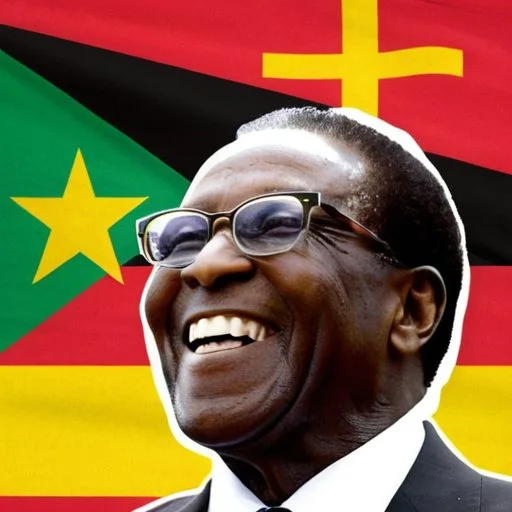
Robert Mugabe's victory in the 1980 elections was not just a result of his charisma and popularity; it was also a testament to his shrewd political maneuvering and ability to build alliances. Mugabe's ZANU-PF party successfully capitalized on the nationalist sentiment and the desire for change among the black majority, while also co-opting key stakeholders and rivals.
Mugabe's leadership style, often described as authoritarian and pragmatic, was shaped by his experiences as a guerrilla leader and his desire to maintain power and stability in a fragile post-independence state.
The historiography of Zimbabwe's independence movement is complex and contested, with different interpretations of the role of key figures like Mugabe and Nkomo. While Mugabe is often portrayed as the hero of the independence movement, some historians argue that his role was more nuanced, and that he was part of a broader collective effort.
Recent revisionist scholarship has sought to challenge the dominant narratives of Zimbabwe's independence, highlighting the agency and experiences of ordinary Zimbabweans and the complexities of the nationalist movement.