


The Navaly church bombing, a brutal airstrike carried out by the Sri Lanka Air Force, is infamous for claiming the lives of 125 Tamil civilian refugees who sought shelter within the church's walls. This devastating event, which occurred in the midst of Sri Lanka's brutal civil war, remains one of the most heinous attacks on civilians in the country's history.
In the late 1990s, Sri Lanka was embroiled in a protracted civil war between the government and the Liberation Tigers of Tamil Eelam (LTTE), a militant separatist group fighting for an independent Tamil state. As the conflict intensified, civilians became increasingly embroiled in the crossfire, with many seeking refuge in churches, temples, and other community centers.
On July 9, 1995, the Sri Lanka Air Force launched a surprise aerial attack on the Navaly church, located in the Jaffna peninsula. The church, which had been serving as a refuge for displaced Tamil civilians, was bombed twice, with the second bombing occurring while rescue efforts were underway. The attack resulted in the deaths of 125 civilians, including women, children, and the elderly.
The Navaly church bombing sparked widespread international outrage, with human rights organizations and governments around the world condemning the attack as a gross violation of human rights. The event was widely reported in the media, with many outlets describing it as a "massacre" and a "war crime."
The Navaly church bombing had far-reaching consequences, exacerbating the already dire humanitarian situation in Sri Lanka and further entrenching the conflict. The event remains a painful reminder of the devastating impact of war on civilians and the importance of protecting human rights in conflict zones.
The Navaly church bombing has had a lasting impact on Sri Lanka's cultural and social fabric, with many Tamils viewing the event as a symbol of the government's disregard for their lives and dignity. The attack has been commemorated in various forms of art, literature, and music, serving as a powerful reminder of the need for reconciliation and justice.
| Date | Event |
|---|---|
| July 9, 1995 | Navaly church bombing |
| July 1995 | International outcry and condemnation of the attack |
| 1996 | Sri Lankan government establishes a commission of inquiry into the bombing |
| 2009 | Sri Lankan government declares victory over the LTTE, ending the civil war |
The Navaly church bombing serves as a powerful reminder of the importance of protecting civilians in conflict zones and the need for accountability in cases of human rights abuses. The event has had a lasting impact on Sri Lanka's political and social landscape, with ongoing efforts towards reconciliation and justice still underway today.
Velupillai Prabhakaran, the founder and leader of the LTTE, was a controversial figure in Sri Lankan politics. Born on November 26, 1954, in the northern Jaffna peninsula, Prabhakaran grew up in a region marked by ethnic tensions between the Tamil minority and the Sinhalese majority.
Prabhakaran's rise to prominence was marked by his involvement in the Tamil nationalist movement, which sought greater autonomy for the Tamil people. He formed the LTTE in 1975, and the organization quickly gained notoriety for its militant tactics and demands for an independent Tamil state.
Despite his violent methods, Prabhakaran remained a charismatic figure among many Tamils, who saw him as a champion of their rights and identity.Throughout the Sri Lankan civil war, Prabhakaran remained elusive, evading capture and assassination attempts. His leadership style was marked by secrecy and paranoia, with many of his closest associates turning against him over the years.

The Navaly church bombing occurred during a period of heightened international tension, with the Cold War drawing to a close and the threat of global terrorism on the rise.
In the early 1990s, the United States and other Western powers were increasingly concerned about the spread of Islamic fundamentalism and its potential to destabilize regional security.In this context, the Sri Lankan government's response to the LTTE insurgency was seen by some as a necessary evil, while others viewed it as a human rights disaster waiting to happen.
The international community's reaction to the Navaly church bombing was shaped by these geostrategic considerations, with some governments prioritizing stability and order over human rights concerns.The Navaly church bombing has left an indelible mark on Tamil literature and art, with many creatives responding to the tragedy through their work.
In the years following the bombing, Tamil writers and poets began to articulate the trauma and loss experienced by their community. Works such as The Navaly Massacre by Tamil poet and writer, S. Sivasegaram, captures the anguish and outrage felt by many Tamils in the aftermath of the bombing.
Tamil filmmakers have also tackled the subject, with films like Fade to Black (2004) and The Narrow Path (2006) exploring the human cost of the conflict and the bombing's impact on Tamil civilians.These creative works not only pay tribute to the victims of the Navaly church bombing but also serve as a powerful reminder of the need for justice and accountability in the face of state-sponsored violence.
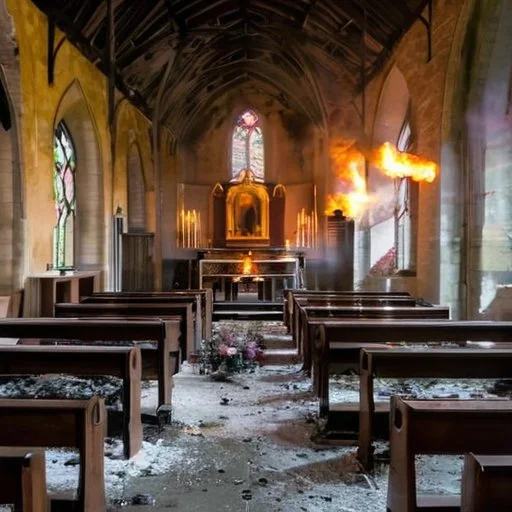
The Navaly church bombing was a major embarrassment for the Sri Lankan government, leading to widespread international condemnation and calls for accountability.
In the aftermath of the bombing, President Chandrika Kumaratunga faced intense pressure to investigate the incident and bring those responsible to justice.
Her government's response was criticized for being inadequate, with many accusing it of trying to sweep the incident under the rug.The political fallout of the Navaly church bombing contributed to a growing distrust of the government among Tamils, who felt that their lives were being sacrificed for political expediency.
The Navaly church bombing was not an isolated incident; it was part of a larger pattern of church bombings and attacks on places of worship in Sri Lanka.
In the early 1990s, a series of church bombings and attacks on Buddhist and Hindu temples rocked the country, leading to widespread panic and outrage.
These attacks were often perpetrated by extremist groups, including the LTTE, which saw religious institutions as legitimate targets in their struggle for independence.The Navaly church bombing was one of the deadliest and most high-profile of these attacks, but it was by no means an anomaly. Rather, it was part of a broader trend of sectarian violence and religious intolerance that has plagued Sri Lanka for decades.