


On October 24, 1795, the last remnants of Polish sovereignty crumbled as Poland was completely consumed by Russia, Prussia, and Austria, marking the end of the once-mighty Polish-Lithuanian Commonwealth's independence for 123 years. This partitioning of Poland would have far-reaching consequences, shaping European politics for centuries to come.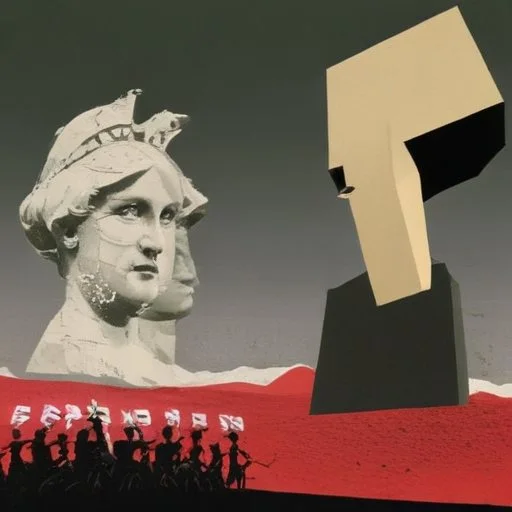
The Polish-Lithuanian Commonwealth, founded in 1569, was a beacon of liberal democracy in Eastern Europe. At its peak, it was one of the largest and most powerful states in the region, known for its tolerant and inclusive policies. However, internal conflicts, corruption, and external pressures gradually weakened the Commonwealth, making it vulnerable to the expansionist ambitions of its neighboring empires.
Three powerful monarchs played a crucial role in Poland's demise: Catherine the Great of Russia, Frederick William II of Prussia, and Francis II of Austria. Each ruler had their own reasons for wanting to annex Polish territories, driven by a desire for territorial expansion, strategic advantage, and economic gain.
The partitioning of Poland had significant consequences, including:
The loss of Polish independence had a profound impact on the country's cultural and social fabric. The influx of foreign influences, particularly from Russia and Prussia, led to:
The partitioning of Poland created a power vacuum in Eastern Europe, which would be filled by rising powers, including Germany and the Soviet Union. This event would shape European politics for centuries, influencing the course of wars, revolutions, and diplomatic alliances.
As we reflect on this pivotal moment in history, we are reminded of the impermanence of empires and the resilience of nations. The story of Poland's defeat serves as a testament to the enduring power of national identity and the human spirit, which continues to inspire and motivate people to this day.
The years leading up to the final partition of Poland were marked by a complex web of alliances and diplomatic maneuvering. Poland's leaders attempted to balance the interests of its powerful neighbors, but ultimately failed to prevent the country's dismemberment. This delicate dance of diplomacy was further complicated by the intrigues of European courts, where ambassadors and spies played crucial roles in shaping the fate of nations.
One of the most significant diplomatic events during this period was the 1792 Alliance of St. Petersburg, which solidified the partnership between Russia, Prussia, and Austria. This treaty effectively isolated Poland and paved the way for the subsequent partitions.
The Partitioning of Polandwas not only a product of military might but also a testament to the skillful manipulation of diplomatic relationships by the great powers of Europe.
Catherine II, also known as Catherine the Great, was a dominant figure in European politics during the late 18th century. She was a shrewd politician, patron of the arts, and a passionate advocate for Enlightenment values. As the Empress of Russia, she played a crucial role in the partitioning of Poland, driven by a desire to expand her empire's borders and secure its influence over Eastern Europe.
Catherine's relationship with Poland was complex and multifaceted. While she admired the country's cultural achievements, she was deeply critical of its internal instability and perceived weaknesses. Her policies towards Poland were shaped by a mix of realpolitik and ideological convictions, as she sought to remake the region in her image.
Catherine's personal charm and diplomatic abilities earned her the nickname "the Great," but her role in the partitioning of Poland remains a controversial aspect of her legacy.The fates of Poland and Russia were inextricably linked throughout history, with the two nations experiencing periods of both cooperation and conflict. A comparative analysis of their development reveals striking similarities and differences, shedding light on the underlying causes of Poland's demise and Russia's rise.
Both Poland and Russia emerged as major powers in Eastern Europe during the Middle Ages, with each playing a significant role in the region's politics and culture. However, their paths diverged in the early modern period, as Poland became increasingly weakened by internal strife and external pressures, while Russia continued to expand its territories and consolidate its power.
The contrasts between Poland's decentralized governance and Russia's autocratic rule, as well as their differing relationships with the Catholic and Orthodox Churches, are crucial in understanding the divergent trajectories of these two empires.
The partitioning of Poland had a profound impact on the country's cultural landscape, as Polish language, literature, and art came under increasing pressure from foreign influences. The suppression of Polish culture was a deliberate policy of the occupying powers, aimed at erasing the country's national identity and promoting their own cultural dominance.
Despite these challenges, Polish culture continued to thrive in secret, with many artists and intellectuals playing important roles in the underground resistance movement. The works of Romantic poets, such as Adam Mickiewicz, became powerful symbols of Polish identity and a rallying cry for national liberation.
The cultural legacy of the partitioning of Poland serves as a testament to the resilience of national identity and the human spirit, even in the face of overwhelming adversity.The partitioning of Poland marked a significant shift in the European balance of power, with the emergence of new alliances and rivalries that would shape the continent's politics for centuries to come. The sudden disappearance of Poland from the European map created a power vacuum, which was quickly filled by rising powers such as Germany and the Soviet Union.
The partitioning of Poland also had significant implications for the global balance of power, as it marked the beginning of a new era of imperial rivalries and great power politics. The consequences of this event continue to resonate in modern geopolitics, influencing the relationships between nations and shaping the course of international relations.
The partitioning of Poland serves as a powerful reminder of the impermanence of empires and the enduring importance of national sovereignty in international relations.