


In a shocking turn of events, on June 25, 1975, Prime Minister Indira Gandhi declared a state of internal emergency in India, suspending civil liberties, jailing opposition leaders, and censoring the press. This draconian measure, which lasted for 21 months, marked a dark chapter in Indian democracy, as Gandhi's government tightened its grip on the nation.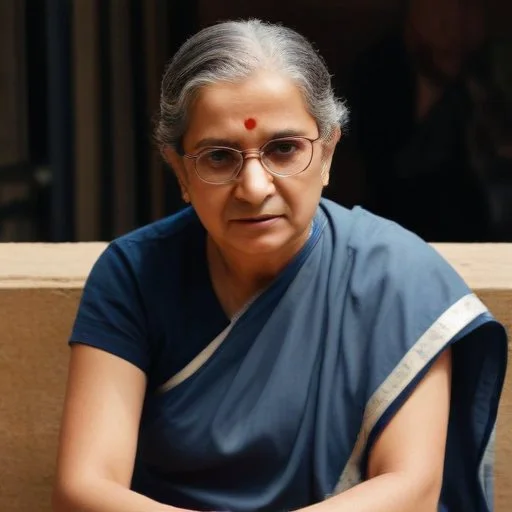
In the early 1970s, India was facing economic and political instability. The country was struggling to recover from a severe drought, and the economy was in shambles. The opposition parties, led by Jayaprakash Narayan, were gaining momentum, calling for Gandhi's resignation and accusing her of corruption. Gandhi, who had been in power since 1966, felt threatened and saw the emergency as a means to consolidate her power.
In the early hours of June 25, 1975, Gandhi declared a state of internal emergency, citing internal security threats as the justification. The president, Fakhruddin Ali Ahmed, signed the proclamation, and the emergency was officially in place. Overnight, the government arrested over 1,000 opposition leaders, including Narayan, and banned all political activities.
The emergency led to a culture of fear, with the government having absolute power over the citizens. The press was heavily censored, and any form of dissent was crushed. Forced sterilizations, slum demolitions, and human rights abuses were rampant. The government also launched a massive campaign to "beautify" cities, which resulted in the destruction of many slums and the displacement of thousands of people.
Despite the government's efforts to silence them, the opposition parties continued to resist. Many leaders, including Narayan, went underground, and a parallel government was formed. The resistance was led by students, activists, and trade unionists, who risked their lives to defy the emergency.
The international community was shocked by Gandhi's move, with many countries condemning the emergency. The United States, in particular, was vocal in its criticism, with President Gerald Ford calling the emergency a "setback for democracy."
In January 1977, Gandhi, facing mounting international pressure and dwindling popularity, lifted the emergency. The country was relieved, and the opposition parties were rejuvenated. In the subsequent elections, Gandhi's party, the Indian National Congress, was defeated, and she lost her seat.
The emergency had a lasting impact on Indian democracy. It led to the formation of a more robust opposition and a more vigilant civil society. The episode also led to the enactment of the 44th Amendment to the Constitution, which limited the power of the government to declare emergencies.
The state of internal emergency was a dark chapter in Indian democracy, but it also led to a more resilient and robust democracy. It served as a warning to future governments, reminding them of the importance of upholding democratic values and protecting individual freedoms.
The historiography of the Emergency period is marked by a dichotomy between those who view it as a necessary measure to stabilize the country and those who see it as a power grab by Indira Gandhi.
Many historians argue that the Emergency was a response to the growing unrest and chaos in the country, and that it was necessary to restore order and stability.
However, others see it as a calculated move by Gandhi to consolidate her power and suppress dissent.
This dichotomy is reflected in the works of historians such as Ramachandra Guha, who has written extensively on the period, and Granville Austin, who has argued that the Emergency was a necessary evil.

Jayaprakash Narayan, a key leader of the opposition, was a charismatic figure who played a crucial role in mobilizing resistance against the Emergency.
Born in 1902, Narayan was a freedom fighter and a socialist who had participated in the Quit India Movement.
He was a vocal critic of Indira Gandhi's government and had been calling for her resignation even before the Emergency was declared.
During the Emergency, Narayan went underground and continued to rally opposition forces, earning him the nickname "Loknayak" or "People's Leader".
The Emergency had a profound impact on Indian culture, with many artists and writers using their work as a form of resistance.
Filmmakers such as Shyam Benegal and Govind Nihalani made films that subtly critiqued the government, while writers like Khushwant Singh and Nayantara Sahgal wrote scathing critiques of the Emergency.
The period also saw the rise of protest music, with singers like Bhupen Hazarika and Hemant Kumar singing songs that called for freedom and democracy.
This cultural resistance played a significant role in mobilizing public opinion against the Emergency.

The Emergency was a turning point in Indian politics, marking a shift from a dominant party system to a more fragmented and competitive party landscape.
The period saw the rise of new political parties, such as the Janata Party, which was formed by opposition leaders to challenge Gandhi's rule.
The Emergency also led to a reinvigoration of civil society, with the formation of organizations such as the People's Union for Civil Liberties (PUCL) to defend human rights.
This new political landscape had a lasting impact on Indian democracy, making it more robust and participatory.
The Emergency was not an isolated event, but was part of a larger trend of authoritarianism in South Asia during the 1970s.
Countries such as Pakistan, Bangladesh, and Sri Lanka were also experiencing similar forms of authoritarian rule.
The global context of the Cold War also played a role, with India's non-aligned movement facing challenges from both the US and the Soviet Union.
This geopolitical context helps to explain why the Emergency was seen as a necessary measure by some, and a draconian move by others.