


On August 2, 1934, the death of President Paul von Hindenburg paved the way for Adolf Hitler's ascension to supreme leader of Germany, marking a significant turning point in the country's history. This pivotal event solidified Hitler's grip on power, allowing him to consolidate his authority and shape the course of Germany's fate.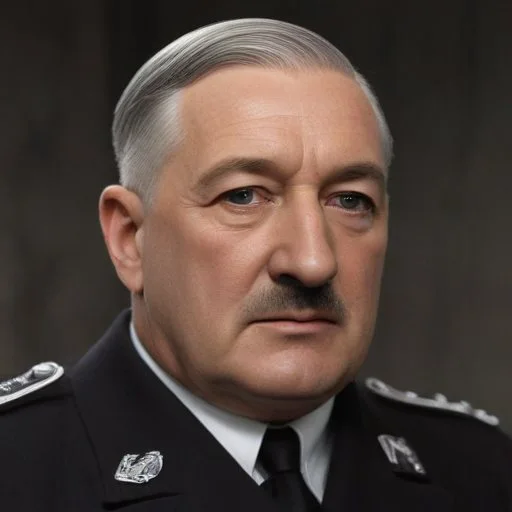
In the early 1930s, Germany was still reeling from the aftermath of World War I. The Treaty of Versailles had imposed harsh penalties on the country, leading to widespread resentment and economic instability. Amidst this turmoil, Hitler, the charismatic leader of the National Socialist German Workers' Party (NSDAP), rose to prominence, capitalizing on the nation's discontent and promising a return to greatness.
When Hindenburg, the respected President of Germany, passed away, Hitler saw an opportunity to seize control. As Reichskanzler, Hitler had already been consolidating power, but Hindenburg's death presented a chance to eliminate any remaining checks on his authority. Without hesitation, Hitler declared himself the Führer, or supreme leader, of Germany, effectively abolishing the office of the President.
July 1934: Hitler orders the Night of the Long Knives, a purge of the SA, eliminating potential rivals and solidifying his control.
August 2, 1934: President Paul von Hindenburg dies, creating a power vacuum.
August 2, 1934: Hitler declares himself Führer, supplanting the office of the President.
Consolidation of Power: Hitler's declaration of himself as Führer marked the beginning of a totalitarian regime, with Hitler holding absolute authority over Germany.
Abolition of the Office of the President: The elimination of the presidential office further solidified Hitler's grip on power.
Rise of the Nazi Regime: Hitler's ascension to Führer marked the beginning of a dark era in German history, characterized by brutal suppression of dissent and aggressive militarization.
The Nazi regime's rise to power was fueled by a complex mix of nationalist sentiment, anti-Semitic rhetoric, and promises of economic recovery. Hitler's charismatic leadership and the NSDAP's propaganda machine skillfully exploited these sentiments, propelling the party to power.
Hitler's consolidation of power was met with widespread concern among Germany's neighbors and the international community. Many saw Hitler's rise as a threat to democracy and peace in Europe, foreshadowing the devastating conflicts that would soon engulf the continent.
"The Führer is the highest authority in the state and the party. He is the leader of the German people." - Adolf Hitler, upon declaring himself Führer
The consequences of Hitler's rise to power were far-reaching and devastating. The Nazi regime's brutal suppression of minority groups, aggressive militarization, and ultimately, its role in World War II, left an indelible mark on human history. As we reflect on this pivotal moment, we are reminded of the dangers of unchecked power and the importance of protecting democracy.
Scholars have long debated the significance of Hitler's consolidation of power in 1934. Some historians, like Ian Kershaw, argue that Hitler's rise was a gradual process, with the Führer exploiting existing power structures to achieve total control. Others, like Richard Evans, contend that Hitler's ascension was a more abrupt event, marked by a deliberate campaign to eliminate opposition and consolidate power.
More recently, historians have sought to recontextualize Hitler's rise to power within the broader framework of German history, examining the role of societal and economic factors in facilitating the Nazi regime's rise.

Ernst Röhm, the leader of the Sturmabteilung (SA), was a key figure in Hitler's rise to power. Initially, Röhm was a close ally of Hitler, providing the paramilitary force that helped the Nazis seize control in the early 1930s. However, as Hitler's power grew, Röhm began to resent his subordinate role and sought greater autonomy for the SA.
His opposition to Hitler's consolidation of power ultimately proved fatal, as Röhm was brutally purged during the Night of the Long Knives, paving the way for Hitler's unchecked dominance.
The Nazi regime's rise to power had a profound impact on German culture, marked by a deliberate campaign to promote nationalist and anti-Semitic sentiment. The regime's propaganda machine, led by Joseph Goebbels, skillfully exploited existing resentments and fears, creating a climate of intolerance and hatred.
This cultural shift was exemplified in the regime's iconic symbols, such as the swastika and the Nazi eagle, which became ubiquitous in German life. The regime's cultural influence extended beyond Germany's borders, too, as Nazi ideology inspired fascist movements across Europe.

Hitler's consolidation of power had significant economic consequences, both domestically and internationally. Domestically, the Nazi regime implemented a series of economic policies aimed at reducing unemployment and stimulating growth, including massive infrastructure projects and rearmament programs.
Internationally, the regime's aggressive militarization and expansionist policies led to increased tensions with neighboring countries, disrupting global trade and contributing to the destabilization of the international economic order.
Hitler's rise to power occurred amidst a complex geopolitical landscape, marked by the aftermath of World War I and the global economic crisis of the 1930s. The Treaty of Versailles had imposed harsh penalties on Germany, creating widespread resentment and a sense of injustice among the German people.
In this context, Hitler's promises of national renewal and revenge against the victors of World War I resonated deeply with the German public, fueling the Nazi regime's rapid rise to power.