


Boris Yeltsin, the Russian President, stunned the nation by sacking his Prime Minister, Sergei Stepashin, and, for the fourth time, his entire cabinet. This drastic move sent shockwaves through the Russian political landscape, leaving many wondering what triggered this bold decision.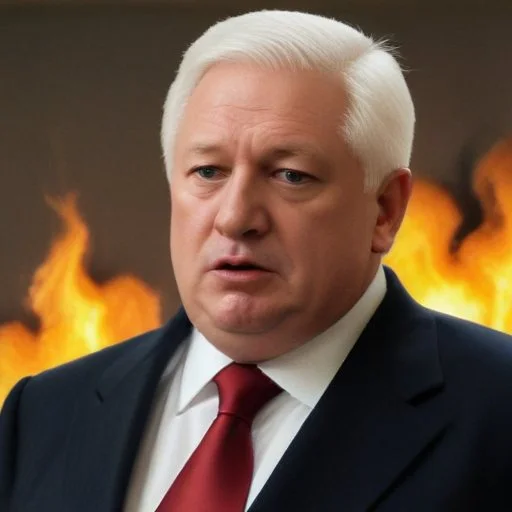
Yeltsin's presidency was marked by economic instability, corruption scandals, and a power struggle between the executive branch and the Duma, Russia's legislative body. The Russian economy was in shambles, with high inflation, widespread poverty, and a declining standard of living.
Sergei Stepashin, the ousted Prime Minister, was a career diplomat and a close ally of Yeltsin. Stepashin's cabinet was seen as a compromise between Yeltsin's loyalists and the opposition, aimed at stabilizing the government.
The cabinet purge sparked widespread criticism, with many seeing it as a power grab by Yeltsin. The opposition accused the President of undermining the government's stability and the country's institutions.
Quote: "This is a clear example of Yeltsin's autocratic style of governance. He's only interested in maintaining his power and influence." - Communist Party leader, Gennady Zyuganov
The cabinet purge marked a significant shift in Yeltsin's presidency, cementing his reputation as an unpredictable leader. The move paved the way for Vladimir Putin's rise to power, who would later succeed Yeltsin as President.
Yeltsin's cabinet purge had far-reaching consequences, contributing to the erosion of trust in Russian institutions and the consolidation of power in the presidency. The event paved the way for Putin's rise to power and the evolution of Russian politics in the 21st century.
Sergei Stepashin, the ousted Prime Minister, was a seasoned diplomat with a background in intelligence and foreign affairs. Born in 1952, Stepashin graduated from the Moscow State Institute of International Relations and began his career in the Soviet Foreign Ministry.
He held various positions, including head of the Russian Federal Border Service and director of the Federal Security Service, before becoming Prime Minister in 1999. Stepashin's diplomatic experience and moderate stance made him an appealing choice for Yeltsin, who sought to stabilize the government.

Yeltsin's cabinet purge was a calculated move to consolidate power and undermine the opposition. By sacking Stepashin, Yeltsin was able to remove a potential rival and install a more loyalist government.
This power play allowed Yeltsin to reassert his authority and control over the political landscape, further solidifying his reputation as a shrewd and ruthless leader.
The cabinet purge sent shockwaves through the Russian economy, causing stocks to plummet and the ruble to weaken. The move was seen as a destabilizing factor, eroding investor confidence and exacerbating the country's economic woes.
The purge led to a delay in much-needed economic reforms, perpetuating the cycle of stagnation and poverty that had plagued Russia since the collapse of the Soviet Union.

The 1990s were a tumultuous period in Russia's geopolitical landscape, marked by the country's transition from a communist state to a capitalist economy. The collapse of the Soviet Union had left Russia struggling to maintain its influence and relevance on the global stage.
In this context, Yeltsin's cabinet purge was seen as a desperate attempt to reassert Russia's authority and maintain its position as a major world power.
Boris Yeltsin's rise to power was marked by his instrumental role in the Soviet Union's collapse. As a key figure in the Communist Party, Yeltsin became a vocal critic of Mikhail Gorbachev's reforms, eventually using his popularity to oust Gorbachev and assume the presidency.
Yeltsin's presidency was marked by a series of power struggles, including his famous stand-off with the Russian parliament in 1993, which culminated in the cabinet purge of 1999.