


On June 18, 1979, in a momentous ceremony in Vienna, Austria, the United States and the Soviet Union put their differences aside to sign the Strategic Arms Limitation Talks (SALT) II agreement, a landmark treaty aimed at curbing the nuclear arms race and easing tensions between the two superpowers. This historic accord marked a significant milestone in the Cold War, as the world witnessed a rare display of cooperation and diplomacy between the two nations.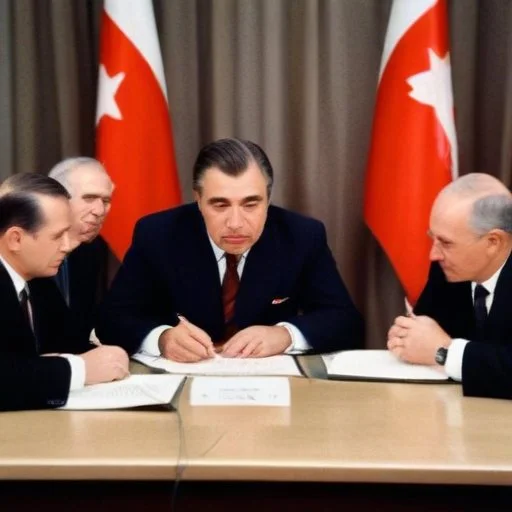
In the aftermath of World War II, the United States and the Soviet Union emerged as the world's two dominant superpowers, locked in a ideological struggle that would come to define the Cold War era. The nuclear arms race, which began in the 1950s, had reached alarming levels, with both nations stockpiling weapons and engaging in a series of tit-for-tat threats and counter-threats. Against this backdrop of escalating tensions, the SALT talks were initiated in 1969, with the goal of mutually limiting the production and deployment of strategic nuclear weapons.
The SALT II treaty marked a significant turning point in the Cold War, as it demonstrated a willingness on both sides to engage in meaningful diplomacy and reduce the risk of nuclear conflict. The treaty:
The signing of SALT II had far-reaching cultural and social implications, as it signaled a shift towards diplomacy and cooperation in international relations. The treaty:
While the SALT II treaty was hailed as a major breakthrough in international relations, it was not without its critics. Some opponents argued that the treaty:
The signing of SALT II paved the way for future arms control agreements, including the Intermediate-Range Nuclear Forces Treaty (INF) and the Strategic Arms Reduction Treaty (START). Today, the treaty remains an important milestone in the history of international relations, a testament to the power of diplomacy and cooperation in reducing the risk of nuclear conflict.

A visual representation of the key events leading up to the signing of SALT II, including the SALT I agreement and the resumption of talks in 1977.
Jimmy Carter's presidency was marked by a strong commitment to human rights and international diplomacy. His campaign promise to reduce nuclear weapons resonated with the American public, who were increasingly concerned about the escalating arms race. Carter's leadership style was characterized by a willingness to listen to opposing views and engage in open dialogue, which helped to build trust with Soviet leaders.
Leonid Brezhnev, on the other hand, was a staunch communist who rose through the Soviet hierarchy through a combination of strategic alliances and ruthless pragmatism. Despite his reputation for being obstinate, Brezhnev was willing to make concessions to the United States in order to achieve a strategic advantage. His leadership style was marked by a focus on maintaining Soviet prestige and influence on the global stage.

The signing of SALT II had significant economic implications for both the United States and the Soviet Union. By reducing the number of nuclear weapons, both countries could redirect budgets towards other sectors, such as education, healthcare, and infrastructure. The treaty also opened up new opportunities for trade and investment between the two nations.
In the United States, the treaty led to a decrease in defense spending, which in turn contributed to a reduction in the federal budget deficit. The Soviet Union, on the other hand, was able to redirect resources towards modernizing its economy and improving living standards for its citizens.
The signing of SALT II had a profound impact on popular culture, inspiring a wave of anti-nuclear protests and activism. The treaty was seen as a symbol of hope and cooperation in a world torn apart by the Cold War.
Musicians, artists, and writers responded to the treaty with a flurry of creative works, from protest songs to anti-nuclear posters. The treaty also inspired a new generation of activists, who saw it as a call to action to work towards a more peaceful and nuclear-free world.

The SALT II treaty marked a significant milestone in the development of nuclear technology. By limiting the production of new strategic nuclear weapons, the treaty encouraged the development of more efficient and effective delivery systems.
The treaty also spurred innovation in the field of verification and monitoring, with the development of new technologies to detect and track nuclear weapons. This, in turn, led to a greater emphasis on transparency and cooperation in international relations.
Historians have long debated the significance of the SALT II treaty in the context of the Cold War. Some have argued that the treaty marked a turning point in the conflict, signaling a shift towards détente and cooperation between the two superpowers.
Others have seen the treaty as a temporary pause in the arms race, with both sides using the agreement as a means to regroup and reassess their strategies. Regardless, the SALT II treaty remains an important chapter in the history of international relations, offering valuable lessons for policymakers and scholars today.