


The Treaty of Vereeniging, signed on May 31, 1902, marked the conclusion of the Second Boer War, a brutal and devastating conflict that had ravaged South Africa for three long years. This historic agreement not only brought an end to the war but also sealed the fate of the region, placing it firmly under British control for decades to come.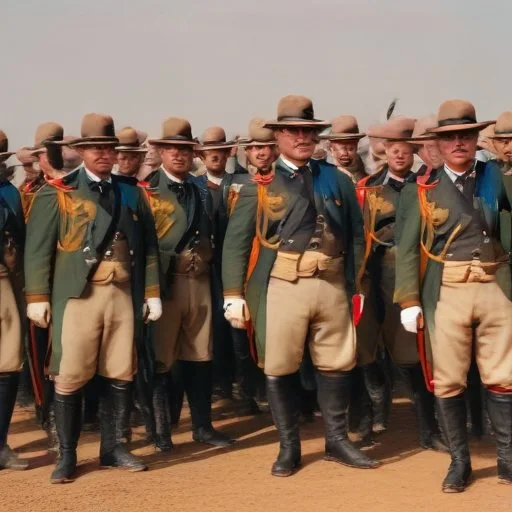
The seeds of the Second Boer War were sown in the late 19th century, when the discovery of gold in the Transvaal region of South Africa sparked a frenzy of mining activity. The Boers, descendants of Dutch settlers, had long been at odds with the British Empire over issues of land ownership, governance, and cultural identity. As tensions simmered, the Boers eventually declared independence, prompting the British to retaliate with military force.
The conflict that ensued was marked by brutal guerrilla warfare, as the Boers employed unconventional tactics to harass and disrupt the British army. Led by figures like Louis Botha and Jan Smuts, the Boers waged a fierce resistance, but ultimately, their efforts were no match for the might of the British Empire.
The tide of the war turned decisively in favor of the British with the fall of Pretoria, the Boer capital, in June 1900. This devastating blow dealt a severe blow to Boer morale, and their leader, Paul Kruger, was forced to flee the country. With their stronghold breached, the Boers were left with little choice but to negotiate a surrender.
In May 1902, a delegation of Boer leaders, including Louis Botha and Jan Smuts, gathered at a Methodist church in Vereeniging, a small town in the Orange River Colony. There, they engaged in intense negotiations with British representatives, led by Lord Alfred Milner and Lord Kitchener. The Boers, exhausted and demoralized, reluctantly agreed to surrender, recognizing King Edward VII as their sovereign.
The Treaty of Vereeniging was signed on May 31, 1902, bringing an end to the Second Boer War. The treaty's terms were far from generous, with the Boers forced to accept British sovereignty over South Africa. In return, they were granted limited autonomy and a promise of eventual self-governance.
The Treaty of Vereeniging marked the beginning of a new era in South African history, with the region firmly under British control. While the war had been brutal and devastating, it also paved the way for the eventual creation of the Union of South Africa in 1910. Today, the treaty is remembered as a poignant reminder of the complex and often troubled history of this majestic region.
The Second Boer War was a complex and multifaceted conflict that involved not only the British and the Boers but also other groups, including African workers and refugees. One of the often-overlooked aspects of the war is the role of black Africans, who were caught in the middle of the conflict and suffered greatly as a result. Many were forced to flee their homes and seeks refuge in concentration camps, where they were subjected to harsh conditions and forced labor.
Despite their significant contributions to the war effort, black Africans were largely excluded from the Treaty of Vereeniging and were not granted the same rights and privileges as their white counterparts. This exclusion would have lasting implications for the trajectory of South African history and would contribute to the country's ongoing struggles with racism and inequality.
In the aftermath of the war, many black Africans were forced to work in hazardous conditions, leading to widespread illness and death. This dark chapter in South African history serves as a poignant reminder of the need for greater inclusivity and recognition of the contributions of all groups involved in the conflict.
Louis Botha, one of the primary signatories of the Treaty of Vereeniging, was a Boer leader who played a crucial role in the Second Boer War. Born in 1862 in the Orange Free State, Botha was a skilled military strategist and politician who rose to prominence during the conflict.
Botha's leadership during the war was marked by his use of unconventional tactics, including guerrilla warfare and sabotage. Despite being outnumbered and outgunned, Botha's forces were able to inflict significant damage on the British army, earning him a reputation as a cunning and resourceful leader.
After the war, Botha went on to become a key figure in South African politics, serving as the first Prime Minister of the Union of South Africa from 1910 to 1919. His legacy as a Boer leader and statesman continues to be felt in South Africa today.The Treaty of Vereeniging has been compared to other significant peace agreements throughout history, including the Treaty of Versailles and the Treaty of Berlin. Like these agreements, the Treaty of Vereeniging marked the end of a devastating conflict and paved the way for a new era of international relations.
However, the Treaty of Vereeniging also shares some striking similarities with more recent peace agreements, such as the Good Friday Agreement in Northern Ireland. Both agreements involved the surrender of armed groups and the establishment of new political institutions, highlighting the complexities and challenges of achieving lasting peace in divided societies.
In both cases, the treaties have been criticized for perpetuating existing power structures and failing to adequately address the grievances of marginalized groups. These comparisons serve as a reminder of the ongoing importance of critically evaluating peace agreements and their implications for social justice and human rights.
The Treaty of Vereeniging had a profound impact on South African culture, contributing to the ongoing legacy of British colonialism and the suppression of indigenous cultures. The treaty's recognition of British sovereignty over South Africa led to the imposition of English as the dominant language and the marginalization of African languages and cultures.
The war and its aftermath also had a significant impact on South African literature, with many writers using the conflict as a backdrop for exploring themes of identity, colonialism, and social justice. The works of writers like Olive Schreiner and Sol Plaatje offer powerful critiques of the war and its legacy, highlighting the need for greater cultural recognition and reconciliation.
The Treaty of Vereeniging serves as a potent symbol of the complex and often fraught relationship between culture and politics in South Africa, and its ongoing impact continues to be felt in the country's vibrant cultural landscape.The economic impact of the Treaty of Vereeniging was significant, with the war marking the beginning of a new era of British economic domination in South Africa. The treaty's recognition of British sovereignty led to the establishment of new trade agreements and the exploitation of South Africa's natural resources, including gold and diamonds.
The war also led to significant investment in infrastructure, including the construction of new railways and ports. While this investment brought economic benefits to some, it also perpetuated existing economic inequalities and contributed to the ongoing exploitation of African workers.
The Treaty of Vereeniging paved the way for the emergence of South Africa as a major economic power, but its legacy continues to be felt in the country's ongoing struggles with poverty and inequality.