


The Seven Years War, a pivotal conflict that ravaged the 18th century, is renowned for reshaping the global balance of power and catapulting Great Britain to the forefront of world dominance. This far-reaching war, which officially commenced on May 17, 1756, when Great Britain declared war on France, entangled multiple European powers, Native American tribes, and distant colonies in a complex web of alliances and rivalries.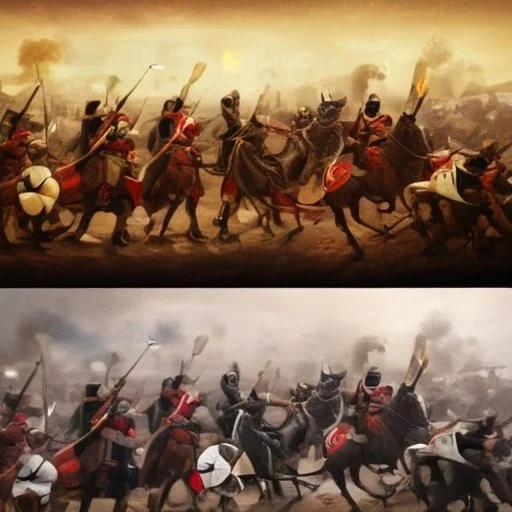
The seeds of the Seven Years War were sown in the intense rivalry between Great Britain and France, twosuperpowers vying for colonial supremacy. The British government, under the aegis of King George II, grew increasingly wary of France's expanding empire, which threatened to upset the delicate balance of power in Europe and beyond. The flashpoint came when French forces ousted British traders from the Ohio River Valley, a strategic region that controlled access to the lucrative fur trade and the gateway to the American West.
The Seven Years War was a conflict unlike any other, with battles raging across three continents: Europe, North America, and India. The war was fought on multiple fronts, involving a complex array of alliances and rivalries. The British and French clashed in the North American wilderness, while Prussia, under the leadership of Frederick the Great, fought against Austria and Russia in Europe. In India, the British East India Company, led by Robert Clive, battled French and Indian forces for control of the subcontinent.
The Seven Years War had a profound impact on world history, setting the stage for the rise of British dominance and reshaping the global balance of power. The war marked the beginning of a new era of colonization, as European powers scrambled to expand their empires across the globe. The war also sparked a cultural and intellectual renaissance, paving the way for the Enlightenment and the French Revolution.
As the dust settled on the battlefields of the Seven Years War, a new world order emerged, forever changed by the clash of empires and the will to power. The war's legacy continues to resonate, a testament to the enduring power of human ambition and the unrelenting pursuit of greatness.
The Historiographical Debate: A War of Interpretations
The Seven Years War has been the subject of intense historiographical debate, with historians interpreting the conflict through various lenses. While traditional historians view the war as a struggle for empire and a testament to British military prowess, more recent scholarship has emphasized the war's impact on indigenous populations and the role of non-European actors. Others have seen the war as a pivotal moment in the development of modern capitalism, with the British East India Company's victories in India marking a significant turning point in the exploitation of colonial resources.
Another area of contention among historians is the war's significance in the broader narrative of European history. Some see the war as a key moment in the decline of the French monarchy and the rise of Prussia as a major power, while others view it as a precursor to the American and French Revolutions.

Louis XV: The King Who Underestimated Britain
Louis XV, King of France from 1715 to 1774, is often criticized for his role in sparking the Seven Years War. While he oversaw the expansion of the French empire, his underestimation of British military power and his failure to adequately prepare for war ultimately led to France's defeat.
Despite his military shortcomings, Louis XV is also remembered for his cultural achievements. He was a patron of the arts and architecture, and his reign saw the construction of many notable landmarks, including the Palace of Versailles.
The Geopolitical Context: A Web of Alliances
The Seven Years War was fought against the backdrop of a complex web of alliances and rivalries that spanned Europe and beyond. The British and French, bitter rivals for centuries, were locked in a struggle for colonial supremacy, while Prussia, under the leadership of Frederick the Great, sought to expand its territory and influence in Europe.
The war also drew in a range of other powers, including Austria, Russia, and Spain, each with their own agendas and interests. The resulting conflict was truly global in scope, with battles fought on three continents and the fate of empires hanging in the balance.

The Cultural Legacy of the Seven Years War
The Seven Years War had a profound impact on the cultural landscape of Europe and beyond. The war sparked a wave of patriotic fervor in Britain, with artists and writers celebrating the nation's military prowess and imperial ambitions.
In France, the war's aftermath saw a renewed focus on Enlightenment values and the rise of prominent thinkers such as Voltaire and Rousseau. Meanwhile, in India, the war marked the beginning of a new era of British cultural and intellectual influence, as British scholars and administrators sought to understand and interpret Indian culture and society.
The Economic Consequences of War
The Seven Years War had significant economic consequences, both for the belligerents and for the global economy as a whole. The war led to a massive increase in government debt, with Britain's national debt more than doubling during the conflict.
The war also disrupted global trade patterns, leading to shortages and inflation in many regions. However, the war also created new economic opportunities, particularly in the colonies, where the exploitation of natural resources and the growth of new industries helped to fuel economic growth and development.