


The Cheonan, a 1,200-ton South Korean Navy corvette, will forever be remembered as a symbol of tragedy and devastation. On March 26, 2010, the warship was torpedoed in the Yellow Sea, claiming the lives of 46 brave sailors and leaving a nation in mourning.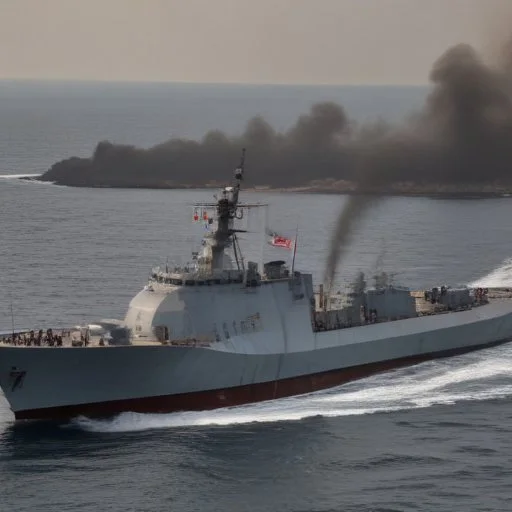
In the aftermath of the attack, an international investigation was launched to determine the responsible party. The probe involved experts from South Korea, the United States, Australia, and Sweden, among others. After a meticulous examination of the wreckage and evidence, the investigators concluded that the Cheonan was sunk by a North Korean torpedo.
The findings of the investigation sparked widespread condemnation from the international community. The President of the United Nations Security Council publicly blamed North Korea for the attack, exacerbating the already strained relations between the two nations. The incident was widely seen as a provocative act that threatened regional stability.
In the years following the tragedy, the Cheonan has become a symbol of national pride and sacrifice in South Korea. The incident has also led to a significant strengthening of the country's military capabilities and a re-evaluation of its defense strategies.
The sinking of the Cheonan has had a profound impact on South Korean society, leading to a surge in nationalism and a renewed sense of purpose among the country's military personnel. The incident has also been the subject of several books, films, and documentaries, ensuring that the memory of the tragic event is kept alive.
The sinking of the Cheonan serves as a poignant reminder of the sacrifices made by those who serve in the military. As we remember the bravery and dedication of the 46 sailors who lost their lives, we are also reminded of the importance of promoting peace and stability in the region.
The Cheonan incident was not an isolated event, but rather part of a larger pattern of aggression by North Korea in the Yellow Sea. In the years leading up to the attack, there were several close encounters between North and South Korean naval vessels, with the North frequently violating the maritime border. The sinking of the Cheonan was a culmination of this escalating tension, and it highlighted the need for a more robust defense strategy in the region.
Additionally, the incident drew attention to the long-standing dispute over the Northern Limit Line (NLL), a de facto maritime boundary that has been the source of contention between the two countries since the 1950s. The NLL has been the site of numerous clashes, and the Cheonan incident brought renewed focus to the need for a more permanent and stable solution to this territorial dispute.

Lee Myung-bak: A Leader in Crisis
As the President of South Korea during the Cheonan incident, Lee Myung-bak played a crucial role in coordinating the international response to the attack. His leadership during this time was marked by a firm stance against North Korean aggression, and he worked closely with the United Nations and other international partners to condemn the attack and seek justice.
Lee's experience in crisis management was critical in preventing further escalation of the situation, and his commitment to strengthening South Korea's military capabilities in the aftermath of the incident has had a lasting impact on the country's defense strategy.
The sinking of the Cheonan has been compared to other maritime incidents in the region, including the 1999 sinking of the South Korean ship Yuk Tae-oh by a North Korean spy vessel. While the circumstances of the two incidents differ, they share a common theme of North Korean aggression and a disregard for international norms.
In contrast, the Cheonan incident has also been compared to the 2000 Estonia ferry disaster, which resulted in the loss of over 850 lives. While both incidents involved significant loss of life, the Cheonan incident was a deliberate act of aggression, whereas the Estonia disaster was a tragic accident.
The sinking of the Cheonan has had a profound impact on South Korean popular culture, with the incident being referenced in numerous films, dramas, and music videos. The incident has become a symbol of national pride and sacrifice, and serves as a reminder of the ongoing tensions between North and South Korea.
In addition, the incident has inspired numerous works of art, including a memorial at the Republic of Korea Navy's Museum in Gangneung, where the wreckage of the Cheonan is on display. The memorial serves as a poignant reminder of the sacrifices made by the 46 sailors who lost their lives.
The Cheonan incident highlighted the need for a more robust defense strategy in South Korea, and led to a significant increase in military spending in the years following the attack. The incident also led to a re-evaluation of the country's defense priorities, with a greater focus on deterring North Korean aggression.
In addition, the incident led to a strengthening of alliances between South Korea and its regional partners, including the United States and Japan. The incident served as a wake-up call for the international community, highlighting the need for increased cooperation and coordination in the face of North Korean aggression.