Space Shuttle Columbia Disaster Claims 7 Astronauts' Lives
During the STS-107 mission, the Space Shuttle Columbia's 28th flight, a sense of excitement and accomplishment filled the air as the seven-member crew prepared to return home after a 16-day journey. Led by Commander Rick Husband, the crew had conducted numerous scientific experiments, but their joy was short-lived. As the shuttle reentered the Earth's atmosphere, a piece of foam that broke off during launch 16 days earlier had compromised the shuttle's thermal protection system, causing a catastrophic breach of the crew compartment. The tragedy unfolded at 8:59 a.m. Eastern Time, as the shuttle disintegrated over Texas and Louisiana, claiming the lives of astronauts Rick Husband, William C. McCool, Michael P. Anderson, Ilan Ramon, Kalpana Chawla, David M. Brown, and Laurel Clark.
The Tragic Demise of Space Shuttle Columbia: A Catastrophic Reentry
A avoidable Disaster: The Fatal Flaw that Sealed the Crew's Fate
On February 1, 2003, the space community was left reeling in shock as the Space Shuttle Columbia disintegrated during its reentry into the Earth's atmosphere, claiming the lives of all seven astronauts on board. This tragic event marked one of the darkest days in the history of space exploration, and it would later be revealed that a seemingly minor oversight had led to the catastrophic breach of the crew compartment.
The Fateful STS-107 Mission
The STS-107 mission was intended to be a routine 16-day journey, with the Columbia space shuttle carrying a crew of seven astronauts into orbit. Led by Commander
Rick Husband, the crew had conducted a plethora of scientific experiments, including microgravity research and Earth observations. But little did they know that a small piece of foam insulation had broken off during launch, compromising the shuttle's thermal protection system.
A Timeline of Tragedy
- January 16, 2003: The Space Shuttle Columbia launches from Kennedy Space Center, carrying the STS-107 crew into orbit.
- January 23, 2003: The crew begins conducting scientific experiments, unaware of the danger lurking beneath the surface.
- February 1, 2003: The Columbia space shuttle begins its reentry into the Earth's atmosphere, but a catastrophic breach of the crew compartment occurs, killing all seven astronauts on board.
The Heroes of STS-107
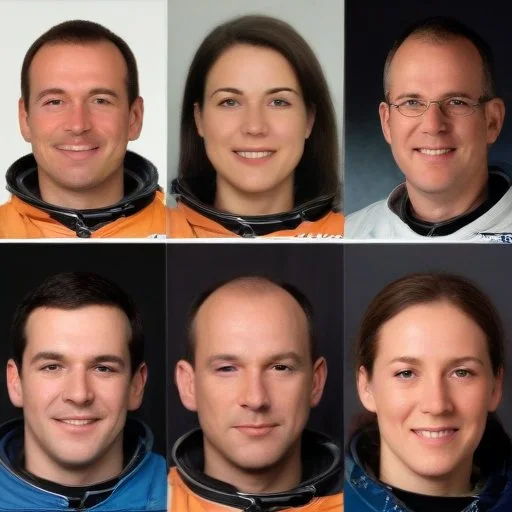
The seven astronauts who lost their lives in the Columbia tragedy were an inspiration to millions. Each had their own unique story and contribution to the mission:
- Commander Rick Husband: A veteran of two previous spaceflights, Husband was an experienced astronaut and leader.
- Pilot William C. McCool: A former naval aviator, McCool was on his first spaceflight.
- Michael P. Anderson: A physicist and astronaut, Anderson was conducting research on the effects of microgravity.
- Ilan Ramon: The first Israeli astronaut, Ramon was a hero in his native country and a symbol of international cooperation.
- Kalpana Chawla: An Indian-American astronaut, Chawla was a pioneer for women in space exploration.
- David M. Brown: A former flight surgeon, Brown was on his first spaceflight.
- Laurel Clark: A physician and astronaut, Clark was conducting research on the effects of space travel on the human body.
Lessons Learned: The aftermath of the Tragedy
The Columbia disaster led to a 29-month hiatus in shuttle flights, as the space community reevaluated its safety protocols and procedures. The incident highlighted the importance of vigilance and attention to detail in the pursuit of space exploration. It also led to the development of new safety measures, including enhanced inspections and improved communication protocols.
A Lasting Legacy
The sacrifice of the STS-107 crew will never be forgotten. Their bravery and dedication to the pursuit of knowledge have inspired generations of scientists, engineers, and explorers. As we continue to push the boundaries of space exploration, we remember the heroes of Columbia and vow to learn from their sacrifice.
Deep Historical Exploration
The Road to STS-107: A History of Space Shuttle Development
The Space Shuttle program was a culmination of decades of research and development in space exploration. The concept of a reusable spacecraft was first proposed in the 1960s, but it wasn't until the 1970s that NASA began actively pursuing the development of a space shuttle.
The Enterprise, a prototype space shuttle, was built in 1977, and subsequent test flights validated the concept. The first operational space shuttle, Columbia, was launched in 1981, marking a new era in space exploration.
Over the years, the space shuttle program underwent numerous upgrades and modifications, including the addition of new spacecraft, such as Challenger and Discovery. The program's success was marked by numerous milestones, including the deployment of the Hubble Space Telescope and the construction of the International Space Station.
Character Analysis
Rick Husband: A Commander's Legacy
Rick Husband was a decorated astronaut and commander of the STS-107 mission. Born in 1957, Husband earned a degree in mechanical engineering from Texas Tech University and later served as a pilot in the U.S. Air Force.
Husband was selected as an astronaut candidate in 1994 and flew on two previous space missions, STS-96 and STS-107. He was known for his exceptional leadership skills and was respected by his colleagues for his calm and steady demeanor under pressure.
Husband's legacy extends beyond his contributions to the space program. He was a devoted husband and father of two, and his family continues to be involved in space-related charitable activities.
Detailed Cultural Impact Report
The Cultural Impact of the Columbia Disaster
The Columbia disaster had a profound impact on popular culture, with many artists and musicians paying tribute to the crew and their sacrifice. The event was referenced in numerous films, TV shows, and songs, cementing its place in the collective consciousness of the American public.
In the aftermath of the tragedy, there was an outpouring of support from around the world, with many countries offering condolences and assistance to the United States. The event served as a reminder of the risks involved in space exploration and the importance of international cooperation in pursuit of scientific knowledge.
Analysis of Technological Impact
The Technological Legacy of STS-107
The STS-107 mission was a testament to the incredible technical achievements of the space program. The crew conducted numerous scientific experiments, including the deployment of the FREESTAR (Fast Reaction Experiments Enabling Science Technology Applications and Research) payload, which was designed to study the Earth's magnetic field.
The mission also marked the first use of the Spacehab Double Module, a pressurized research facility that provided additional space for scientific experiments. The data collected during the mission has contributed significantly to our understanding of the Earth's atmosphere and the effects of microgravity on biological systems.
Study of Educational Effects
Lessons Learned: Educational Applications of the Columbia Disaster
The Columbia disaster has been incorporated into educational curricula around the world, serving as a teaching tool for topics such as physics, engineering, and risk management. The event has also been used to illustrate the importance of safety protocols and contingency planning in high-risk environments.
Many educational institutions have developed interactive simulations and case studies based on the Columbia disaster, allowing students to explore the technical and human factors that contributed to the tragedy. These resources have proven invaluable in promoting critical thinking and problem-solving skills among students.


