


On the fateful day of February 22, 1986, the streets of Manila witnessed a historic phenomenon, as millions of Filipinos converged to demand an end to President Ferdinand Marcos' authoritarian regime, marking the dawn of the People Power Revolution. This four-day peaceful protest, led by Corazon Aquino and Cardinal Jaime Sin, would forever etch its place in the annals of history, culminating in Marcos' ousting and Aquino's ascendance to the presidency.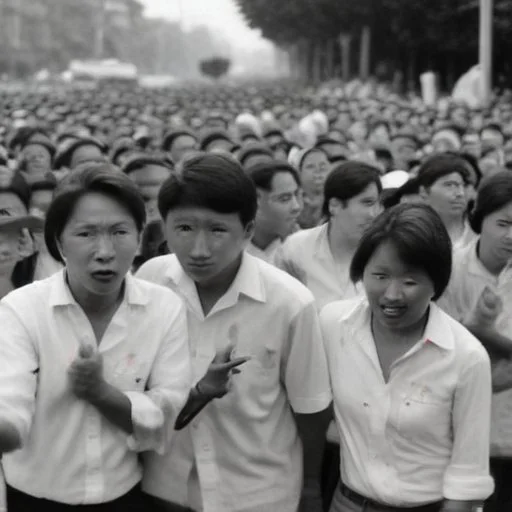
By the mid-1980s, Marcos' regime had been entrenched in power for over two decades, marked by widespread corruption, human rights abuses, and economic stagnation. The assassination of Benigno "Ninoy" Aquino Jr., a vocal critic of Marcos, in 1983, had galvanized the opposition, paving the way for his widow, Corazon, to emerge as a unifying force against the regime.
February 22, 1986: The snap election, called by Marcos, sparks widespread fraud and electoral irregularities, prompting the opposition to contest the results.
February 23, 1986: Corazon Aquino, backed by Cardinal Sin, calls for a peaceful protest, urging Filipinos to take to the streets and demand Marcos' resignation.
February 25, 1986: The military, under Marcos' command, attempts to disperse the crowd, but the protesters, comprising nuns, priests, and civilians, form a human barricade, resisting the forces with prayer and song.
February 26, 1986: As international pressure mounts, Marcos flees the country, and Corazon Aquino is sworn in as the new president of the Philippines.
The People Power Revolution marked a watershed moment in the Philippines' transition to democracy, as it:
The People Power Revolution not only brought an end to Marcos' regime but also awakened a nation's collective consciousness, as:
The People Power Revolution serves as a testament to the power of non-violent resistance, inspiring movements worldwide. Its legacy can be seen in the Philippines' continued struggle for democracy, human rights, and social justice, as well as its influence on global events, such as the Arab Spring and the Tiananmen Square protests.
As the world looks back on this pivotal moment, it is reminded that even in the darkest of times, the human spirit can ignite a spark of freedom, illuminating the path towards a brighter, more just future.
Cardinal Jaime Sin: The Unlikely Revolutionary
Behind the scenes of the People Power Revolution, Cardinal Jaime Sin played a crucial role in mobilizing the masses and providing spiritual guidance. As the Archbishop of Manila, Sin was known for his outspoken criticism of Marcos' regime, often using his weekly radio broadcasts to denounce human rights abuses and corruption.
Sin's influence extended beyond the Catholic Church, as he was a respected figure in Filipino society. His leadership helped to galvanize the opposition, providing a sense of moral authority to the movement.

The Economic Legacy of the People Power Revolution
The Marcos regime's economic mismanagement had left the Philippines in a state of stagnation, with high levels of poverty and unemployment. The People Power Revolution marked a turning point, as the new government implemented reforms aimed at promoting economic growth and transparency.
The revolution paved the way for the Philippines' integration into the global economy, with the country experiencing rapid growth in the 1990s. The revolution also led to the establishment of institutions such as the Presidential Commission on Good Government, which aimed to recover the Marcos regime's ill-gotten wealth.
The Cultural Awakening of the People Power Revolution
The People Power Revolution was more than just a political event – it was a cultural phenomenon that awakened a nation's collective consciousness. The revolution's focus on non-violent resistance and people power inspired a new generation of Filipinos to become involved in politics and social activism.
The revolution also led to a resurgence in Filipino nationalism, as the country began to assert its identity and independence from foreign influence. The event inspired a new wave of Filipino artists, writers, and musicians, who began to express themselves through various forms of media.

The Political Fallout of the People Power Revolution
The People Power Revolution marked a significant shift in the Philippines' political landscape, as the country transitioned from authoritarian rule to democracy. The event paved the way for the restoration of democratic institutions, including a new constitution and a more independent judiciary.
The revolution also led to the emergence of new political parties and leaders, who began to challenge the traditional elite. The event inspired a new generation of Filipino politicians, who were committed to promoting democracy and human rights.
Reinterpreting the People Power Revolution: A Historiographical Perspective
Historians have long debated the significance of the People Power Revolution, with some viewing it as a triumph of democracy and others as a conservative reaction against Marcos' regime. Recent scholarship has sought to reinterpret the event, highlighting the role of women, workers, and other marginalized groups in the revolution.
Revisionist historians have also argued that the revolution was not a spontaneous event, but rather the culmination of years of organizing and mobilization by various social movements. This new perspective highlights the complexity and multifaceted nature of the People Power Revolution.