


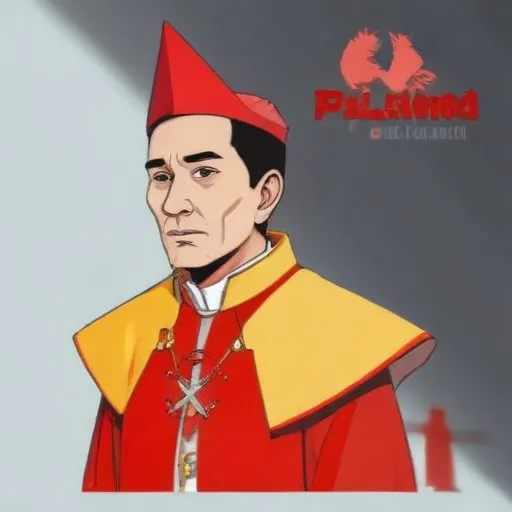
A prominent Catholic leader who played a key role in the Philippines' transition to democracy, known for his strong stance against corruption and human rights abuses.
Born on August 31, 1928, in New Washington, Aklan, Sin was the 14th of 16 children to Juan Sin, a merchant of Chinese descent, and Mxima Lachica, an ethnic Aklanon. Despite being frail and asthmatic, Sin's determination and strong sense of faith led him to pursue a life of priesthood.
Ordained on April 3, 1954, Sin served as the first rector of St. Pius X Seminary in Lawaan Hills, Roxas City, Capiz, from 1957 to 1967. He was appointed Domestic Prelate in 1960, and later, auxiliary bishop of Jaro in 1967.
Sin's appointment as Coadjutor Archbishop of Jaro in 1972 marked the beginning of his prominent role in the Catholic Church. He became Archbishop of Jaro in 1972, and his influence extended beyond the ecclesiastical sphere as he became a respected voice for social justice and human rights.
In 1986, Sin's leadership played a crucial role in the historic People Power Revolution. He rallied the Filipino people, calling for them to take a stand against Marcos' authoritarian regime. His message of hope and freedom resonated with the nation, and on February 25, 1986, the Marcos regime was toppled, paving the way for Corazon Aquino's presidency.
Sin's unwavering commitment to democracy and human rights earned him both national and international recognition. He was a key figure in the 2001 EDSA Revolution, which led to the ousting of President Joseph Estrada and the installation of Gloria Macapagal Arroyo as president.
Throughout his life, Sin received numerous awards and honors, including the Order of Sikatuna, the highest diplomatic honor in the Philippines, and the Ramon Magsaysay Award for Peace and International Understanding.
Sin's philosophical stance was rooted in his unwavering commitment to social justice, human rights, and democracy. He believed in the power of the people to effect change and in the role of the Church as a catalyst for social transformation.
His leadership style was marked by his humility, compassion, and courage in the face of adversity. Sin's quotes, such as "The Church should not be a silent observer in the face of oppression," continue to inspire generations of leaders and reformers.
Sin's legacy extends beyond the Philippines. His courageous stance against oppression and his commitment to democracy and human rights have inspired movements and leaders around the world.
Today, Sin's name is synonymous with courage, conviction, and leadership. His life's work serves as a testament to the power of faith, hope, and the human spirit to bring about positive change.
93 Years Old
First female president of the Philippines, led the People Power Revolution, and restored democracy after decades of authoritarian rule.
Born in 1917
A Filipino leader who ruled with an iron fist, implementing martial law and amassing wealth, leaving a legacy of controversy and economic turmoil.
96 Years Old
The 10th First Lady of the Philippines, known for her extravagant lifestyle and shoe collection, which symbolized the excesses of her husband's corrupt regime. She was a powerful figure in her own right, with a strong influence on politics and fashion.
93 Years Old
A Filipino journalist and politician who led the opposition against Ferdinand Marcos' regime, known for his courageous fight for democracy and human rights. Assassinated in 1983, his death sparked the People Power Revolution.
93 Years Old
A Filipino cardinal who served as the Archbishop of Manila and was a key figure in the country's Catholic Church, known for his advocacy on social justice and human rights issues.
68 Years Old
The Prefect of the Congregation for the Evangelization of Peoples, a high-ranking Vatican official, is known for his progressive stance on social issues and his efforts to promote Catholicism in Asia.
