


The Battle of Sekigahara, fought on October 21, 1600, is renowned as the most pivotal battle in Japanese history, marking the dawn of the Tokugawa shogunate that would govern the nation for over 250 years. This epic clash of samurai armies catapulted Tokugawa Ieyasu to the pinnacle of power, earning him the title of shogun and forever changing the course of Japan's destiny.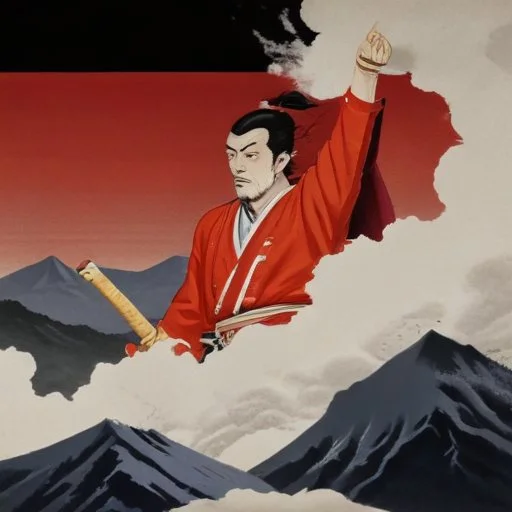
In the late 16th century, Japan was plagued by civil wars and factional strife. The powerful daimyos (feudal lords) vied for control, while the once-mighty Toyotomi Hideyoshi, the "Napoleon of Japan," lay dying. Amidst this chaos, Tokugawa Ieyasu, a cunning and ambitious warlord, began to forge alliances and build a formidable army.
Ishida Mitsunari, a brilliant strategist and loyalist to the Toyotomi regime, rallied the western daimyos against Ieyasu's growing threat. Meanwhile, Mori Terumoto, a powerful daimyo from the west, maintained a fragile alliance with Ishida, bound by their shared distrust of Ieyasu.
The armies of Ieyasu and Ishida clashed on the misty mountainside of Sekigahara, a terrain that favored Ieyasu's superior cavalry. As the battle raged on, Ieyasu's clever tactics and cunning maneuvers exploited the weaknesses of his opponents. The tide of the battle turned decisively in his favor with the timely defection of Kobayakawa Hideaki, a key general from the western army.
The Battle of Sekigahara proved a crushing defeat for the western clans, paving the way for Ieyasu's ascension to the shogunate. This marked the beginning of the Tokugawa era, which would shape Japanese politics, culture, and society for centuries to come.
According to legend, Ieyasu's victory was secured when he received a message from Kobayakawa Hideaki, signaling his intention to defect. Ieyasu, ever the pragmatist, reportedly exclaimed, "The battle is won!" before the battle had even ended.
The Battle of Sekigahara serves as a testament to the power of strategic thinking, perseverance, and adaptation. Ieyasu's willingness to form alliances, exploit his opponents' weaknesses, and seize opportunities ultimately led to his triumph. His legacy continues to inspire generations, reminding us that even in the face of uncertainty, courage and determination can shape the course of history.
As the great Japanese proverb goes, "Fall down seven times, stand up eight." The Battle of Sekigahara stands as a monument to this unyielding spirit, a beacon of hope that continues to illuminate the path of those who dare to dream big.
Ieyasu was born in 1543 in the Mikawa Province, Japan. From a young age, he was known for his cunning and ambition. Throughout his life, he formed and broke alliances, always keeping his eyes on the prize of power. His mastery of strategy and tactics ultimately led to his victory at Sekigahara.
Despite his ruthless nature, Ieyasu was also a charismatic leader who inspired loyalty in his followers. He was a skilled diplomat and knew how to manipulate his opponents to achieve his goals.

1598: Toyotomi Hideyoshi dies, leaving a power vacuum in Japan.
1600: Tokugawa Ieyasu forms an alliance with the eastern daimyos, preparing for battle against the western clans.
October 21, 1600: The Battle of Sekigahara takes place, resulting in Ieyasu's decisive victory.
1603: Ieyasu is appointed shogun by the emperor, marking the beginning of the Tokugawa era.
The Battle of Sekigahara had a profound impact on Japanese culture, shaping the country's identity and values for centuries to come.
The Tokugawa era saw a flourishing of art, literature, and philosophy, as well as the development of a unique Japanese aesthetic.
The battle also influenced Japanese spirituality, with the rise of Zen Buddhism and its emphasis on discipline and self-control.

The Battle of Sekigahara marked a significant shift in Japan's political landscape, consolidating power among the daimyos and establishing the Tokugawa shogunate as the ruling authority.
The Tokugawa regime would go on to implement a system of centralized governance, strictly controlling the daimyos and maintaining peace and stability for over two centuries.
The battle also had far-reaching implications for Japan's foreign policy, with the Tokugawa shogunate adopting a policy of isolationism that would last until the 19th century.
The Battle of Sekigahara took place at a time of great upheaval in East Asia, with the Chinese Ming dynasty in decline and the Korean peninsula embroiled in conflict.
In this context, Ieyasu's victory at Sekigahara can be seen as a key moment in Japan's rise to prominence as a regional power.
The Tokugawa shogunate would go on to establish itself as a major player in East Asian geopolitics, engaging in trade and diplomacy with its neighbors while maintaining a policy of isolationism.