


The Treaty of Tordesillas, a landmark agreement between Spain and Portugal, was ratified by Spain on July 2, 1494, reshaping the course of history by dividing the New World, Africa, and Asia between the two powers. This pivotal treaty, brokered by Pope Alexander VI, drew an imaginary line in the Atlantic, granting Spain the right to colonize most of the Americas, while Portugal claimed Brazil and the eastern part of South America.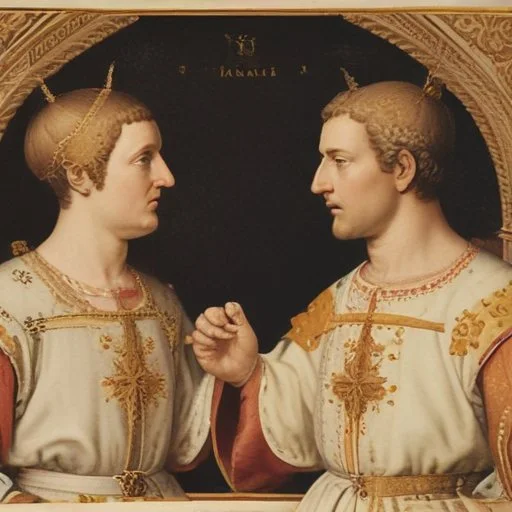
The Treaty of Tordesillas was the culmination of a complex web of interests, fueled by the desire for exploration, colonization, and resource extraction. The Spanish monarchs, Ferdinand II of Aragon and Isabella I of Castile, sought to expand their empire and spread Christianity, while Portugal aimed to establish a foothold in the lucrative spice trade.
The ratification of the Treaty of Tordesillas was made possible by the vision and diplomatic prowess of several key figures. Pope Alexander VI, a shrewd politician and strategist, played a crucial role in brokering the treaty, leveraging his spiritual authority to mediate between the two nations.
The Treaty of Tordesillas had far-reaching implications for the global political landscape. The division of the New World, Africa, and Asia between Spain and Portugal paved the way for European conquest and colonization, forever altering the course of history.
The treaty also had significant cultural and social implications, as it facilitated the transfer of people, goods, and ideas between the Old and New Worlds. The exchange of cultures, though often marked by conflict and exploitation, also led to the creation of new cultural forms and hybrid identities.
The Treaty of Tordesillas has been the subject of controversy and debate, with some critics arguing that it legitimized the brutal colonization and exploitation of non-European peoples. Others have questioned the treaty's moral and ethical implications, pointing to the destruction of indigenous cultures and the transatlantic slave trade.
Despite these criticisms, the Treaty of Tordesillas remains a significant milestone in world history, shaping the course of globalization and global politics.
The Treaty of Tordesillas has had a lasting impact on global politics, economy, and culture. The division of the New World, Africa, and Asia between Spain and Portugal paved the way for European domination, shaping the course of colonialism, imperialism, and globalization.
The treaty has also left a cultural legacy, as the exchange of cultures and ideas facilitated by the treaty has contributed to the rich cultural diversity of the Americas, Africa, and Asia.
In conclusion, the Treaty of Tordesillas was a pivotal moment in world history, shaping the course of globalization, colonialism, and cultural exchange. Its legacy continues to resonate today, serving as a reminder of the complex and often fraught history of global politics and cultural encounter.
The Treaty of Tordesillas was not the first agreement between Spain and Portugal to divide the New World. In 1479, the Treaty of Alcáçovas established a temporary truce between the two nations, granting Spain the right to colonize the Canary Islands and Portugal the right to explore and colonize Africa. However, this treaty was soon rendered obsolete by the discovery of the New World, prompting the need for a new agreement.
The negotiations leading up to the Treaty of Tordesillas were marked by tension and compromise. Portugal initially demanded a significant portion of the New World, citing its exploratory achievements and maritime expertise. Spain, on the other hand, insisted on a larger share of the territories, arguing that it had provided significant financial and military support to Christopher Columbus's voyages.
The final agreement was brokered by Pope Alexander VI, who used his spiritual authority to mediate between the two nations. The Pope's role was crucial in establishing the treaty, as he helped to overcome the significant differences between Spain and Portugal.

Ferdinand II of Aragon: The Master Diplomat
Ferdinand II of Aragon was a skilled diplomat and strategist who played a key role in negotiating the Treaty of Tordesillas. As the King of Aragon and Sicily, Ferdinand was well-versed in the art of diplomacy, having navigated complex web of alliances and rivalries in Europe.
Ferdinand's diplomatic prowess was instrumental in securing a favorable agreement for Spain. He successfully exploited the rivalry between Portugal and the Holy Roman Empire, using it to extract concessions from Portugal and secure a larger share of the New World for Spain.
The Treaty of Tordesillas had a profound impact on the cultural landscape of the Americas, Africa, and Asia. The division of the New World between Spain and Portugal facilitated the transfer of people, goods, and ideas between the Old and New Worlds, leading to the creation of new cultural forms and hybrid identities.
The treaty also led to the exchange of crops, diseases, and technologies between the Old and New Worlds, resulting in significant demographic and environmental changes. The introduction of new crops, such as maize and potatoes, transformed the dietary habits of indigenous populations, while the introduction of European diseases decimated native populations.

The Treaty of Tordesillas was not an isolated event, but rather part of a broader geopolitical context. The late 15th century saw a surge in European exploration and colonization, driven by the desire for resources, trade routes, and strategic territories.
The treaty was also influenced by the Ottoman Empire's expansion into Eastern Europe, which prompted European powers to seek new trade routes and territories. The Treaty of Tordesillas was thus part of a larger struggle for global influence and power.
The Treaty of Tordesillas had significant economic implications, shaping the course of global trade and commerce. The division of the New World between Spain and Portugal created new trade routes and opportunities for resource extraction, leading to a surge in economic growth and development.
The treaty also led to the establishment of new trade monopolies, such as the Spanish and Portuguese East India Companies, which played a crucial role in shaping global commerce. The exchange of goods, services, and ideas facilitated by the treaty helped to establish a global economy, with Europe at its center.