


Tsar Paul I of Russia is known for his shocking and brutal assassination, which took place on the night of March 23, 1801. He was struck with a sword, strangled, and finally trampled to death inside his bedroom at St. Michaels Castle, marking the end of his short and tumultuous reign.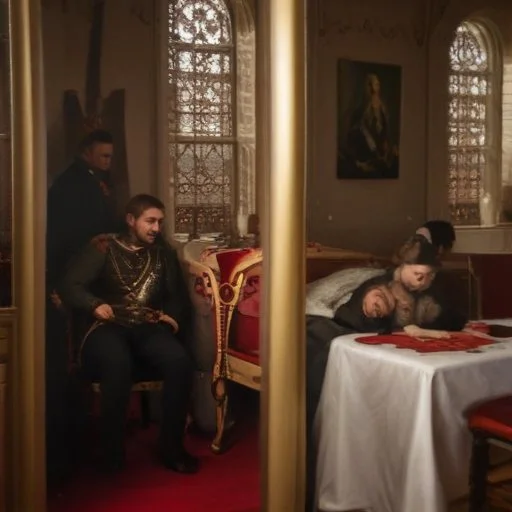
Tsar Paul I's reign was marked by erratic and cruel behavior, earning him the fear and resentment of his people. His policies were often contradictory and impulsive, causing widespread discontent among the nobility and the general population. His brutal treatment of his soldiers and his penchant for executing anyone who disagreed with him made him a hated figure in Russia.
A group of high-ranking conspirators, led by Count Nikolay Zubov, had had enough of the Tsar's tyranny and decided to take matters into their own hands. The group was comprised of nobles and military officers who had been wronged by Paul's policies and brutal behavior. They hatched a plan to overthrow and assassinate the Tsar, paving the way for a more benevolent ruler.
On the night of March 23, 1801, the conspirators put their plan into action. They snuck into Paul's bedroom in St. Michaels Castle, striking him with a sword before strangling and trampling him to death. The brutal assassination was a shocking and dramatic event that sent shockwaves throughout the Russian court.
The assassination of Tsar Paul I marked the end of his short and tumultuous reign, but it also paved the way for his son Alexander I to take the throne. Alexander would go on to become one of the most beloved and revered rulers in Russian history, implementing reforms and modernizing the country. The dramatic event cemented its place in history as one of the most infamous royal assassinations, serving as a cautionary tale for rulers who abuse their power.
Early Life and Career: Count Nikolay Zubov was born in 1763 to a noble family in Russia. He rose through the ranks of the Russian army, earning a reputation as a skilled and ambitious officer.
Zubov's disillusionment with Paul's rule began when the Tsar started to reverse the reforms implemented by his mother, Catherine the Great. Zubov, who had benefited from these reforms, saw Paul's actions as a threat to his own power and status.
Leadership of the Conspiracy: Zubov's charisma and military background made him the natural leader of the conspiracy against Paul. He recruited other disillusioned nobles and officers, forging a united front against the Tsar.

During Paul's reign, Russia was facing increasing pressure from European powers, particularly France and Austria. Napoleon's rise to power in France had created a sense of unease in Russia, and Paul's erratic behavior did little to alleviate these fears.
Russia's position in the European balance of power was precarious, and Paul's actions only served to weaken the country's position. The assassination of Paul and the ascension of Alexander I would bring a measure of stability to Russia's foreign policy.
Historians have long debated the nature of Paul's reign, with some viewing him as a well-intentioned but misguided leader, while others see him as a cruel and despotic ruler.
The revisionist school of historians has argued that Paul's policies, though brutal, were motivated by a desire to modernize and strengthen Russia. However, this view is not universally accepted, and the majority of historians view Paul's reign as a dark period in Russian history.

The assassination of Paul I has had a significant impact on Russian art and literature. The event has been immortalized in paintings, plays, and novels, often serving as a cautionary tale about the dangers of absolute power.
The Russian Romantic movement of the 19th century was particularly drawn to the story of Paul's assassination, seeing in it a symbol of the struggle for freedom and democracy.
The assassination of Paul I marked a significant shift in Russian politics, as Alexander I ascended to the throne. Alexander's early reforms aimed to consolidate power and centralize the government, marking a move away from Paul's erratic and decentralized rule.
Alexander's leadership style, characterized by pragmatism and caution, was a welcome change from Paul's impulsive decisions. The new Tsar's approach would go on to shape Russian politics for decades to come.