


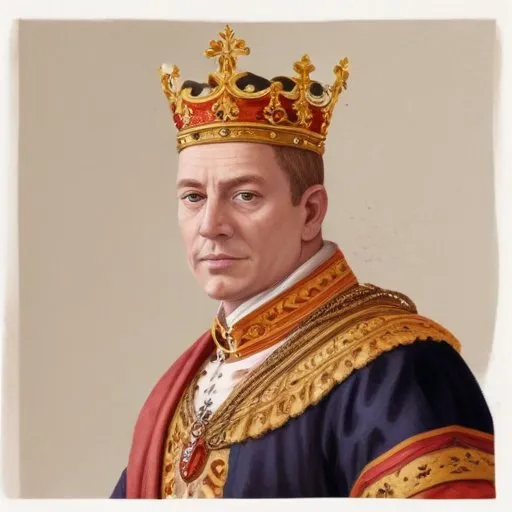
The King of Portugal who ruled briefly in 1777, known for his attempts to reform the Portuguese government and military, but was ultimately overthrown by his wife and son.
Peter III, also known as the Builder, was the King of Portugal from 1777 to 1786, co-ruling with his wife and niece, Queen Dona Maria I. He is remembered for his significant contributions to the country's infrastructure, architecture, and education, earning him the nickname "the Builder".
Born on July 5, 1717, in the Ribeira Palace in Lisbon, Portugal, Peter III was the son of King John V of Portugal and his wife Maria Ana of Austria. He was baptized on August 29 and given the name Peter Clemente Francisco José António. As the younger brother of Joseph I of Portugal, Peter's early life was marked by his close relationship with his parents and his older brother.
In 1760, Peter married his niece, Maria, Princess of Brazil, who was the heiress presumptive to the throne held by his brother Joseph I. This union made Peter the King of Portugal in right of his wife, following the birth of their first child. The couple had six children, with their eldest surviving son going on to succeed Maria as John VI of Portugal in 1816.
During his reign, Peter III focused on developing Portugal's infrastructure, architecture, and education. He sponsored the construction of numerous buildings, roads, and bridges, earning him the nickname "the Builder". Peter also defended the high nobility of Portugal and supported the petitions of those accused in the Távora affair, seeking the restitution of their confiscated properties.
Peter III was moderately friendly towards the Jesuits, who had been banished from Portugal and its overseas empire in 1759. Having received part of his early education from the Jesuits, Peter's affection for them was evident. However, his efforts to support the Jesuits were ultimately unsuccessful, as Pope Clement XIV ordered their suppression across Europe in 1773.
Peter III's reign marked a significant period in Portuguese history, characterized by infrastructural development, architectural innovations, and educational reforms. His legacy as the "Builder King" has endured, with many of hisprojects continuing to shape the country's landscape. Despite facing challenges during his reign, Peter III remains an important figure in Portuguese history, remembered for his contributions to the country's growth and progress.
Born in 1455
King of Portugal from 1481 to 1495, known for his centralizing policies, establishing a strong monarchy, and sponsoring explorers like Bartolomeu Dias and Vasco da Gama.
Born in 1825
The last emperor of Brazil, ruling from 1831 to 1889, known for modernizing and stabilizing the country, abolishing slavery, and promoting education and infrastructure development.
