


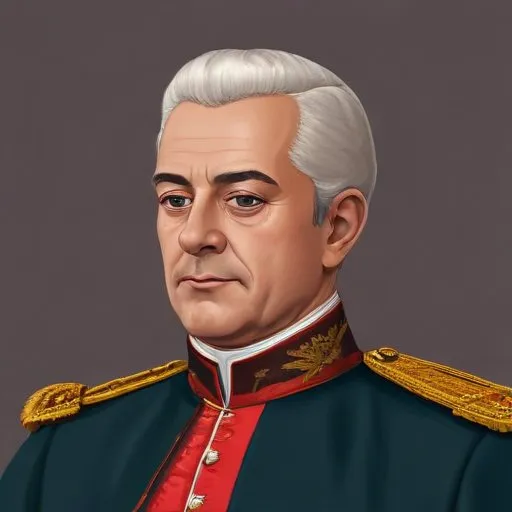
The monarch who ruled Portugal during a period of significant cultural and economic growth, and is remembered for his efforts to rebuild Lisbon after a devastating earthquake. He also centralized power and reduced the influence of the nobility.
Joseph I of Portugal, also known as the Reformer, ruled Portugal from 1750 until his death in 1777 and is remembered for his significant contributions to the country's development, particularly in the wake of the devastating Lisbon earthquake in 1755. During his reign, he was devoted to hunting and the opera, and his government was largely controlled by Sebastião José de Carvalho e Melo, the 1st Marquis of Pombal.
Joseph was born on June 6, 1714, as the third child and second son of King John V of Portugal and his wife Maria Anna of Austria. He became the heir apparent at a young age following the death of his older brother, Pedro, Prince of Brazil, and held the titles of Prince of Brazil and Duke of Braganza.
In 1729, Joseph married Infanta Mariana Victoria of Spain, daughter of King Philip V of Spain and Elisabeth Farnese. The couple had four daughters: Maria, Mariana, Doroteia, and Benedita. Joseph's marriage to Mariana Victoria strengthened the alliance between Portugal and Spain, but ultimately, it was his daughters who would play a significant role in shaping the future of Portugal.
Joseph's reign was marked by significant reforms, particularly in the aftermath of the Lisbon earthquake. The earthquake led to the rebuilding of Lisbon, and the Marquis of Pombal played a crucial role in consolidating power and implementing reforms. Joseph's government implemented various measures, including the establishment of a new palace in Lisbon, the creation of a committee to oversee the rebuilding of the city, and the reorganization of the government.
Joseph's reign had a lasting impact on Portugal, particularly in terms of reconstruction and reforms following the Lisbon earthquake. His government's efforts led to the modernization of Lisbon and the establishment of a more efficient government. Additionally, Joseph's daughters played a significant role in shaping the future of Portugal, with Maria going on to become one of the most beloved queens in Portuguese history.
Overall, Joseph I of Portugal's reign was marked by significant reforms, personal milestones, and a lasting impact on the country's development. His legacy continues to be felt in modern-day Portugal, and his contributions to the country's history remain an important part of its rich cultural heritage.
Born in 1536
Led the Catholic Church during a tumultuous period, issuing papal bulls and playing a key role in the Counter-Reformation. He's also famous for his coffee habit, being the first Pope to try and approve of it.
