


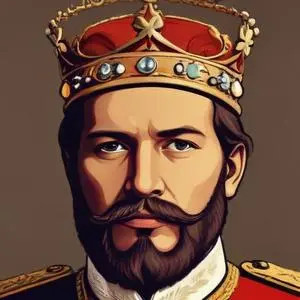
The last emperor of Brazil, ruling from 1831 to 1889, known for modernizing and stabilizing the country, abolishing slavery, and promoting education and infrastructure development.
Pedro II of Brazil, affectionately known as "The Magnanimous," was the second and last monarch of the Empire of Brazil, reigning for an impressive 58 years. He is renowned for transforming Brazil into an emerging power in the international arena, promoting political stability, freedom of speech, and respect for civil rights.
Born on December 2, 1825, in Rio de Janeiro, Pedro II was the seventh child of Emperor Dom Pedro I of Brazil and Empress Dona Maria Leopoldina. Following his father's abrupt abdication and departure to Europe in 1831, the five-year-old Pedro II was left to assume the throne, leading to a lonely and intense childhood focused on studying and preparing for his future role as monarch.
Despite inheriting an empire on the brink of disintegration, Pedro II successfully steered Brazil towards economic growth, military victories, and cultural flourishing. He played a pivotal role in:
Pedro II earned the respect and admiration of prominent figures such as Charles Darwin, Victor Hugo, Friedrich Nietzsche, and Richard Wagner, among others. He maintained close relationships with notable intellectuals and artists, solidifying Brazil's position in the international community.
In a sudden coup d'état on November 15, 1889, Pedro II was deposed, marking the end of the Empire of Brazil and the beginning of the Republic of Brazil. Despite this unexpected turn of events, Pedro II's legacy as a champion of freedom, education, and progress continues to inspire Brazilians to this day.
Pedro II was known for his strong sense of duty and devotion towards his country and people. He once said, "I don't want to be an emperor, I want to be a human being." This sentiment reflects his commitment to serving his nation and his people.
Pedro II's reforms and achievements have had a lasting impact on modern Brazilian society. His emphasis on education, cultural development, and social progress continues to influence the country's growth and development.
Did you know that Pedro II was a prolific writer and poet? He published several books and articles under various pseudonyms, showcasing his love for literature and learning.
In conclusion, Pedro II of Brazil stands as a testament to the power of dedication, hard work, and visionary leadership. His remarkable achievements continue to inspire generations, solidifying his place as one of the most beloved and respected figures in Brazilian history.
Born in 1767
A pioneer of classical liberalism, he advocated for individual rights, limited government, and constitutional monarchy, influencing modern democratic thought.
Born in 1827
Brazil's first president, a military leader who oversaw the country's transition from empire to republic, known for his role in shaping the nation's early years.
Born in 1841
A Brazilian lawyer and politician who served as the country's third president, known for his efforts to modernize and stabilize the young nation during a tumultuous period. He's remembered for his strong leadership and commitment to democracy.
