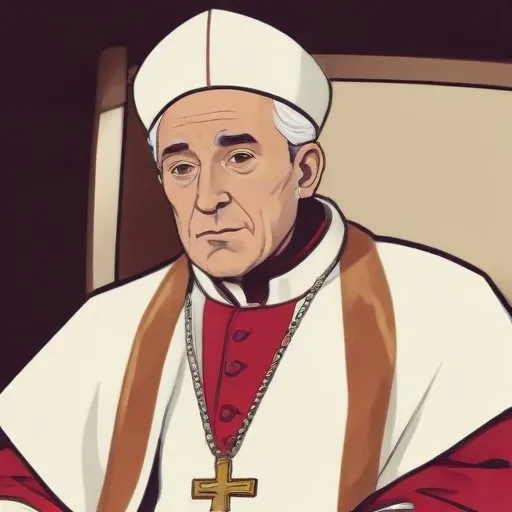
Pope Clement XIV: The Franciscan Friar Who Shaped the Catholic Church
A Life of Suppression and Legacy
Pope Clement XIV, born Giovanni Vincenzo Antonio Ganganelli, is perhaps best known for his monumental decision to suppress the Society of Jesus, a move that would have far-reaching consequences for the Catholic Church. Elected as the Pope in 1769, Clement XIV's papacy was marked by a commitment to reform and a desire to reassert the authority of the Church.
An Early Life of Devotion
Born on October 31, 1705, in Santarcangelo di Romagna, Clement XIV was the second child of Lorenzo Ganganelli and Angela Serafina Maria Mazza. His early life was marked by a deep devotion to his faith, and he received his education from the Society of Jesus at Rimini, later studying with the Piarists of Urbino. In 1723, he entered the Order of Friars Minor Conventual, taking the name Lorenzo Francesco.
A Rise to Prominence
Clement XIV's intellectual prowess and theological expertise earned him recognition within the Church. He was ordained as a priest and went on to teach philosophy and theology in various cities, including Ascoli, Bologna, and Milan. His reputation as a scholar and theologian led to his election as the Definitor General of the Order in 1741.
The Suppression of the Society of Jesus
In 1773, Clement XIV issued the papal brief
Dominus ac Redemptor, suppressing the Society of Jesus. This decision was met with both praise and criticism, with some hailing it as a necessary reform and others lamenting the loss of a revered institution. The move would have significant consequences for the Church, leading to the exile of many Jesuits and the seizure of their properties.
A Legacy of Controversy and Reform
Despite the controversy surrounding his decision, Clement XIV's papacy was marked by a commitment to reform and renewal. He worked tirelessly to promote the interests of the Church, supporting the growth of Catholic education and promoting the role of the laity in Church affairs.
Personal Milestones and Key Life Events
- 1705: Born in Santarcangelo di Romagna on October 31st
- 1723: Entered the Order of Friars Minor Conventual, taking the name Lorenzo Francesco
- 1741: Elected as the Definitor General of the Order
- 1758: Appointed by Pope Benedict XIV to investigate the issue of the traditional blood libel
- 1769: Elected as Pope Clement XIV
- 1773: Issued the papal brief Dominus ac Redemptor, suppressing the Society of Jesus
- 1774: Died on September 22nd
A Lasting Impact
Pope Clement XIV's legacy is complex and multifaceted, marked by both controversy and reform. While his decision to suppress the Society of Jesus remains a subject of debate, his commitment to the growth and renewal of the Catholic Church is undeniable. As the most recent pope to take the pontifical name of Clement, his impact on the Church continues to be felt to this day.
FAQ
Who was Pope Clement XIV?
Pope Clement XIV was the Pope of the Catholic Church from 1769 to 1774. He is best known for his suppression of the Jesuit Order.
Why did Pope Clement XIV suppress the Jesuit Order?
Clement XIV suppressed the Jesuit Order due to its growing power and influence, as well as accusations of corruption and heresy. He issued the papal brief Dominus ac Redemptor in 1773 to dissolve the order.
What were Pope Clement XIVs views on the Enlightenment?
Clement XIV was critical of the Enlightenment and its emphasis on reason and individualism, which he saw as threatening the authority of the Church.
Who succeeded Pope Clement XIV as Pope?
Pope Pius VI succeeded Clement XIV as Pope, and he reversed many of Clements policies, including the suppression of the Jesuit Order.
What is Pope Clement XIVs legacy in the Catholic Church?
Clement XIVs legacy is complex, but he is often remembered as a strong opponent of the Enlightenment and a defender of traditional Catholicism.