


The United States' imposition of a total embargo on all Cuban imports and exports in 1962 marked a significant escalation in the Cold War, as the country took a firm stance against the spread of communism in the Western Hemisphere. This bold move, orchestrated by President John F. Kennedy, responded to the failed Bay of Pigs invasion and Cuba's increasing alignment with the Soviet Union.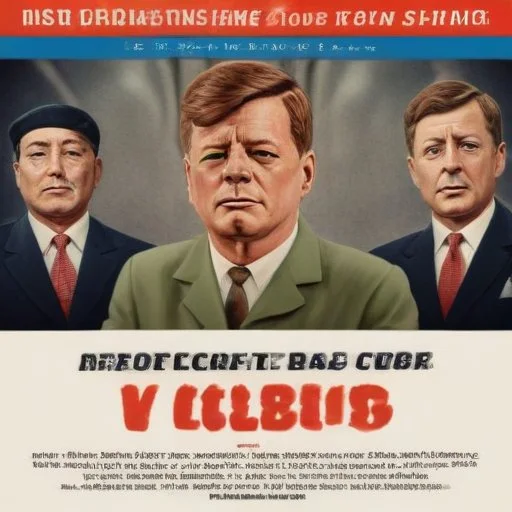
In the aftermath of the Cuban Revolution, led by Fidel Castro, the island nation began to shift towards communism. The United States, fearing the spread of communism in its backyard, responded with economic sanctions and diplomatic pressure. However, these measures failed to deter Castro's regime, which turned to the Soviet Union for support.
President John F. Kennedy, determined to counter communist influence in the Western Hemisphere, played a crucial role in imposing the embargo. Alongside Kennedy, other key figures involved included:
The embargo had far-reaching consequences, not only for Cuba but also for the United States and its allies:
The embargo reinforced the ideological divisions between the United States and Cuba, solidifying their respective roles as champions of capitalism and communism:
Debate surrounding the embargo's effectiveness and morality continues to this day, with some arguing that it has only served to strengthen Castro's regime:
The embargo has left an indelible mark on US-Cuba relations, shaping the trajectory of events in the decades to come:
The United States' ban on all Cuban imports and exports in 1962 remains a significant chapter in the Cold War narrative, a testament to the ideological divisions that continue to shape our world.
Fidel Castro: The Charismatic Leader
Fidel Castro, the Cuban Prime Minister, was a charismatic leader who played a crucial role in shaping the country's response to the embargo. With his powerful oratory skills and unwavering commitment to socialism, Castro rallied the Cuban people behind his government's anti-imperialist stance.
Castro's rise to power was marked by a series of populist policies, including the nationalization of American assets and the redistribution of land to peasants. His leadership style was characterized by a mix of authoritarianism and charisma, which helped him maintain a tight grip on power.
Despite being a divisive figure, Castro remains an iconic figure in modern Cuban history, symbolizing the country's resistance to American imperialism.
The Economic Fallout: A Decade of Decline
The embargo had a devastating impact on Cuba's economy, which had already been struggling to recover from the revolution. The country's sugar production, its main export, plummeted by over 50% in the first year of the embargo, leading to widespread poverty and shortages.
The embargo also had a ripple effect on the global sugar market, causing prices to soar and leading to a shortage of sugar in many countries. The international community, already critical of the embargo, began to question the effectiveness of the policy.
The embargo's economic impact was felt not only in Cuba but also in the United States, where businesses that had invested heavily in Cuba suffered significant losses.The Cultural Significance of the Embargo
The embargo had a profound impact on Cuban culture, particularly in the fields of music, art, and literature. The country's cultural institutions, once heavily influenced by American and European trends, began to develop a distinctively Cuban identity.
The embargo also led to a flourishing of socialist realism in Cuban art, with many artists using their work to express their support for the revolution and criticize American imperialism.
The embargo's cultural impact was not limited to Cuba, however, as it also influenced the development of Latin American culture as a whole.
The Embargo as a Foreign Policy Tool
The embargo marked a significant shift in American foreign policy, as the United States began to use economic sanctions as a means of exerting pressure on countries deemed to be a threat to national security.
The embargo set a precedent for future U.S. foreign policy initiatives, including the use of economic sanctions against countries such as Iran, Iraq, and North Korea.
The embargo's legacy can be seen in the continued use of economic sanctions as a tool of American foreign policy, with varying degrees of success.The Geopolitical Context of the Embargo
The embargo was imposed at a time of heightened Cold War tensions, with the Soviet Union and the United States engaged in a global struggle for influence.
The embargo was seen as a critical component of the United States' containment strategy, aimed at preventing the spread of communism in the Western Hemisphere.
The embargo's geopolitical significance was underscored by the CIA's failed Bay of Pigs invasion, which highlighted the need for more effective measures to counter Cuban-Soviet cooperation.