Mass protests sweep through Prague, Czechoslovakia
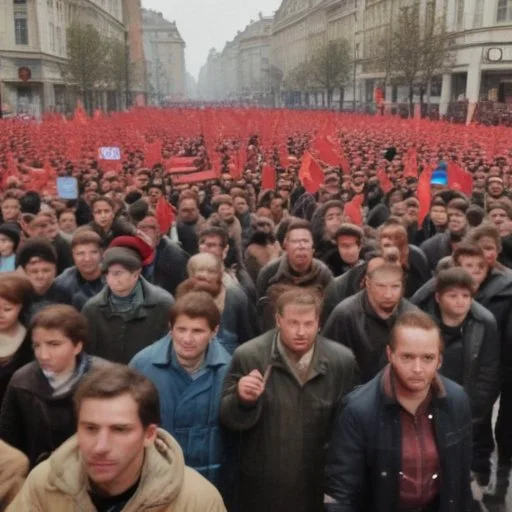
The Velvet Revolution is in full swing! Hundreds of thousands of Czechs and Slovaks have taken to the streets of Prague, demanding an end to communist rule. Just a day ago, 200,000 brave souls gathered in Wenceslas Square, and now that number has more than doubled to an estimated half-million. Chants of "Freedom!" and "Democracy!" echo through the streets as the people stand united against the Soviet-backed regime. The protest's peaceful, yet determined, atmosphere is a testament to the power of the human spirit. As the communist government teeters on the brink of collapse, one thing is clear: the Czech and Slovak people will no longer be silenced.
The Velvet Revolution: A Pivotal Moment in Czechoslovakian History
A Sea of Protesters Demanding Freedom
The Velvet Revolution, a pivotal event in modern European history, is renowned for the unprecedented mass demonstrations that swept across Prague, Czechoslovakia, in November 1989. As the number of protesters swelled from 200,000 to an estimated half a million, the streets of Wenceslas Square reverberated with chants of "Freedom" and "Democracy," marking a decisive turning point in the country's struggle against communist rule.
Historical Context: Seeds of Dissent
Following World War II, Czechoslovakia fell under the grip of Soviet-backed communism, led by the Czechoslovak Communist Party. The regime's repressive policies and censorship sparked growing discontent among the population. The 1968 Prague Spring, a brief period of liberalization, was brutally suppressed by Soviet troops, further fueling dissent. In the 1980s, the emergence of dissident groups, such as Charter 77, and the rise of reform-minded leaders, like
Alexander Dubček, laid the groundwork for the Velvet Revolution.
Key Figures: Beacons of Hope
- Václav Havel: A playwright and dissident, Havel played a crucial role in mobilizing the opposition movement. His eventual presidency symbolized the revolution's triumph.
- Alexander Dubček: A Czechoslovak politician, Dubček's attempts to reform the communist system in the 1960s inspired a generation of dissidents.
- Zdeněk Mlynář: A Czech philosopher and politician, Mlynář's involvement in the reform movement helped bridge the gap between intellectuals and activists.
Timeline of Events: A Rapid Descent into Chaos
| Date |
Event |
| November 17, 1989 |
Police brutality against student demonstrators sparks widespread outrage. |
| November 18, 1989 |
200,000 protesters gather in Wenceslas Square, with demands for democratic reforms and the resignation of the communist government. |
| November 19, 1989 |
The number of protesters swells to an estimated half a million, as the communist regime begins to crumble. |
| December 10, 1989 |
Václav Havel is released from prison, marking a symbolic victory for the revolution. |
| December 29, 1989 |
Václav Havel is elected President of Czechoslovakia, officially ending communist rule. |
Major Outcomes and Impacts: A New Era of Freedom
The Velvet Revolution brought about the dissolution of communist rule, paving the way for democratic reforms and the eventual dissolution of Czechoslovakia into the Czech Republic and Slovakia. This peaceful revolution inspired similar movements across Eastern Europe, contributing to the collapse of the Soviet Union and the end of the Cold War.
Cultural and Social Influences: A Renaissance of Creativity
The Velvet Revolution unleashed a creative explosion, as Czech and Slovak artists, writers, and musicians were finally free to express themselves without censorship. This cultural renaissance continues to shape the region's identity and inform its contemporary art scene.
Quotes and Memorable Sayings: Echoes of Defiance
- "Truth and love must prevail over lies and hatred." - Václav Havel
- "We want a government that will not be afraid of the people, but one that will be accountable to the people." - Alexander Dubček
Comparative Analysis: A Unique Blend of Peace and Determination
The Velvet Revolution's remarkable blend of peaceful protest and determination distinguishes it from other revolutionary movements. Its non-violent nature, coupled with the Czech and Slovak people's unwavering commitment to democracy, serves as a powerful model for social change.
By examining the complex tapestry of events, personalities, and influences that defined the Velvet Revolution, we gain insight into the transformative power of collective action and the enduring human desire for freedom and self-determination.
Full Cultural Impact Analysis
Cultural Renaissance: A New Era of Creative Freedom
The Velvet Revolution marked a significant turning point in Czechoslovakian cultural history. With the end of censorship, artists, writers, and musicians were finally able to express themselves freely, leading to a creative explosion that continues to shape the region's identity. The revolution also brought about a renewed interest in Czech and Slovak cultural heritage, as people sought to reconnect with their national identity after decades of communist rule.
The era saw a surge in alternative rock music, with bands like Plastic People of the Universe and DG 307 becoming symbols of resistance against communist oppression. Literature also flourished, with writers like Václav Havel, Ivan Klíma, and Milan Kundera gaining international recognition.

Thorough Character Sketch
The Unlikely Hero: Václav Havel's Rise to Prominence
Václav Havel's transformation from a dissident playwright to the President of Czechoslovakia is a testament to the power of grassroots movements. Born in 1936, Havel was raised in a family that valued education and cultural heritage. His involvement in the Czech dissident movement began in the 1970s, when he co-founded the Charter 77 movement, a group that advocated for human rights and democratic reforms.
Havel's playwrighting career was marked by subtle critiques of communist rule, earning him frequent harassment and imprisonment by the regime. Despite these obstacles, he continued to write, producing works like The Power of the Powerless, which became a manifesto for the Velvet Revolution.
Rich Political Insight
Political Reforms: The Birth of a New Czechoslovakia
The Velvet Revolution's immediate aftermath saw a flurry of political reforms that transformed the country's governance structure. The Communist Party's grip on power was loosened, and a new, democratic constitution was drafted. The federal assembly, which had been dominated by the Communist Party, was dissolved, and free elections were held in June 1990.
Václav Havel's presidency embodied the spirit of democratic reforms, as he worked to rebuild the country's institutions and restore civil society. His leadership also facilitated the country's transition to a market economy, paving the way for Czechoslovakia's integration into the European community.

In-Depth Geopolitical Examination
Geopolitical Context: The End of the Cold War and the Birth of a New Europe
The Velvet Revolution was a key moment in the collapse of the Soviet Empire and the end of the Cold War. As the last relic of communist rule in Eastern Europe, Czechoslovakia's transition to democracy sent shockwaves across the Soviet bloc, inspiring similar movements in Poland, Hungary, and East Germany.
The revolution also marked a significant shift in the global balance of power, as the United States and Western Europe capitalized on the Soviet Union's weakened state to expand their influence in Eastern Europe. The fall of the Berlin Wall in November 1989, just weeks after the Velvet Revolution, symbolized the end of the Iron Curtain and the beginning of a new era of European integration.
Contrastive Analysis
A Peaceful Revolution: Comparing the Velvet Revolution to Other Movements
The Velvet Revolution's peaceful nature sets it apart from other revolutionary movements in modern history. Unlike the French Revolution's Reign of Terror or the USSR's violent suppression of dissent, Czechoslovakia's transition to democracy was marked by a remarkable absence of violence.
This peaceful approach was facilitated by the country's unique blend of cultural and historical factors, including its strong traditions of civic activism and intellectual dissent. The revolution's non-violent nature also drew international attention and support, as the world watched in awe as a nation of 15 million people brought down a communist regime without firing a shot.


