


On April 29, 1975, as the North Vietnamese army closed in on Saigon, the United States launched Operation Frequent Wind, a massive evacuation effort to rescue American citizens and Vietnamese allies from the capital city. This daring operation would become the final chapter of the Vietnam War, marking the end of a long and divisive conflict that had lasted over a decade.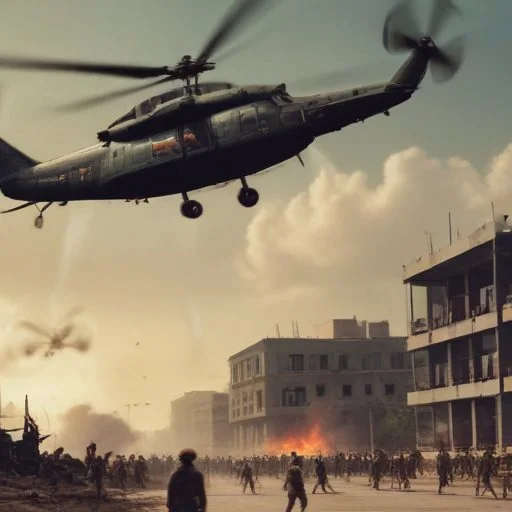
The Vietnam War was a brutal and complex conflict that began in the early 1960s, pitting the communist North against the anti-communist South. The United States, under the presidency of John F. Kennedy, had initially provided military aid to the South, but as the war dragged on, American involvement deepened. By the early 1970s, it became clear that the war was unwinnable, and the United States began to withdraw its troops.
As the North Vietnamese army advanced on Saigon, the South Vietnamese government began to crumble. Panic set in among American citizens and Vietnamese allies, who feared retribution from the victorious communists. The United States government, realizing the gravity of the situation, ordered the evacuation of all American personnel and Vietnamese allies who had assisted the U.S. during the war.
Operation Frequent Wind was a logistical nightmare. With the North Vietnamese army closing in, the U.S. military had just 48 hours to evacuate an estimated 7,000 people. The operation was led by U.S. Ambassador to South Vietnam Graham Martin, who oversaw the evacuation efforts from the American embassy in Saigon.
Air Force helicopters, piloted by brave airmen, flew in and out of the embassy compound, airlifting people to safety. The scene was chaotic, with desperate civilians clamoring to board the helicopters. In a dramatic moment, captured on film, a U.S. Marine Corps helicopter took off from the embassy rooftop, carrying the last American diplomat to leave Saigon.
The evacuation was a success, with over 7,000 people airlifted to safety. However, the fall of Saigon marked the end of the Vietnam War, and the beginning of a new era of communist rule in Vietnam. The war had a profound impact on American society, leading to widespread anti-war protests and a shift in public opinion.
The Vietnam War, and the dramatic evacuation that marked its end, had a profound impact on American culture. The war became a symbol of American Hubris, and the evacuation a reminder of the limits of American power. The war also spawned a generation of anti-war activists, who would go on to shape American politics for decades to come.
One of the most poignant accounts of the evacuation comes from Captain Gerry Berry, who recalled the scene on the USS Blue Ridge: "It was like the end of the world... people were crying, screaming, and praying. It was a very emotional time."
The fall of Saigon and the end of the Vietnam War marked a turning point in American foreign policy. The war had exposed the limits of American power, and the need for a more nuanced approach to international relations. The evacuation also highlighted the importance of humanitarian intervention, and the need for the United States to protect its allies and citizens in times of crisis.
In the end, Operation Frequent Wind was a heroic effort that saved thousands of lives. It marked the end of a long and bloody conflict, and the beginning of a new era in American foreign policy. The bravery and sacrifice of those who participated in the evacuation will never be forgotten.
As the North Vietnamese army closed in on Saigon, the city's infrastructure began to crumble. The once-thriving streets were now filled with chaos and desperation, as civilians scrambled to find a way out. The sounds of gunfire and artillery fire echoed through the air, and the smell of smoke and fear hung heavy over the city.
Despite the danger, a small group of American journalists remained in Saigon, determined to capture the story of the city's fall. Photographers like Hubert van Es and Neal Ulevich risked their lives to take iconic images of the evacuation, including the famous shot of a U.S. Marine Corps helicopter taking off from the embassy rooftop.
Meanwhile, the South Vietnamese military, realizing the futility of their efforts, began to abandon their posts and flee the city. The once-proud army, which had fought alongside the United States for over a decade, was now in disarray, leaving the city vulnerable to the advancing North Vietnamese forces.
Graham Martin, the U.S. Ambassador to South Vietnam, played a crucial role in the evacuation efforts. A seasoned diplomat with a deep understanding of Vietnamese politics, Martin was instrumental in coordinating the airlift and ensuring the safety of American citizens and Vietnamese allies.
Despite his efforts, Martin was criticized for his slow response to the deteriorating situation in Saigon. Some blamed him for underestimating the North Vietnamese army's strength and failing to prepare adequately for the evacuation. Nevertheless, his leadership during the crisis was instrumental in saving thousands of lives.
Martin's experience in Vietnam had a profound impact on him, and he later became an advocate for greater understanding and reconciliation between the United States and Vietnam.
The fall of Saigon and the subsequent evacuation had a profound impact on American culture. The images of desperate civilians clinging to helicopters, and the stories of bravery and sacrifice, seared themselves into the American psyche.
The war, and the evacuation that marked its end, became a symbol of American Hubris, and the limits of American power. The war also spawned a generation of anti-war activists, who would go on to shape American politics for decades to come.
In the years that followed, the Vietnam War would become a cultural touchstone, influencing music, film, and literature. The era's music, from Bob Dylan to Bruce Springsteen, reflected the nation's disillusionment and sense of moral crisis.
The fall of Saigon marked a significant shift in the global balance of power. The North Vietnamese victory, backed by China and the Soviet Union, represented a major Communist triumph in the Cold War.
The United States, having withdrawn its military presence from Vietnam, was now forced to re-evaluate its foreign policy priorities. The evacuation marked the beginning of a new era of diplomatic engagement, as the United States sought to rebuild relationships with its allies and navigate the complexities of international relations.
In the years that followed, the United States would adopt a more nuanced approach to foreign policy, recognizing the limits of its power and the importance of diplomacy and cooperation.
The evacuation of Saigon was a remarkable feat of military logistics, made possible by the innovative use of helicopters and other aircraft. The U.S. military's ability to airlift over 7,000 people in just 48 hours was a testament to its technological prowess and adaptability.
The operation also highlighted the importance of communication and coordination in crisis situations. The use of radio and satellite communication enabled the U.S. military to coordinate the evacuation efforts in real-time, ensuring a relatively smooth and efficient process.
The evacuation of Saigon would go on to influence military doctrine and crisis management strategies, shaping the way the U.S. military responds to similar crises around the world.