


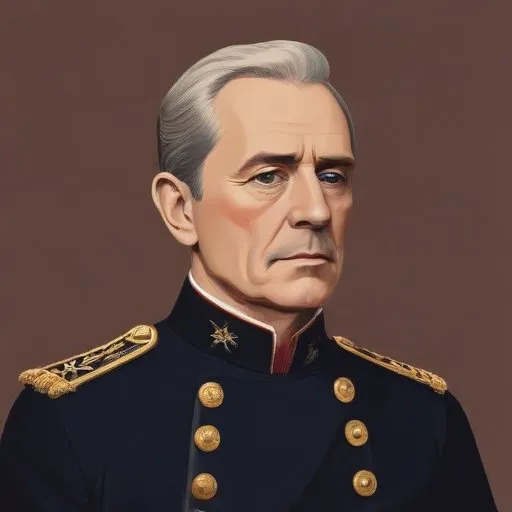
The last four-star general to serve as Chief of Staff of the United States Army, known for his leadership during the Vietnam War and his efforts to reform the Army after the war. He played a key role in rebuilding the Army's morale and effectiveness.
Frederick Carlton Weyand, a decorated general in the United States Army, is perhaps best known for being the last commander of United States military operations in the Vietnam War from 1972 to 1973, and later serving as the 28th Chief of Staff of the United States Army from 1974 to 1976. His remarkable military career spanned over three decades, taking him to the battlefields of World War II, the Korean War, and the Vietnam War, earning him a reputation as a seasoned and respected military leader.
Weyand was born on September 15, 1916, in Arbuckle, California. He attended Fresno High School and later graduated from the University of California, Berkeley, in May 1938, where he was commissioned a second lieutenant in the United States Army through the Reserve Officers Training Corps program.
Weyand's military career was marked by significant milestones and accomplishments. During World War II, he served with the 6th Field Artillery from 1940 to 1942 and later graduated from the Command and General Staff College at Fort Leavenworth in 1942. He served as adjutant of the Harbor Defense Command in San Francisco from 1942 to 1943 and later moved on to the Office of the Chief of Intelligence for the US War Department General Staff in 1944.
In the post-war period, Weyand became assistant chief of staff for intelligence in the China-Burma-India Theater from 1944 to 1945 and later served in the Military Intelligence Service in Washington, D.C. from 1945 to 1946. He was chief of staff for intelligence, United States Army Forces, Middle Pacific from 1946 to 1949, and later graduated from the United States Army Infantry School at Fort Benning in 1950.
During the Korean War, Weyand commanded the 1st Battalion, 7th Infantry Regiment, and served as assistant chief of staff, G3, of the 3d Infantry Division from 1950 to 1951. He later served on the faculty of the Infantry School from 1952 to 1953 and attended the Armed Forces Staff College.
In 1974, Weyand became the 28th Chief of Staff of the United States Army, a position he held until 1976. During his tenure, he oversaw significant reforms and modernization of the Army, focusing on improving morale, training, and equipment.
Frederick C. Weyand's remarkable military career is a testament to his dedication, leadership, and service to his country. His contributions to the United States Army and his role in shaping its modernization are still remembered and revered today.
Weyand married Arline Langhart in 1940, and the couple had a long and happy marriage. He passed away on February 10, 2010, leaving behind a legacy of service, leadership, and dedication to his country.
Born in 1914
A decorated four-star general who played a crucial role in the Vietnam War, leading US military forces to victory in several key battles and later becoming the Army's Chief of Staff.
Born in 1914
Led the United States Army during the Vietnam War, implementing a strategy of search and destroy, and was a prominent figure in the war's escalation. He was later criticized for his tactics and the war's outcome.
91 Years Old
Led a coalition of forces to a decisive victory in the Gulf War, earning acclaim for his strategic brilliance and leadership. He's also known for his humanitarian efforts, particularly in the Middle East.
89 Years Old
The first African American to serve as Secretary of State, he played a crucial role in shaping US foreign policy during the Gulf War and War on Terror. He's also known for his diplomatic efforts and leadership in the military.
Born in 1924
The 59th United States Secretary of State, a four-star general who played a key role in the Nixon administration and later served as a diplomat, known for his controversial and influential decisions during the Cold War era.
Born in 1901
American general and diplomat who served as United States Ambassador to South Vietnam, playing a crucial role in shaping US foreign policy during the Vietnam War. He's known for his efforts to stabilize the region and prevent communist takeover.
