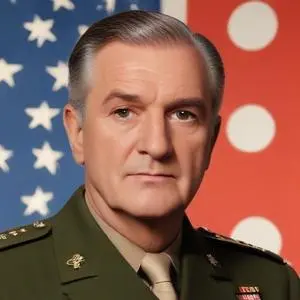
William Westmoreland: The Controversial Commander of the Vietnam War
A Life of Military Service and Leadership
William Childs Westmoreland is perhaps most notable for his role as the commander of United States forces during the Vietnam War from 1964 to 1968. During his tenure, he adopted a strategy of attrition against the Viet Cong and the North Vietnamese Army, attempting to drain them of manpower and supplies.
Early Life and Education
Westmoreland was born on March 26, 1914, in Spartanburg, South Carolina, to Eugenia Talley Childs and James Ripley Westmoreland. His upper-middle-class family was involved in the local banking and textile industries. At the age of 15, William became an Eagle Scout in his Boy Scouts of America (BSA) local council's Troop 1, and was a recipient of the Distinguished Eagle Scout Award and Silver Buffalo from the BSA as a young adult. After spending a year at The Citadel in 1932, he was appointed to attend the United States Military Academy on the nomination of Senator
James F. Byrnes, a family friend.
Rise to Prominence
Westmoreland's military career spanned over three decades, during which he served in various capacities, including as a company commander in the 9th Infantry Division during World War II and as the superintendent of the United States Military Academy from 1960 to 1963. His leadership skills and tactical prowess earned him rapid promotion, and he became a four-star general in 1964.
Vietnam War and Attrition Strategy
As the commander of United States forces in Vietnam, Westmoreland implemented a strategy of attrition, which aimed to wear down the enemy through relentless bombing and ground offensives. He believed that by inflicting heavy casualties on the Viet Cong and the North Vietnamese Army, the United States could ultimately emerge victorious. However, this strategy proved to be costly and ineffective, as the enemy continued to replenish its ranks and the war dragged on.
Criticism and Controversy
Westmoreland's leadership during the Vietnam War was marred by controversy and criticism. His strategy of attrition was widely criticized for being ineffective and brutal, leading to high casualties on both sides. The Tet Offensive in 1968, which was a series of surprise attacks by the Viet Cong, caught the United States military off guard and led to a significant shift in public opinion against the war.
Later Life and Legacy
After his reassignment as Army Chief of Staff in 1968, Westmoreland continued to serve until his retirement in 1972. He died on July 18, 2005, at the age of 91. Despite his controversial legacy, Westmoreland remains a significant figure in American military history, and his leadership during the Vietnam War continues to be studied and debated by historians and military strategists.
Quotes and Memorable Sayings
- "The Oriental doesn't put the same high price on life as the Westerner." - This quote, attributed to Westmoreland, has been criticized for its cultural insensitivity and racism.
- "I do not believe that the Vietnamese people will tolerate a communist regime." - This quote highlights Westmoreland's conviction that the United States could ultimately prevail in the war.
Awards and Honors
Westmoreland received numerous awards and honors during his military career, including the Distinguished Service Medal, the Legion of Merit, and the Bronze Star Medal. He was also awarded the Silver Buffalo Award from the Boy Scouts of America.
Personal Milestones and Key Life Events
- Became an Eagle Scout at the age of 15
- Graduated from the United States Military Academy in 1936
- Served as superintendent of the United States Military Academy from 1960 to 1963
- Became a four-star general in 1964
- Served as commander of United States forces in Vietnam from 1964 to 1968
- Served as Army Chief of Staff from 1968 to 1972
Influence on Modern Society
Westmoreland's legacy continues to influence modern society, particularly in the context of military strategy and leadership. His experience in Vietnam serves as a cautionary tale about the dangers of relying on brute force and the importance of understanding cultural nuances in military conflicts.
FAQ
What was William Westmorelands role in the Vietnam War?
William Westmoreland was the commander of the US Military Assistance Command, Vietnam (MACV) from 1964 to 1968, during which time he oversaw the escalation of US involvement in the Vietnam War.
What was William Westmorelands military strategy in Vietnam?
William Westmorelands military strategy in Vietnam was based on the principle of attrition, which aimed to wear down the enemy through a war of attrition. He believed that the US military could defeat the North Vietnamese and Viet Cong through a combination of search-and-destroy missions and firepower.
How did William Westmorelands leadership impact the US military in Vietnam?
William Westmorelands leadership during the Vietnam War has been the subject of much controversy and debate. Critics have argued that his military strategy was overly reliant on firepower and failed to take into account the complexities of guerrilla warfare.
What was William Westmorelands reaction to the Tet Offensive?
William Westmoreland was caught off guard by the Tet Offensive in 1968, which marked a turning point in the war. He requested more troops to respond to the offensive, but the US militarys failure to defeat the North Vietnamese and Viet Cong led to widespread disillusionment and opposition to the war.
How did William Westmorelands experiences in Vietnam shape his later views on warfare?
William Westmorelands experiences in Vietnam led him to reassess his views on warfare and the role of the US military in modern conflicts. He later advocated for a more nuanced approach to warfare, one that took into account the complexities of guerrilla warfare and the need for diplomacy and political solutions.