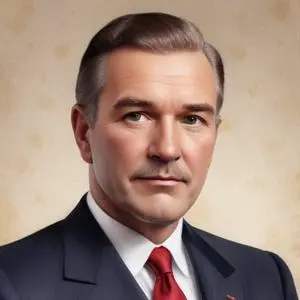
Henry Cabot Lodge Jr.: The Diplomatic Leader
A Statesman of Diplomacy and Politics
Henry Cabot Lodge Jr. is renowned for his distinguished career as an American diplomat and politician, representing Massachusetts in the United States Senate and serving as United States Ambassador to the United Nations under President
Dwight D. Eisenhower's administration. He is also notable for being the Republican nominee for Vice President in 1960, running alongside Richard Nixon.
Early Life and Education
Born on July 5, 1902, in Nahant, Massachusetts, Lodge was the grandson of Senator Henry Cabot Lodge and the great-grandson of Secretary of State Frederick Theodore Frelinghuysen. He graduated from Harvard University, setting the stage for his future endeavors in politics and diplomacy.
Rise to Prominence
Lodge's political career began in 1932 when he was elected to the Massachusetts House of Representatives. He later defeated Democratic governor
James Michael Curley in 1936 to represent Massachusetts in the United States Senate. During World War II, Lodge resigned from the Senate to serve in Italy and France, eventually rising to the rank of major general in the Army Reserve.
Diplomatic Career
Lodge's diplomatic career took off in 1953 when he was appointed as ambassador to the United Nations by President Eisenhower. He played a pivotal role in Eisenhower's administration, leading the Draft Eisenhower movement and managing the president's successful campaign for the Republican presidential nomination at the 1952 Republican National Convention.
Vice Presidential Nomination and Later Career
In 1960, Lodge was chosen by
Richard Nixon as his running mate in the presidential election, although the Republican ticket narrowly lost to Democrats
John F. Kennedy and
Lyndon B. Johnson. Lodge continued to serve as a diplomat in the administrations of Kennedy, Johnson, Nixon, and
Gerald Ford, solidifying his reputation as a seasoned diplomat and politician.
Personal Milestones and Key Life Events
- Lodge married Emily Severson in 1926, and they had two children together.
- He was a presidential contender in 1964, although he did not secure the Republican nomination.
- Lodge passed away on February 27, 1985, leaving behind a legacy of diplomatic service and political leadership.
Legacy and Impact
Henry Cabot Lodge Jr.'s legacy is a testament to his dedication to diplomacy and politics. Through his various roles, he played a significant part in shaping American foreign policy and international relations. His commitment to public service and leadership continues to inspire future generations of diplomats and politicians.
Quotes and Memorable Sayings
"I think that our foreign policy has got to be based on the principle of protecting our own people, and that means being strong enough to defend ourselves." - Henry Cabot Lodge Jr.
FAQ
What was Henry Cabot Lodge Jr.s career in politics like?
Henry Cabot Lodge Jr. was an American politician and diplomat who served as the 3rd United States Ambassador to the United Nations. He was a prominent figure in American politics, serving in various roles, including Senator and Ambassador.
What were Henry Cabot Lodge Jr.s accomplishments as Ambassador to the UN?
Henry Cabot Lodge Jr. played a crucial role in shaping American foreign policy during the early years of the United Nations. He was a strong advocate for international cooperation and helped negotiate several key resolutions, including the Admission of Japan to the UN.
What was Henry Cabot Lodge Jr.s stance on international relations?
Henry Cabot Lodge Jr. was a strong believer in international cooperation and diplomacy. He advocated for a robust American presence in international organizations, such as the United Nations, and worked to promote peace, security, and cooperation among nations.
How did Henry Cabot Lodge Jr. contribute to American foreign policy?
Henry Cabot Lodge Jr. made significant contributions to American foreign policy, shaping the countrys approach to international relations during a critical period. He helped establish the United States as a leader in international organizations and promoted American interests abroad.
What awards and honors did Henry Cabot Lodge Jr. receive?
Henry Cabot Lodge Jr. received several awards and honors for his contributions to American politics and foreign policy. He was awarded the Distinguished Service Medal and the Legion of Merit, among others.