


On December 18, 1972, history was made as 120 American B52 Stratofortress bombers, including 78 launched from Andersen Air Force Base in Guam, descended upon Hanoi, unleashing a torrent of bombs in the largest single combat launch in Strategic Air Command history. This 11-day aerial onslaught, codenamed Operation Linebacker II, would become one of the most pivotal moments of the Vietnam War.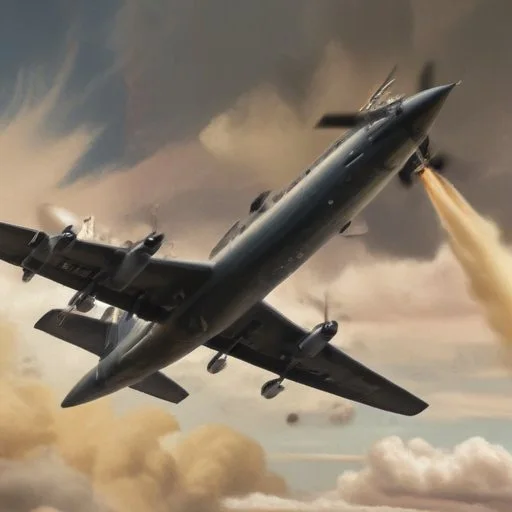
The year 1972 marked a critical turning point in the Vietnam War. As peace talks in Paris stalled, President Richard Nixon and National Security Adviser Henry Kissinger sought to force North Vietnam back to the negotiating table. The North Vietnamese, emboldened by their recent military gains, refused to budge. In response, the Nixon administration launched Operation Linebacker II, a campaign aimed at crippling North Vietnam's industrial and transportation infrastructure.
General Curtis LeMay, Commander of the Strategic Air Command, played a crucial role in planning and executing Operation Linebacker II. His experience in World War II and the Korean War made him an expert in strategic bombing. Meanwhile, President Nixon and Henry Kissinger orchestrated the operation from the White House, working closely with General LeMay to ensure maximum pressure on North Vietnam.
Operation Linebacker II achieved its primary objective, forcing North Vietnam to return to the negotiating table. The bombing campaign weakened North Vietnam's military capacity, allowing for a swift conclusion to the Paris peace talks. The operation also marked a turning point in the war, as the United States began to disengage from the conflict.
The "Eleven Days of Christmas" campaign sparked widespread protests across the United States and worldwide, with many condemning the bombing as excessive and inhumane. However, the operation also had a profound impact on the American psyche, as the country began to question its involvement in the war.
The bombing campaign was met with international outrage, with many labeling it a "Christmas massacre." Critics argued that the operation was disproportionate to the goals of the war, while others saw it as a necessary measure to bring North Vietnam to the negotiating table. To this day, the operation remains a contentious issue in the history of the Vietnam War.
Air Force Major General James P. Alley, who participated in the operation, recalled the tense atmosphere in the cockpit: "We knew we were in for a long and dangerous mission... The radar screens lit up like a Christmas tree, with North Vietnamese defenses firing everything they had at us."
Operation Linebacker II paved the way for the Paris Peace Accords, signed on January 27, 1973, which officially ended the United States' involvement in the Vietnam War. The operation also shaped future military strategies, as the US military incorporated lessons learned from the campaign into its doctrine.
As we reflect on the "Eleven Days of Christmas," we are reminded of the devastating consequences of war and the importance of diplomacy in international relations. This pivotal moment in history serves as a testament to the human cost of conflict and the enduring importance of seeking peaceful solutions.
General Curtis LeMay, a seasoned military strategist, played a pivotal role in planning and executing Operation Linebacker II. Born on November 15, 1906, LeMay was a veteran of World War II and the Korean War, with a reputation for being a no-nonsense commander who advocated for the strategic bombing of enemy targets.
LeMay's experience in World War II, particularly during the Allied bombing campaign against Germany, influenced his approach to strategic bombing. He believed that a heavy bombardment campaign could weaken an enemy's resolve and cripple their industrial infrastructure.
Under LeMay's command, the Strategic Air Command (SAC) became a potent force, equipped with the latest bombers and technology. He was instrumental in selecting the B-52 Stratofortress as the primary bomber for Operation Linebacker II, due to its range, payload capacity, and ability to deliver precision-guided munitions.

The B-52 Stratofortress, the primary bomber used during Operation Linebacker II, was a technological marvel of its time. With a range of over 8,000 miles, the B-52 could fly from Andersen Air Force Base in Guam to North Vietnam and back without refueling.
The B-52's advanced avionics and navigation systems allowed it to operate at high altitudes, evade enemy defenses, and deliver payloads with precision. The bomber's terrain-following radar enabled it to fly at low altitudes, reducing the risk of detection.
The B-52's payload capacity of up to 70,000 pounds of bombs made it an ideal platform for the carpet-bombing tactics employed during Operation Linebacker II. The bomber's ability to carry a mix of high-explosive and incendiary bombs further enhanced its destructive capability.
Operation Linebacker II was not only a military campaign but also a geopolitical chess move by the Nixon administration. The operation was part of a broader strategy to exert pressure on North Vietnam and its allies, the Soviet Union and China.
The Soviet Union, which had been supplying North Vietnam with military aid, was caught off guard by the intensity of the bombing campaign. The Soviet Union's inability to protect its ally weakened its credibility as a global superpower.
Meanwhile, China, which shared a border with North Vietnam, was forced to reconsider its support for the North Vietnamese regime. The operation demonstrated the United States' ability to project military power in the region, influencing China's subsequent foreign policy decisions.

Operation Linebacker II was a calculated political move by the Nixon administration to break the stalemate in the Paris peace talks. The administration believed that a demonstration of military power would force North Vietnam back to the negotiating table.
The operation was also intended to reassure the American public that the Nixon administration was committed to ending the war. The bombing campaign was, in part, a response to domestic pressure to take a tougher stance against North Vietnam.
Furthermore, the operation was a show of force aimed at the Democratic Congress, which had been critical of the administration's handling of the war. The success of Operation Linebacker II strengthened the administration's hand in future negotiations with Congress.
Operation Linebacker II had a profound impact on American culture, symbolizing the nation's growing disillusionment with the Vietnam War. The bombing campaign sparked widespread protests across the United States, with many questioning the morality and necessity of the war.
The operation also influenced the anti-war movement, which gained momentum in the aftermath of the bombing campaign. The protests and demonstrations that followed became a defining feature of the era, shaping the nation's political and cultural landscape.
The "Eleven Days of Christmas" campaign has since become a cultural touchstone, symbolizing the destructive nature of war and the importance of seeking peaceful solutions to conflict.