


The Watergate scandal, a political upheaval that shook the very foundations of American democracy, reached its boiling point on a fateful Saturday evening in October 1973. On that night, President Richard Nixon executed a drastic move, firing Attorney General Elliot Richardson and Deputy Attorney General William Ruckelshaus, after they refused to axe Watergate special prosecutor Archibald Cox, a decision that would forever tarnish Nixon's presidency.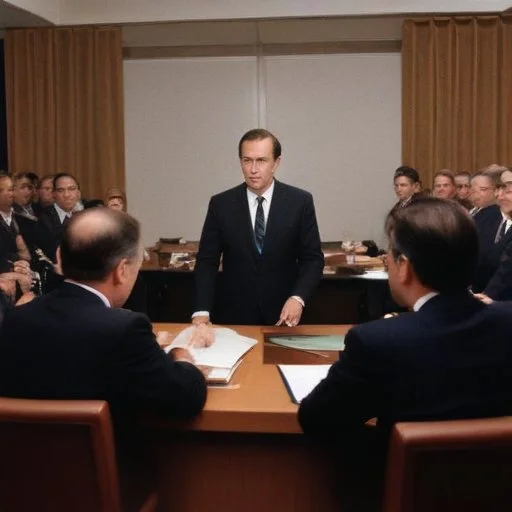
In the early 1970s, the United States was grappling with social unrest, economic stagnation, and a growing distrust of government institutions. Amidst this tumult, Richard Nixon, the 37th President of the United States, sought to consolidate power and protect his administration from perceived threats. The June 1972 break-in at the Democratic National Committee headquarters at the Watergate complex in Washington, D.C., marked the beginning of a clandestine operation that would ultimately consume Nixon's presidency.
At the heart of the Saturday Night Massacre were three men: Richard Nixon, Elliot Richardson, and Archibald Cox.
The events of the Saturday Night Massacre unfolded rapidly, with far-reaching consequences.
The Saturday Night Massacre had far-reaching consequences, solidifying Nixon's role in one of America's most infamous political scandals.
The Saturday Night Massacre reflected a broader distrust of government institutions and the growing unease with Nixon's leadership style.
The scandal captivated the nation, with many Americans glued to their television sets, watching as the drama unfolded. The event also inspired a generation of journalists, including Bob Woodward and Carl Bernstein, who would go on to expose the inner workings of the Nixon administration.
The Saturday Night Massacre remains one of the most controversial events in American political history, with many regarding Nixon's actions as a brazen abuse of power.
"The President has fired his own Attorney General and Deputy Attorney General, not for wrongdoing, but for refusing to do his bidding. This is a grave and disturbing development." - Howard Baker, Republican Senator
The event has been the subject of numerous books, films, and documentaries, cementing its place in the American collective consciousness.
The Saturday Night Massacre serves as a powerful reminder of the importance of checks and balances in American democracy, highlighting the dangers of executive overreach and the importance of an independent judiciary.
As we reflect on this pivotal moment in American history, we are reminded that the pursuit of truth and accountability is a cornerstone of our democracy, and that even the most powerful individuals are not above the law.
The historiography of the Saturday Night Massacre is marked by a diversity of perspectives on the event's significance and meaning. Some historians view the event as a symbol of Nixon's authoritarian tendencies, while others see it as a desperate attempt to salvage his presidency. Stanley Kutler, a prominent Watergate historian, has argued that the Saturday Night Massacre was a pivotal moment in the scandal, as it revealed the depths of Nixon's paranoia and desperation.
Other historians, such as Bruce Oudes, have emphasized the importance of the Massacre in solidifying public opposition to Nixon. According to Oudes, the event marked a turning point in the scandal, as it galvanized public opinion against the president and paved the way for his eventual resignation.

The Saturday Night Massacre occurred at a time of heightened global tension, with the Cold War between the United States and the Soviet Union at its peak. Nixon's handling of foreign policy, including his détente with the Soviet Union and his bombing campaign in Cambodia, had been widely criticized by Democrats and Republicans alike.
In this geopolitical context, Nixon's actions during the Saturday Night Massacre can be seen as an attempt to assert his authority and maintain control over the executive branch. However, his actions ultimately backfired, as they were widely perceived as an abuse of power and a threat to democratic institutions.
The Saturday Night Massacre has had a lasting impact on American popular culture, inspiring countless references and allusions in film, literature, and music. All the President's Men, the 1976 film adaptation of Bob Woodward and Carl Bernstein's book, dramatized the events leading up to the Massacre, cementing its place in the American cultural consciousness.
In television and film, the Saturday Night Massacre has been referenced in shows such as The Simpsons and House of Cards, while musicians like Bob Dylan and Neil Young have written songs about the event.

The Saturday Night Massacre highlighted the tensions between the executive and judicial branches of government, raising important questions about the limits of presidential power. The firing of Archibald Cox sparked a national debate about the independence of the judiciary and the importance of checks and balances in American democracy.
In the aftermath of the Massacre, Congress moved to strengthen the independence of the judiciary, passing legislation to protect special prosecutors and ensure their independence from the executive branch. This legacy continues to shape the relationship between the presidency and the judiciary today.
Archibald Cox, the Watergate special prosecutor, was a man of unwavering principle and integrity. A renowned Harvard Law professor, Cox brought a sense of gravitas and independence to the investigation, earning the respect of his colleagues and the public alike.
Cox's refusal to drop the subpoena for the White House tapes, despite intense pressure from Nixon, was a defining moment in the scandal. His courage and conviction set an important precedent for future investigators and solidified his place as a champion of truth and accountability.