


Edith Cavell, a British nurse, etched her name in history on October 12, 1915, when she was brutally executed by a German firing squad for her courageous act of helping Allied soldiers escape from occupied Belgium during World War I. This selfless act of defiance against the oppressors sparked international outrage, cementing her legacy as a symbol of resistance against tyranny.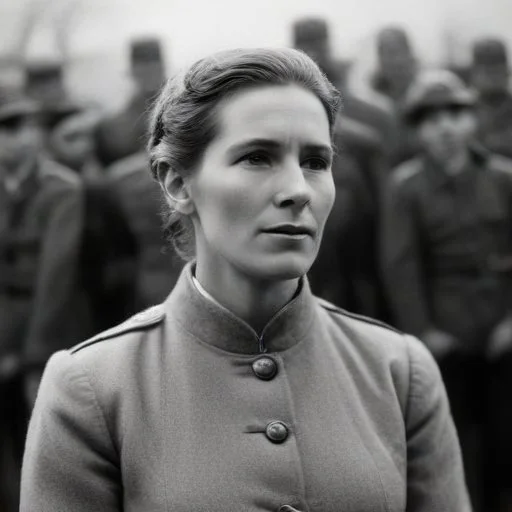
In the tumultuous years of World War I, Belgium was under German occupation, and the fate of Allied soldiers who found themselves stranded in this war-torn country was dire. In the midst of this chaos, Edith Cavell, the matron of the Berkendael Institute in Brussels, saw an opportunity to make a difference. She joined the Belgian resistance, spearheading a secret network to smuggle Allied soldiers out of Belgium and back to their homes.
Edith Cavell's bravery was tested in the early months of 1915, when she began secretly harboring and aiding Allied soldiers who had found themselves stranded in Belgium. Her actions did not go unnoticed for long, and on August 3, 1915, she was arrested by the German authorities. After a hasty trial, she was sentenced to death by firing squad on October 12, 1915.
Cavell's execution sparked widespread international outrage, with the British, French, and American governments condemning the atrocity. The event galvanized public opinion against Germany, and her martyrdom became a powerful symbol of resistance against oppression. The news of her execution also served as a rallying cry for the Allies, strengthening their resolve to fight against the oppressors.
Edith Cavell's bravery and sacrifice have inspired generations of people around the world. Her legacy extends beyond the trenches of World War I, symbolizing the power of ordinary individuals to make a difference in the face of extraordinary circumstances. She has been immortalized in literature, film, and art, and her story continues to inspire people to stand up against injustice and oppression.
As the news of her execution spread, people from all walks of life came together to pay tribute to her bravery. In the words of Cavell's own motto, "Patriotism is not enough. I must have no hatred or bitterness towards anyone."
In a letter to her sister, Cavell wrote, "Standing as I do in view of God and eternity, I realize that patriotism is not enough. I must have no hatred or bitterness towards anyone." These words, written in the face of certain death, serve as a testament to her unwavering commitment to her values.
Cavell's bravery has inspired many, including the famous author, Agatha Christie, who was working as a nurse during the war. Christie often spoke about the profound impact Cavell's story had on her, and how it influenced her own writing.
Edith Cavell's legacy extends far beyond the trenches of World War I. Her courage and sacrifice have inspired countless individuals to stand up against oppression and fight for what is right. Her story has also influenced the development of humanitarian law, with her case being cited as a pioneering example of the need to protect civilians and health workers in times of conflict.
In the words of the former British Prime Minister, David Lloyd George, "The martyrdom of Edith Cavell has dignified the whole of humanity."
Edith Cavell's story is a powerful reminder that even in the darkest of times, ordinary individuals can make a profound difference. Her bravery and sacrifice serve as a beacon of hope, inspiring people around the world to stand up against injustice and fight for what is right.
As we reflect on her life and legacy, we are reminded of the power of compassion, courage, and sacrifice. Edith Cavell's story is a testament to the enduring power of humanity, and a reminder that even in the face of overwhelming adversity, we always have the power to choose our own path.
One of the most poignant aspects of Edith Cavell's story is the clandestine network she established to smuggle Allied soldiers out of Belgium. This network, which came to be known as the "Comité du Secours" or "Relief Committee," was a complex web of safe houses, hidden routes, and secret signals that allowed soldiers to escape the occupying German forces. Cavell's role in this network was that of a conductor, coordinating the movements of soldiers and civilians who were willing to risk their lives to help them escape.
The Comité du Secours was not only a testament to Cavell's organizational skills but also a reflection of her deep commitment to humanity. She worked tirelessly to build relationships with people from all walks of life, from wealthy aristocrats to humble farmers, to create a network that spanned the length and breadth of Belgium.
Her selflessness and bravery inspired countless ordinary individuals to become extraordinary heroes, risking everything to defy the oppressors and uphold the values of freedom and compassion.
Edith Cavell's personality was a unique blend of compassion, courage, and determination. Born on December 4, 1865, in Swardeston, England, she grew up in a family that valued education and public service. Her father, Frederick Cavell, was a vicar who instilled in her a strong sense of morality and duty.
Cavell's early years as a nurse were marked by a desire to help others, and she worked tirelessly to improve the lives of her patients. Her experiences during the Boer War, where she witnessed the horrors of conflict firsthand, only strengthened her resolve to make a difference.
Her heroism was not limited to her actions during World War I; it was a culmination of a lifetime of selfless service and unwavering commitment to humanity.The news of Edith Cavell's execution sent shockwaves across the world, sparking widespread outrage and condemnation. The British, French, and American governments were united in their outrage, and her martyrdom became a powerful symbol of resistance against oppression.
The cultural impact of Cavell's execution was profound, inspiring writers, artists, and filmmakers to create works that honored her bravery and sacrifice.In the years that followed, her story was immortalized in literature, film, and art, cementing her place as an icon of courage and compassion. The song "Edith Cavell," composed by Harry Carroll and Ballard MacDonald, became a popular anthem, sung by soldiers and civilians alike.

The execution of Edith Cavell was a watershed moment in the politics of World War I. The international outcry that followed her death precipitated a shift in public opinion, galvanizing support for the Allied forces and eroding sympathy for the German cause.
The British government, in particular, seized upon Cavell's martyrdom as a powerful tool to mobilize public opinion and justify its continued involvement in the war. The propaganda machine went into overdrive, churning out posters, pamphlets, and newspaper articles that touted Cavell as a symbol of British courage and resilience.
The exploitation of Cavell's story was a calculated move to sway public opinion and demonize the German enemy, marking a turning point in the propaganda war.Edith Cavell's actions must be viewed within the broader context of the German occupation of Belgium during World War I. The invasion of neutral Belgium had sparked widespread international outrage, and the subsequent occupation had created a climate of fear and repression.
The German military authorities, determined to crush any opposition, had instituted a regime of surveillance, censorship, and intimidation that made it increasingly difficult for Belgians to resist their occupation. Cavell's bravery was all the more remarkable given the draconian measures in place to suppress dissent.
The geopolitics of the time created a perfect storm that allowed Cavell's actions to take on a symbolic significance that transcended national boundaries.