


In the midst of World War II, a pivotal moment in Norwegian history unfolded as Josef Terboven, the Reichskommissar of German-occupied Norway, appointed Vidkun Quisling as the Minister President of the National Government. This notorious collaboration would forever etch Quisling's name in the annals of infamy, earning him the scorn of his people and the world.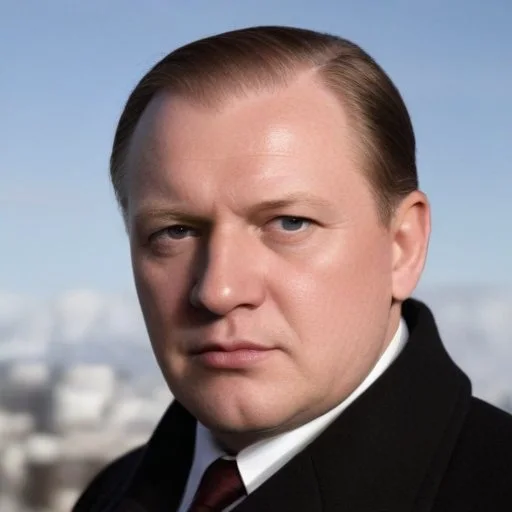
The seeds of Quisling's treachery were sown in the early 1930s, when he began to build relationships with high-ranking Nazi officials, including Adolf Hitler himself. As the Nazi war machine expanded its territorial ambitions, Quisling saw an opportunity to advance his own political career by serving as a willing collaborator.
Quisling's appointment marked the beginning of a brutal era of Nazi occupation, as he enforced German policies with ruthless efficiency. The Norwegian people suffered greatly under his leadership, with thousands forced into labor camps, and the country's economy and infrastructure ravaged by war.
The appointment of Quisling as Minister President forever tarnished his name, and that of Norway, in the eyes of the world. His betrayal would haunt the country long after the war's end, serving as a stark reminder of the dangers of collaboration and the importance of standing strong against tyranny.
"I am not a traitor, I am a Norwegian who has chosen to cooperate with the Germans." - Vidkun Quisling, in a futile attempt to justify his actions.
The Quisling regime would be marred by controversy, with widespread criticism of his brutal policies and collaboration with the Nazi regime. His treachery would ultimately earn him a swift execution in 1945, as Norway began to rebuild in the aftermath of war.
The story of Quisling's rise to power serves as a powerful reminder of the importance of standing strong against tyranny and oppression. In the face of overwhelming odds, the Norwegian people demonstrated remarkable courage and resilience, ultimately emerging from the shadow of war with a newfound sense of national pride and identity.
The fateful appointment of Vidkun Quisling as Minister President of the National Government marked a significant turning point in Norway's wartime history. However, the events that led to this moment were shaped by a complex web of political alliances and strategic maneuvers. In the early 1930s, Quisling's party, the Nasjonal Samling, had begun to gain traction, capitalizing on the growing sentiment of nationalism and anti-communism in Norway. As the Nazi war machine expanded its territorial ambitions, Quisling saw an opportunity to advance his own political career by serving as a willing collaborator.
In the days leading up to the appointment, Quisling had been in secret negotiations with German officials, including Josef Terboven, who had been appointed as the Reichskommissar of Norway. Quisling's proposal to establish a puppet government in Norway, with himself at the helm, was met with enthusiasm by the German High Command. The stage was set for a dramatic shift in Norway's wartime trajectory, as Quisling's treachery would forever alter the course of the country's history.
Vidkun Quisling: A Complex and Controversial Figure
Quisling's rise to power was marked by a series of calculated moves, driven by a desire for power and recognition. Born in 1887, Quisling was a Norwegian politician and officer who had served in the Norwegian Army during World War I. His early years were marked by a sense of disillusionment and frustration, stemming from his perceived lack of recognition and advancement. It was this sense of resentment that would drive Quisling to seek alliances with high-ranking Nazi officials, including Adolf Hitler.
Quisling's personality was marked by a combination of charm and ruthlessness, allowing him to navigate the complex landscape of Norwegian politics with ease. Despite his Machiavellian tendencies, Quisling was a skilled orator, able to inspire devotion in his followers and intimidate his opponents. It was this unique blend of traits that would make him a formidable figure in Norwegian politics, and ultimately earn him the scorn of his people.
The Quisling Regime: A Comparative Analysis
The Quisling regime in Norway shares striking similarities with other fascist and nationalist movements of the era. Like Mussolini's Italy and Franco's Spain, Quisling's Norway was characterized by a strong authoritarian leader, who ruled with an iron fist and crushed all opposition. The regime's emphasis on nationalism, anti-communism, and state control of the economy also draws parallels with other fascist regimes of the time.
However, the Quisling regime also demonstrates some unique features, shaped by Norway's specific historical and cultural context. Unlike other fascist regimes, Quisling's Norway was occupied by a foreign power, and his government was heavily dependent on German support. This complex dynamic led to a nuanced and often contradictory relationship between the Quisling regime and the German occupation authorities.
The Cultural Impact of Quisling's Betrayal
Quisling's appointment as Minister President had a profound impact on Norwegian culture, as the country struggled to come to terms with the treachery of its own leader. The regime's emphasis on nationalism and anti-communism led to a climate of fear and mistrust, as Norwegians were forced to confront the possibility of internal enemies and collaborators.
The Quisling regime's cultural policies were marked by a heavy-handed approach, as the government sought to impose strict controls on artistic expression and intellectual freedom. Writers, artists, and intellectuals who refused to toe the party line were persecuted, and many were forced into exile or hiding. The regime's cultural legacy would be marked by a sense of silence and repression, as Norway struggled to rebuild its shattered cultural identity.
The Political Fallout of Quisling's Appointment
The appointment of Vidkun Quisling as Minister President marked a significant shift in Norway's political landscape, as the country was forced to confront the reality of occupation and collaboration. The Norwegian government-in-exile, led by King Haakon VII, condemned Quisling's treachery and vowed to continue the fight against Nazi occupation.
The Quisling regime's political legitimacy was questionable from the outset, and its authority was consistently challenged by the Norwegian resistance movement. As the war dragged on, the regime's grip on power began to falter, and Quisling's own position became increasingly precarious. The eventual defeat of Nazi Germany would mark the end of Quisling's reign of terror, and pave the way for Norway's post-war reconstruction.