


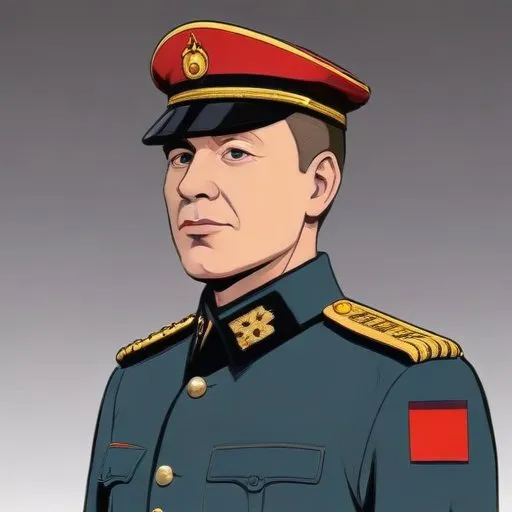
A high-ranking Nazi official who served as the Reichskommissar of Norway during World War II, notorious for his brutal rule and war crimes.
Josef Terboven is infamous for being the Reichskommissar for Norway during the German occupation, where he implemented brutal policies, established multiple concentration camps, and perpetrated atrocities against the Jewish population and Norwegian resistance movement. His ruthless rule in Norway earned him the nickname "The King of Norway" among the Nazi Party elite.
Terboven was born on May 23, 1898, in Essen, Germany. He attended Volksschule and Realschule before volunteering for military service during World War I. After the war, he studied law and political science at the University of Munich and the University of Freiburg, where he first became involved in politics.
Terboven joined the Nazi Party in 1923 and participated in the Beer Hall Putsch. He rose through the ranks to become the Gauleiter of Essen and the editor of various Nazi newspapers. After the Nazi seizure of power in 1933, Terboven was promoted to SA-Gruppenführer and was made a member of the Prussian State Council.
As the Reichskommissar for Norway, Terboven established multiple concentration camps, including Falstad, Grini, and Berg. He ruthlessly persecuted the Jewish population, and his actions led to numerous atrocities, such as the Beisfjord massacre, where hundreds of Yugoslavian political prisoners and prisoners of war were murdered.
As the tide of the war turned against Germany, Terboven implemented a scorched earth policy in northern Norway, resulting in the forced evacuation of 50,000 Norwegians and widespread destruction. He hoped to turn Norway into a fortress for the Nazi regime's last stand. However, after Adolf Hitler's suicide, his successor, Großadmiral Karl Dönitz, dismissed Terboven from his post as Reichskommissar on May 7, 1945.
The next day, on May 8, 1945, Terboven committed suicide by detonating 50 kg of dynamite in a bunker on the Skaugum compound in Norway.
Josef Terboven's brutal reign in Norway left a lasting impact on the country and its people. His actions during World War II are still remembered today as a dark chapter in Norwegian history. Terboven's legacy serves as a reminder of the horrors of war and the importance of standing against tyranny and oppression.
Born in 1889
The dictator of Nazi Germany, responsible for the genocide of six million Jews and millions of other people during World War II, and infamous for his extreme nationalist and anti-Semitic ideology.
Born in 1900
Leading the SS and Gestapo, he oversaw the Nazi regime's brutal security apparatus and implemented the "Final Solution," orchestrating the genocide of six million Jews during World War II.
Born in 1897
A mastermind of Nazi propaganda, he crafted a persuasive narrative that fueled the Third Reich's rise to power, leaving a lasting impact on the world.
Born in 1893
A high-ranking Nazi official, he was a decorated World War I fighter pilot and later became a prominent politician, serving as Minister President of Prussia. He's infamous for his role in the Nazi regime and war crimes trials.
Born in 1894
A high-ranking Nazi official who flew to Scotland on a solo mission to negotiate peace with the UK, but was instead arrested and imprisoned.
Born in 1893
A German diplomat who served as the Nazi regime's Foreign Minister, orchestrating key alliances and treaties that led to World War II. He was a close associate of Adolf Hitler and played a crucial role in shaping Nazi foreign policy.
Born in 1891
A German naval commander who led the U-boat fleet during World War II and briefly served as President of Germany after Hitler's death, known for his role in the war and its aftermath.
Born in 1876
A German naval leader who played a key role in the Kriegsmarine during World War II, overseeing the German U-boat fleet and naval operations. He was a close advisor to Adolf Hitler and implemented the German naval strategy during the war.
