


On April 6, 1941, Nazi Germany unleashed a two-pronged assault on the Balkans, launching Operation 25 against the Kingdom of Yugoslavia and Operation Marita against Greece. This daring dual invasion caught the world off guard, cementing the reputation of Hitler's war machine as a ruthless and efficient force.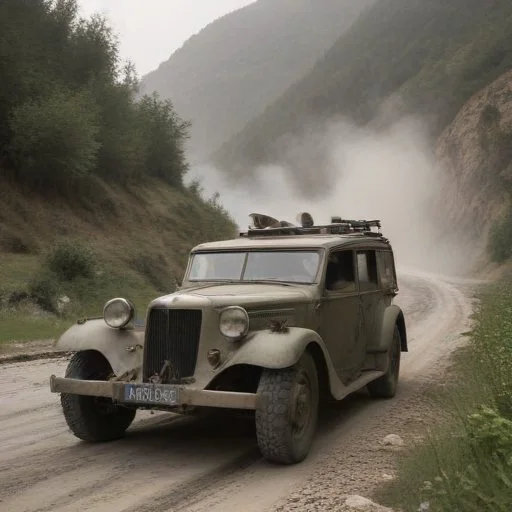
In the early 1940s, the Balkans were a powder keg of ethnic and nationalist tensions. The Kingdom of Yugoslavia, a fragile entity cobbled together after World War I, struggled to maintain unity among its diverse population. Meanwhile, Greece, still reeling from the Italian invasion in October 1940, had become a British-supported bastion against Axis expansion.
The dual invasion had far-reaching consequences for the region and the war effort:
"The new Blitzkrieg tactic is based on the principle that the enemy will be defeated before the battle begins."
- General Heinz Guderian, German Panzer Corps Commander
"I remember the sound of the Stukas dive-bombing our positions, the screams of the wounded, and the stench of burning buildings. It was a living hell."
- Anonymous Greek soldier, recalling the German invasion of Greece
The dual invasion of Yugoslavia and Greece set the stage for:
The Balkans Blitzkrieg serves as a testament to the brutal efficiency of the Nazi war machine, as well as the resilience and bravery of those who resisted its onslaught. As the world marks the anniversaries of these pivotal events, we honor the sacrifices of those who fought against tyranny and oppression.
Tito, born on May 25, 1892, was a Croatian communist and leader of the Yugoslav Partisans. He played a crucial role in the resistance against the Nazi occupation, mobilizing a diverse group of people from various ethnic and social backgrounds.
Tito's leadership transformed the Partisans into a formidable force, employing guerrilla warfare tactics and sabotage to disrupt the German war effort. His vision of a socialist Yugoslavia, where all ethnic groups could coexist, resonated with many, earning him respect and admiration.
In the post-war era, Tito would go on to become the Prime Minister and later President of Yugoslavia, shaping the country's identity and foreign policy. His legacy as a champion of Yugoslav unity and independence continues to be felt to this day.
The Balkans, a region of southeastern Europe, has long been a crossroads of conflicting interests and allegiances. Strategically located between Europe and Asia, the region has been a prized possession for empires and nations seeking to expand their influence.
In the early 20th century, the Balkans were a powder keg of ethnic tensions, with various nations vying for dominance. The assassination of Archduke Franz Ferdinand in Sarajevo in 1914 sparked World War I, and the region remained a hotbed of nationalist sentiment in the interwar period.
The Nazi invasion of Yugoslavia and Greece in 1941 was, in part, a response to the region's perceived strategic importance. The Axis powers sought to secure the Balkans as a buffer zone against the Soviet Union and to secure vital natural resources.
The dual invasion of Yugoslavia and Greece had far-reaching economic consequences for the region. The destruction of infrastructure, industry, and agricultural production led to widespread poverty and displacement.
The Nazi occupation imposed harsh economic conditions, forcing the local population to work in labor camps and extracting natural resources to fuel the German war machine. The illegal occupation also led to a thriving black market, which further exacerbated the economic instability.
In the aftermath of the war, the region struggled to rebuild its economy, with Yugoslavia and Greece receiving significant aid from the United States and the Soviet Union. The economic impact of the invasion continued to be felt for decades, shaping the region's economic development and integration into the global economy.
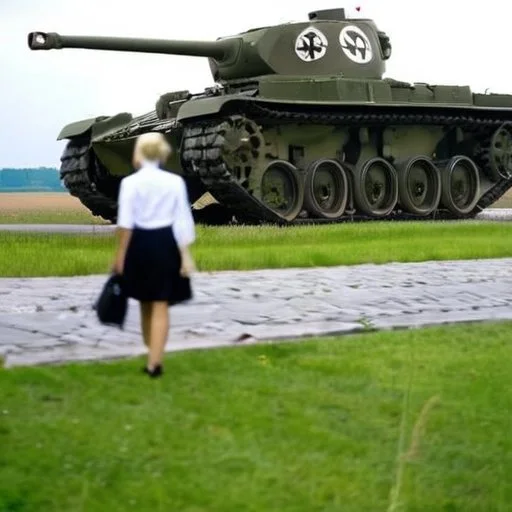
The Yugoslav Army, prior to the invasion, was a poorly equipped and disorganized force. Despite possessing a large manpower, the army struggled with outdated equipment, inadequate training, and a lack of coordination among its units.
The Order of Battle, or organizational structure, of the Yugoslav Army was largely based on the French model, with three army groups and 12 divisions. However, the army's weaknesses were exposed during the invasion, as German forces exploited the Yugoslav Army's lack of mobility and air support.
A closer examination of the Yugoslav Army's Order of Battle reveals the extent of its unpreparedness, which contributed to its rapid defeat. The study of military documents and records provides valuable insights into the Yugoslav Army's organization and performance during the invasion.
Historians have long debated the significance and implications of the Nazi invasion of Yugoslavia and Greece. One area of contention revolves around the role of the Yugoslav government in facilitating the invasion.
Some historians argue that the Yugoslav government's appeasement policy towards Nazi Germany, coupled with its internal divisions, paved the way for the invasion. Others contend that the government's attempts to maintain neutrality were inadequate in the face of overwhelming German military power.
Another area of debate surrounds the nature of the Greek resistance, with some historians emphasizing the role of the British in supporting the Greek defense, while others highlight the bravery and sacrifice of the Greek people.