


On February 11, 1942, the fate of Singapore hung in the balance as the Japanese forces, driven by Lieutenant General Tomoyuki Yamashita's unyielding ambition, clashed with the British troops in the second day of the Battle of Bukit Timah. This pivotal encounter would decide the course of the war in Singapore, and its repercussions would be felt for generations to come.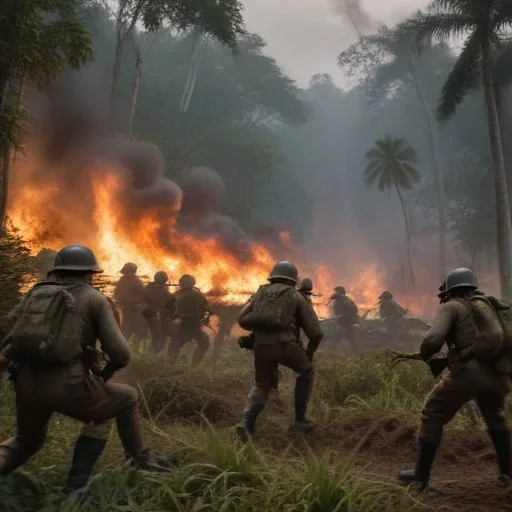
Bukit Timah Ridge, a key vantage point controlling Singapore's water supply and vital roads, was the prized possession that both sides coveted. The Japanese 5th and 18th Divisions, determined to secure this strategic location, pushed forward with relentless ferocity.
Lieutenant General Arthur Percival's defense lines were stretched to the breaking point as his troops struggled to hold back the Japanese onslaught. The British, despite their valiant efforts, found themselves outnumbered and outgunned, leaving them vulnerable to the Japanese forces' superior firepower.
The second day of the Battle of Bukit Timah was a brutal and intense affair, with both sides suffering heavy losses. The Japanese employed their trademark tactics of rapid infantry advances and artillery bombardments, while the Britishresponded with fierce resistance and desperate counterattacks. The outcome hung precariously in the balance, as the fate of Singapore teetered on the brink of collapse.
As the battle raged on, the civilian population of Singapore bore the brunt of the conflict. Thousands of innocent lives were lost, and many more were displaced as the city descended into chaos. The once-peaceful streets of Singapore were now a battle-scarred landscape, pockmarked with the remnants of war.
In a desperate bid to stem the Japanese advance, the British launched a series of counterattacks, but these were ultimately repelled by the Japanese forces. As the day drew to a close, the British were forced to concede ground, and the Japanese continued their relentless push towards the heart of Singapore.
The second day of the Battle of Bukit Timah was a turning point in the war, marking the beginning of the end for British rule in Singapore. The fall of Singapore would have far-reaching consequences, influencing the course of World War II and leaving an indelible mark on the region's history.
The Battle of Bukit Timah serves as a poignant reminder of the devastating consequences of war and the bravery of those who fought on both sides. As we reflect on this pivotal chapter in history, we honor the memory of those who gave their lives in service of their nation and pay tribute to the resilience of the human spirit in the face of adversity.
The Battle of Bukit Timah was not an isolated event, but rather a crucial part of the larger campaign by the Japanese to conquer Southeast Asia. The fall of Singapore would provide a strategic foothold for the Japanese to launch further invasions into Malaysia and the Dutch East Indies.
The Japanese advance was also motivated by a desire to secure access to the region's rich natural resources, including oil and rubber. The Allies, on the other hand, were determined to prevent the Japanese from gaining control of the region's strategic ports and shipping lanes.

Lieutenant General Tomoyuki Yamashita, the commander of the Japanese 25th Army, was a highly experienced and respected military leader. Known as the "Tiger of Malaya," Yamashita had a reputation for being a skilled tactician and a bold commander.
Despite his military prowess, Yamashita was also a complex figure with a deep sense of honor and a strong sense of justice. He was known to be deeply troubled by the brutal atrocities committed by his own troops during the war.
The Japanese invasion of Singapore was facilitated by the use of innovative military tactics and cutting-edge technology. The Japanese deployed advanced tanks, such as the Type 97 Chi-Ha, which proved to be highly effective against the British defenses.
The British, on the other hand, were hampered by outdated military equipment and tactics. The failure of the British to adapt to the changing nature of modern warfare contributed to their defeat.

The Battle of Bukit Timah had a profound impact on the cultural identity of Singapore. The fall of the city marked a turning point in the country's history, as it shifted from being a British colony to being occupied by the Japanese.
The Japanese occupation had a profound impact on the daily lives of Singaporeans, as they were forced to adapt to a new language, culture, and way of life. The occupation also led to the widespread use of Japanese currency, language, and customs.
The Japanese occupation of Singapore had a devastating impact on the city's economy. The war disrupted trade and commerce, leading to widespread unemployment and poverty.
The Japanese also exploited Singapore's resources, including its rubber and tin industries, to fuel their own war effort. The occupation led to a decline in living standards and a shortage of essential goods.