


In the aftermath of the German invasion of France in May 1940, the French government, led by Paul Reynaud, sought to continue fighting against the Nazi forces. However, with the defeat of France imminent, Reynaud resigned, and Pétain, a revered military leader, took over as prime minister.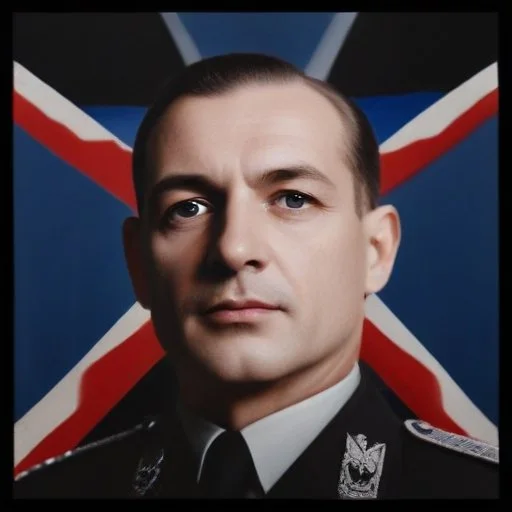
Pétain, who had previously negotiated an armistice with the Nazis, believed that France's best option was to cooperate with the occupiers and maintain some semblance of autonomy. This decision would lead to the establishment of the Vichy government, with its capital in the town of Vichy, in central France.
The Vichy regime presented itself as a sovereign government, tasked with maintaining order and stability in the unoccupied zone of France. However, in reality, the regime was heavily influenced by the Nazi occupation forces, with Pétain and his government forced to comply with German demands.
The Vichy government implemented a range of policies that catered to Nazi interests, including the persecution of Jews, communists, and other minority groups. The regime also collaborated with the Nazis in the deportation of French citizens to concentration camps and forced labor camps.
The Vichy government's collaboration with the Nazis led to the persecution and deportation of hundreds of thousands of French citizens, including Jews, communists, and other minority groups. The regime's policies also contributed to the deaths of millions of people during the Holocaust.
The Vichy regime's legacy continues to be felt in France today, with many French citizens still grappling with the moral implications of their country's collaboration with the Nazis.
The Vichy regime's influence extended beyond politics, with the regime promoting a cult of personality around Pétain and propagating a mythology of French grandeur. The regime's cultural policies also sought to erase the cultural contributions of Jews and other minority groups.
Despite the regime's best efforts, the Vichy government's cultural policies ultimately failed to erase the cultural heritage of France's minority groups, with many artists, writers, and intellectuals continuing to produce works that celebrated the diversity of French culture.
The Vichy regime's collaboration with the Nazis remains a highly controversial topic in France today, with many French citizens continuing to grapple with the moral implications of their country's actions during World War II.
The regime's legacy has also been the subject of numerous debates and controversies, with some historians and scholars arguing that the regime's actions were a necessary evil in the face of Nazi occupation, while others argue that the regime's collaboration was a moral and political failure.
"Vichy is not a government, it's a disease." - Henri Frenay, French Resistance leader
"I have been proud to be the head of the French state, but I am also proud to be the head of the French people." - Marshal Philippe Pétain
The Vichy regime's collaboration with the Nazis shares similarities with other instances of collaboration during World War II, such as the Quisling regime in Norway and the Slovak Republic in Slovakia.
However, the Vichy regime's unique blend of authoritarianism, nationalism, and anti-Semitism sets it apart from other instances of collaboration, making it one of the most notorious and infamous regimes in modern history.
Ruth Klüger, a Jewish survivor of the Auschwitz concentration camp, recalled her experiences under the Vichy regime, saying, "We were treated like dirt, like animals. We were nothing to them."
French Resistance leader, Jean Moulin, wrote in his diary, "The Vichy government is a cancer that must be cut out of France."
The Vichy regime's legacy continues to shape French politics and society today, with many French citizens still grappling with the moral implications of their country's collaboration with the Nazis.
The regime's impact can also be seen in the development of European politics, with the Vichy regime serving as a cautionary tale about the dangers of authoritarianism and collaboration with oppressive regimes.
The Vichy regime's dark chapter in French history also serves as a testament to the bravery and resilience of the French people, who continued to resist and fight against the Nazi occupation despite overwhelming odds.
The story of the Vichy regime serves as a powerful reminder of the importance of standing up against oppression and fighting for human rights and dignity.
Pierre Laval, a cunning and opportunist politician, played a crucial role in shaping the Vichy government's collaborative policies with the Nazis. Born in 1883, Laval was a lawyer by training and had a reputation for being a skilled negotiator. He served as a minister in various French governments before the war and was known for his anti-communist and nationalist views.
Laval's influence on Pétain was significant, and he convinced the marshal to sign the armistice with Germany in 1940. He then became Pétain's deputy and was instrumental in implementing the Vichy regime's policies, including the deportation of Jews and the persecution of communists.
Laval's role in the Vichy regime's crimes was so significant that he was eventually arrested and executed for treason in 1945. Despite his treacherous legacy, Laval remains a fascinating figure in the history of the Vichy regime, and his story serves as a cautionary tale about the dangers of opportunism and collaboration with oppressive regimes.

In the aftermath of France's defeat in May 1940, the French government was in disarray. The new prime minister, Paul Reynaud, was determined to continue fighting against the Nazis, but his government was paralyzed by internal divisions and a lack of resources.
It was in this context that Marshal Philippe Pétain, a hero of World War I, emerged as a potential savior. Pétain was an old-fashioned conservative who believed in the importance of order and discipline. He was also a fierce patriot who was determined to protect France's sovereignty and integrity.
On June 16, 1940, Pétain replaced Reynaud as prime minister, and his government quickly negotiated an armistice with Germany. The armistice divided France into two zones: the occupied zone, which included Paris and the north of France, and the unoccupied zone, which included the rest of the country.
The Vichy regime was established on July 10, 1940, with Pétain as its chief of state. The new government was headquartered in the town of Vichy, which was chosen for its central location and its proximity to the demarcation line between the occupied and unoccupied zones.
The Vichy regime's cultural policies were designed to promote a narrow and xenophobic vision of French identity. The regime sought to erase the cultural contributions of Jews, communists, and other minority groups, and to promote a mythical view of France's past.
The regime's cultural purge was orchestrated by the Ministry of Information, which was responsible for censoring the press, controlling the media, and promoting the regime's ideology. The ministry was led by Philippe Henriot, a fanatical anti-Semite who was determined to rid France of its "undesirable" elements.
The Vichy regime's cultural policies had a devastating impact on France's cultural landscape. Many artists, writers, and intellectuals were forced into exile or hiding, and the regime's censorship policies stifled creativity and freedom of expression.
Despite the regime's best efforts, the Vichy government's cultural policies ultimately failed to erase the cultural heritage of France's minority groups. The resistance movement, which included many artists and intellectuals, continued to produce works that celebrated the diversity of French culture.

The Vichy regime's collaboration with the Nazis was not unique in the context of World War II. Several other European countries, including Norway, Denmark, and Slovakia, also established collaborationist regimes during the war.
However, the Vichy regime's collaboration was distinct in its scale and scope. Unlike other collaborationist regimes, the Vichy regime was not simply a puppet government, but a sovereign state that had a significant degree of autonomy and influence.
The Vichy regime's collaboration also had a profound impact on France's national identity and its relationships with other European countries. The regime's betrayal of France's values and ideals led to a deep sense of shame and guilt, which would take decades to overcome.
In comparative perspective, the Vichy regime's collaboration with the Nazis serves as a cautionary tale about the dangers of authoritarianism and the importance of defending democracy and human rights in the face of oppression.
The Vichy regime's ideology was rooted in a toxic mix of authoritarianism, nationalism, and anti-Semitism. The regime's leaders, including Pétain and Laval, were influenced by a range of ideological currents, including fascism, monarchism, and Maurrassianism.
The regime's ideology was also shaped by a deep-seated fear of communism and a belief in the importance of social hierarchy and order. The regime's leaders believed that France's defeat in 1940 was a result of the country's decadence and moral decay, and that a strong authoritarian government was necessary to restore France's greatness.
The Vichy regime's ideology was propagated through a range of media, including newspapers, posters, and films. The regime's propaganda machine was highly effective, and it helped to create a climate of fear and hatred that facilitated the regime's crimes.
Despite its defeat, the Vichy regime's ideology continues to influence French politics and society today. The regime's legacy serves as a reminder of the dangers of authoritarianism and the importance of defending democracy and human rights.