


In the scorching summer of 1914, the powder keg of European tensions finally ignited, as Serbia declared war on Germany, and Austria-Hungary retaliated against Russia. These dual declarations would plunge the continent into the abyss of World War I, a global conflict that would redefine the world order.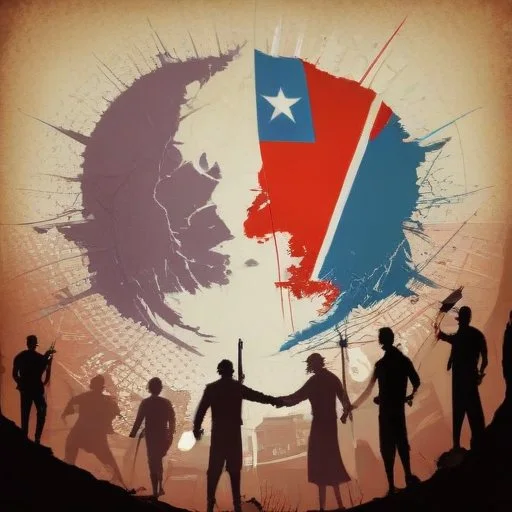
The complex network of treaties and alliances that crisscrossed Europe had been building for decades. The Dual Alliance of Austria-Hungary and Germany, the Triple Entente of France, Russia, and Britain, and the Balkan League of Serbia, Bulgaria, and Greece created a delicate balance of power. The assassination of Archduke Franz Ferdinand, heir to the Austro-Hungarian throne, by Gavrilo Princip, a Serbian nationalist, on June 28, 1914, was the spark that set off the flames of war.
July 23, 1914: Austria-Hungary issues an ultimatum to Serbia, which Serbia refuses to comply with.
July 28, 1914: Austria-Hungary declares war on Serbia.
July 30, 1914: Russia mobilizes its army in response to Austria-Hungary's declaration of war on Serbia.
August 1, 1914: Germany declares war on Russia, and Serbia declares war on Germany.
August 4, 1914: Austria-Hungary declares war on Russia.
The war declarations marked the beginning of World War I, which would last for four years, claim millions of lives, and reshape the world. The war would lead to the downfall of four empires – Austria-Hungary, Germany, Russia, and the Ottoman Empire – and redrawing of national borders.
The war declarations had far-reaching cultural and social implications. The war would lead to a re-evaluation of traditional values, the rise of modern art and literature, and a shift in the social fabric of European societies.
"It is a grave misfortune that Austria-Hungary's ultimatum has led to the mobilization of the Russian army, and that war has become inevitable." – Kaiser Wilhelm II
In his memoirs, German Chancellor Theobald von Bethmann-Hollweg recalled the sense of inevitability that gripped the German leadership as the war declarations unfolded: "We were caught in a mechanism that we could no longer control."
The war declarations of 1914 set the stage for the tumultuous 20th century, from the rise of fascist and communist regimes to the Cold War and beyond. The devastating consequences of World War I would also inform the policies of the League of Nations and its successor, the United Nations.
The war declarations of 1914 serve as a testament to the devastating consequences of unchecked nationalism and militarism. Yet, they also inspired a generation of leaders to strive for international cooperation and peace, as embodied in the efforts of Woodrow Wilson and the League of Nations.
The complex web of alliances that led to the outbreak of World War I was not an overnight development. It was the culmination of decades of diplomatic maneuvering and power struggles between European nations. The Franco-Russian Alliance, formed in 1894, was a direct response to the Triple Alliance between Germany, Austria-Hungary, and Italy. This division of Europe into two rival camps created an atmosphere of tension and mistrust, which ultimately made war almost inevitable.
The Balkans, a region of southeastern Europe, were a particular flashpoint in the years leading up to the war. The region was a complex mix of ethnic and nationalist groups, with Serbia, Bulgaria, and Greece vying for control. Austria-Hungary, with its own interests in the region, was determined to keep Serbia in check, leading to a series of confrontations and ultimatums that eventually escalated into war.
Kaiser Wilhelm II: The German Emperor
Kaiser Wilhelm II was the German Emperor who supported Austria-Hungary's aggressive stance against Serbia. Known for his impulsive and erratic behavior, Wilhelm II was often at odds with his own advisors and diplomats. Despite his provocative rhetoric, Wilhelm II was initially hesitant to go to war, but eventually gave in to the pressure from his military leaders.
Wilhelm II's role in the outbreak of World War I is still debated among historians. Some see him as a key instigator of the war, while others argue that he was merely a pawn in a larger game of international politics. Regardless, his decision to support Austria-Hungary's ultimatum to Serbia set in motion the chain of events that led to the war.
The war declarations of 1914 marked a turning point in the history of modern warfare. Compared to previous conflicts, World War I was characterized by its massive scale, industrialized warfare, and unprecedented levels of destruction. The war saw the introduction of new technologies, such as tanks, aeroplanes, and poison gas, which would go on to shape the course of modern warfare.
In contrast to the relatively contained conflicts of the 19th century, World War I was a global conflict that involved multiple empires and nations. The war was fought on multiple fronts, from the trenches of Western Europe to the deserts of the Middle East. The sheer scale of the war effort required unprecedented levels of mobilization and organization, which would have far-reaching consequences for the economies and societies of the combatant nations.
The war declarations of 1914 were not just a European affair, but had far-reaching implications for the global balance of power. The war marked the beginning of a new era of global politics, in which the United States would emerge as a dominant power. The war also saw the rise of new global actors, such as Japan, which would go on to play a major role in the 20th century.
The war had significant implications for the colonial empires of Europe, which began to unravel in the aftermath of the war. The war marked the beginning of a process of decolonization, which would continue throughout the 20th century. The war also led to the redrawing of national borders, with the collapse of the Ottoman Empire and the emergence of new nation-states in the Middle East.
The war declarations of 1914 marked a devastating blow to the global economy. The war led to a sharp decline in international trade, as nations imposed trade embargoes and mobilized their economies for war. The war saw the introduction of rationing, austerity measures, and other forms of economic controls, which would have far-reaching consequences for the economies and societies of the combatant nations.
The war also led to a massive increase in government spending, as nations poured resources into the war effort. The war marked the beginning of a new era of government intervention in the economy, which would continue throughout the 20th century. The war also led to a significant shift in the global balance of power, with the United States emerging as a major creditor nation.