


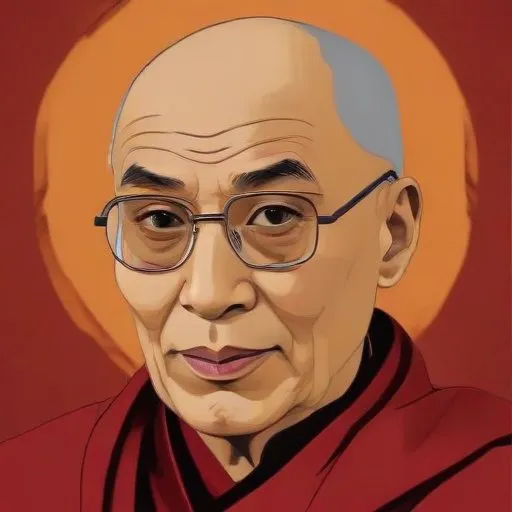
The 11th Dalai Lama was a spiritual leader who played a significant role in Tibetan Buddhism, known for his efforts to modernize and reform the Gelug school of Tibetan Buddhism. He was also a prolific writer and poet.
The 11th Dalai Lama, Khedrup Gyatso, is known for his short but significant reign in Tibetan history, marked by war, internal conflicts, and the struggle to maintain Tibet's independence. Recognized as the Eleventh Dalai Lama in 1840, he played a crucial role in maintaining the balance of power in Tibet during a time of great turmoil.
Khedrup Gyatso was born on November 1, 1838, in the same village as the 7th Dalai Lama, Kelzang Gyatso. In 1841, he received the pre-novice ordination from Palden Tenpai Nyima, the 7th Panchen Lama, who also gave him the name Khedrup Gyatso.
In 1842, Khedrup Gyatso was enthroned in the Potala Palace, marking the beginning of his reign. He took the novice vows of monkhood from Palden Tenpai Nyima in 1849, at the age of eleven. He formally assumed full power on March 1, 1855, at the request of his government.
Khedrup Gyatso wrote a book of stanzas, Story of the Monkeys and Birds (Bya sprel gyi gtam rgyud), an allegory of the war between the Tibetans and the Gurkhas in the late 18th century. This literary work showcases his philosophical contributions and provides insight into the tumultuous period in which he lived.
Khedrup Gyatso's reign was cut short, and he died on January 31, 1856, at a relatively young age. Despite the challenges he faced, his contribution to Tibetan literature and his efforts to maintain Tibet's independence have left a lasting impact on Tibetan history.
During his lifetime, the Panchen Lama played a significant role in filling the power vacuum left by the short-lived Dalai Lamas from the 9th to the 12th incarnations. Khedrup Gyatso's legacy serves as a testament to the resilience of the Tibetan people and their spiritual leaders in the face of turmoil and adversity.
Born in 1876
The spiritual leader of Tibetan Buddhism, who ruled Tibet and sought to modernize and secularize the country while maintaining its cultural heritage. He's known for his efforts to resist Chinese occupation and preserve Tibetan independence.
Born in 1876
The spiritual leader of Tibetan Buddhism, who ruled Tibet and sought to modernize and secularize the country while maintaining its cultural heritage. He's known for his efforts to resist Chinese occupation and preserve Tibetan independence.
91 Years Old
The spiritual leader of Tibetan Buddhism, advocating for peace, compassion, and human rights, while guiding millions on a path of inner peace and enlightenment.
87 Years Old
The 5th Ling Rinpoche was a prominent Tibetan Buddhist monk who served as the senior tutor to the 14th Dalai Lama, playing a crucial role in his education and spiritual development. He was a revered scholar, teacher, and leader in the Gelug school of Tibetan Buddhism.
