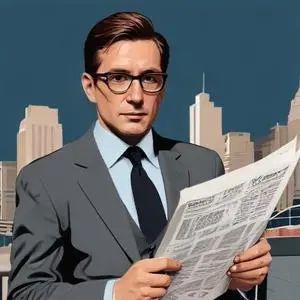
A. M. Rosenthal: The Visionary Journalist Who Shaped The New York Times
The Pulitzer Prize Winner Who Oversaw Landmark Coverage
A. M. Rosenthal, a renowned American journalist, left an indelible mark on the world of journalism as the executive editor of The New York Times from 1977 to 1986. He is best known for his fearless and visionary leadership, guiding the paper's coverage of some of the most pivotal events in American history, including the Vietnam War, the Pentagon Papers, and the Watergate scandal.
A Lifetime of Service to The New York Times
Rosenthal's 56-year tenure at The New York Times began in 1943, when he joined the paper as a young journalist. Over the years, he rose through the ranks, serving as metropolitan editor and managing editor before becoming executive editor. His dedication and commitment to excellence earned him a Pulitzer Prize in 1960 for international reporting.
Landmark Coverage and Controversies
Under Rosenthal's guidance, The New York Times tackled some of the most significant stories of the time. He oversaw the paper's coverage of the Vietnam War, which sparked intense national debate and scrutiny. In 1971, the paper's scoop on the Pentagon Papers, a secret study on the war, made headlines and cemented the Times' reputation as a fearless and investigative newspaper.
Rosenthal's leadership was not without controversy, however. The paper's coverage of the 1964 Kitty Genovese murder case, which highlighted the "bystander effect," was later criticized for its inaccuracies. Despite this, Rosenthal remained committed to journalistic excellence and continued to push the boundaries of reporting.
A Family Legacy of Journalism
Rosenthal's family legacy in journalism extends beyond his own accomplishments. His son, Andrew Rosenthal, went on to become the editorial page editor of The New York Times from 2007 to 2016. His other sons, Jonathan and Daniel, pursued careers in medicine and finance, respectively.
Early Life and Influences
Born on May 2, 1922, in Sault Ste. Marie, Ontario, Canada, to a Jewish family, Rosenthal's early life was marked by adventure and resilience. His father, Harry Shipiatsky, was a farmer, fur trapper, and trader who immigrated to Canada from Poland in the 1890s. The family eventually settled in the Bronx, New York, where Rosenthal's father found work as a house painter.
Awards and Honors
Throughout his career, Rosenthal received numerous awards and honors for his contributions to journalism. In addition to his Pulitzer Prize, he was recognized for his bravery and commitment to a free press.
Legacy and Impact
A. M. Rosenthal's legacy extends far beyond his own accomplishments. He inspired a generation of journalists to pursue fearless and investigative reporting. His commitment to excellence and his willingness to take risks have made him a legend in the world of journalism.
- "The news is the news, and it's our job to report it, not to make it." - A. M. Rosenthal
Rosenthal's impact on modern journalism is immeasurable. He set a high standard for reporting and editing, and his influence can still be seen in newsrooms around the world. As a testament to his enduring legacy, The New York Times continues to be a beacon of journalistic excellence, inspiring generations of reporters and editors to come.
FAQ
What was A.M. Rosenthals career in journalism?
A.M. Rosenthal was a renowned journalist, serving as executive editor of The New York Times from 1963 to 1986. He oversaw the publication of the Pentagon Papers and won two Pulitzer Prizes.
What awards did A.M. Rosenthal win?
A.M. Rosenthal won numerous awards, including two Pulitzer Prizes, the George Polk Award, and the Elijah Parish Lovejoy Award for his commitment to journalism.
What was A.M. Rosenthals experience in reporting?
A.M. Rosenthal reported from various parts of the world, including Poland, India, and Japan. He covered major events like the Polish October and the Cuban Missile Crisis.
What was A.M. Rosenthals stance on press freedom?
A.M. Rosenthal was a strong advocate for press freedom, fighting against government censorship and promoting the importance of an independent press in a democratic society.
What is A.M. Rosenthals legacy?
A.M. Rosenthals legacy is one of excellence in journalism, commitment to press freedom, and dedication to upholding the highest standards of reporting and editing.