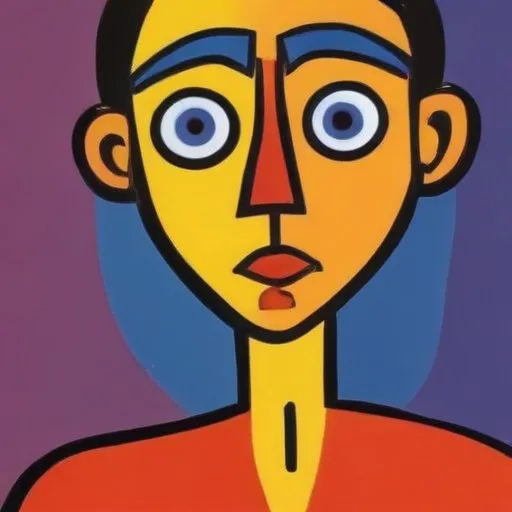
A. R. Penck: The Visual Storyteller of Neo-Expressionism
A Life of Artistic Rebellion
A. R. Penck, the renowned German painter, printmaker, and sculptor, is known for his distinctive visual style, which draws inspiration from primitive art. With a rebellious spirit and an anti-establishment attitude, Penck's artistic journey was marked by a refusal to compromise his creative vision, leading to a lifetime of innovative and provocative works.
Early Life and Influences
Born Ralf Winkler on October 5, 1939, in Dresden, Germany, Penck's early life was shaped by his fascination with art. He took painting and drawing lessons with Jürgen Böttcher, also known as Strawalde, and joined the renegade artists' group Erste Phalanx Nedserd Dresden. This collective of like-minded artists sought to create art without compromise, refusing to study at an academy or conform to traditional norms.
The Birth of A. R. Penck
In 1966, Winkler adopted the pseudonym A. R. Penck, inspired by the geologist Albrecht Penck. This new identity marked the beginning of his journey as a visual storyteller, as he began to develop his unique style, characterized by bold lines, vibrant colors, and primitive forms.
A Life of Resistance
Penck's artistic career was marked by continuous struggles with the East German authorities. His paintings were frequently confiscated, and he was denied membership in the Association of Visual Artists of the GDR. Despite these challenges, he continued to create, often working in secret and selling his works on the black market.
GAP: A Collective of Nonconformists
In 1971, Penck co-founded the artist group GAP (German: Gruppe Aktuelle Produktion), along with Steffen Terk, Wolfgang Opitz, and Harald Gallasch. This collective of nonconformist artists existed until 1976 and provided a platform for creative expression outside the restrictive boundaries of the East German art scene.
Jazz and Rhythm
Penck's creative pursuits extended beyond the visual arts. He was an accomplished jazz drummer and performed with various ensembles throughout his life. This musical inclination influenced his visual style, as he often incorporated rhythmic patterns and dynamic energy into his works.
Legacy and Impact
A. R. Penck's artistic contributions have had a profound impact on the development of neo-expressionism. His bold, expressive style has inspired generations of artists, and his rebellious spirit has paved the way for creative nonconformity. Today, his works can be found in prominent museums and collections worldwide, including the Museum of Modern Art in New York and the Tate Modern in London.
Philosophical Contributions and Beliefs
Penck's artistic philosophy was rooted in his conviction that art should be uninhibited and unapologetic. He believed that the creative process should be driven by instinct and emotion, rather than intellectual or theoretical frameworks.
Personal Milestones and Key Life Events
- 1966: Adopted the pseudonym A. R. Penck
- 1971: Co-founded the artist group GAP
- 1980: Emigrated to the West, settling in Berlin
- 2017: Passed away on May 2, at the age of 77
Quotes and Memorable Sayings
"I don't paint what I see, but what I think."
— A. R. Penck
Historical Context and Legacy
A. R. Penck's artistic career was set against the backdrop of the Cold War, and his experiences as a nonconformist artist in East Germany have become an integral part of his legacy. His contributions to neo-expressionism have had a lasting impact on the art world, inspiring countless artists to push the boundaries of creative expression.
Comparative Analysis with Contemporaries
Penck's work can be compared to that of other notable neo-expressionist artists, such as
Georg Baselitz and Jörg Immendorff. Like his contemporaries, Penck's artistic style was characterized by a rejection of traditional representational art forms and a focus on expressive, emotive, and often provocative works.
Impact on Modern Society
A. R. Penck's artistic contributions have extended beyond the art world, influencing popular culture and inspiring creative nonconformity. His rebellious spirit and anti-establishment attitude have made him a cultural icon, symbolizing the power of artistic expression to challenge and subvert authority.
In Memoriam
A. R. Penck's legacy continues to inspire and provoke. His artistic contributions serve as a testament to the power of creative expression and the importance of staying true to one's vision, even in the face of adversity.
FAQ
What is A. R. Pencks artistic style?
A. R. Pencks artistic style is characterized by its primitivist and neo-expressionist tendencies. His paintings often feature bold, vibrant colors and simple, childlike forms that convey a sense of raw energy and emotional intensity.
What themes does A. R. Pencks artwork explore?
A. R. Pencks artwork explores themes of politics, history, and the human condition. His paintings often feature symbols and imagery that critique societal norms and conventions, and challenge the viewer to think critically about the world around them.
Was A. R. Penck part of any artistic movements?
Yes, A. R. Penck was part of the New Leipzig School, a group of German artists who sought to challenge the conventions of modern art in the 1960s and 1970s. The movement was characterized by its emphasis on figurative art and its rejection of abstract expressionism.
What is the significance of A. R. Pencks artwork in the context of Cold War politics?
A. R. Pencks artwork is significant in the context of Cold War politics because it offers a unique perspective on the experiences of living in East Germany during the 1960s and 1970s. His paintings often critiqued the communist regime and the stifling of artistic expression under totalitarian rule.
How did A. R. Pencks artwork evolve over the course of his career?
A. R. Pencks artwork evolved significantly over the course of his career, from his early primitivist paintings to his later, more abstract works. His style became more refined and sophisticated, but his commitment to exploring themes of politics and the human condition remained constant.