


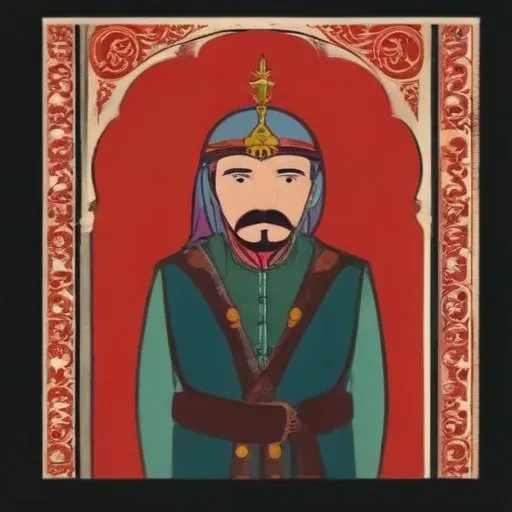
The longest-reigning Ottoman Sultan, ruling from 1861 to 1876, who implemented reforms to modernize the empire, including education, infrastructure, and women's rights.
Abdlaziz, the 32nd Sultan of the Ottoman Empire, is often overshadowed by his more famous predecessors, but his reign was marked by significant reforms and cultural achievements that left a lasting impact on the empire. He is primarily known for his efforts to modernize the empire, introducing European-style reforms and fostering a cultural renaissance that earned him the nickname "the Reforming Sultan."
Abdlaziz was born on February 18, 1830, in Constantinople to Sultan Mahmud II and Pertevniyal Sultan. Following the death of his brother, Abdulmejid I, in 1861, Abdlaziz ascended to the throne, marking the beginning of his 15-year reign.
Abdlaziz's reign was characterized by a series of reforms aimed at modernizing the empire. He introduced European-style education, encouraged the development of infrastructure, and promoted the arts. One of his most notable reforms was the establishment of the Ottoman Empire's first civil service school, which trained bureaucrats in modern administrative techniques.
Abdlaziz was a patron of the arts and encouraged cultural exchange with Europe. He supported the development of literature, music, and art, earning him recognition as a champion of Ottoman culture. During his reign, the empire experienced a cultural renaissance, marked by the emergence of prominent writers, poets, and artists.
Despite his many achievements, Abdlaziz's reign was not without controversy. He faced opposition from conservative elements within the empire, who saw his reforms as a threat to traditional Ottoman values. His later years were marked by financial difficulties and internal strife, ultimately leading to his deposition in 1876.
Abdlaziz's reign marked a significant turning point in Ottoman history, as the empire began to transition from a traditional, Islamic state to a modern, secular nation. His reforms laid the groundwork for future modernization efforts, earning him a place alongside other great reforming sultans, such as Mahmud II and Abdulmejid I.
Abdlaziz's legacy is complex and multifaceted, reflecting both the achievements and challenges of his reign. Despite being overshadowed by more famous predecessors, his contributions to Ottoman culture, education, and modernization remain an important chapter in the empire's history.
Born in 1861
The last Sultan of the Ottoman Empire, ruling from 1918 to 1922, known for his brief and tumultuous reign marked by the empire's collapse and eventual abolition.
Born in 1881
Founder of modern Turkey, leading the country's transition from the Ottoman Empire to a secular, democratic nation, and implementing sweeping reforms in education, law, and women's rights.
Born in 1642
The Ottoman sultan who ruled from 1648 to 1687, known for his military campaigns that expanded the empire's borders, including the conquest of Crete and parts of Poland. He was also known for his cultural and architectural achievements, including the construction of several mosques and palaces.
Born in 1326
The founder of the Ottoman Empire's expansionist era, known for conquering much of the Balkans and establishing the Ottoman state as a dominant power in the region.
