


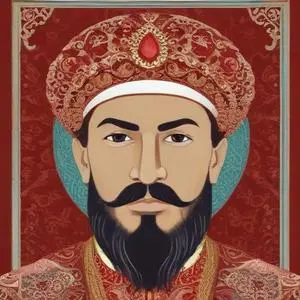
Reformed the Ottoman Empire's military and administrative systems, modernizing the country and ending the Janissary corps' power. He also reformed the education system and encouraged Western-style learning.
Mahmud II, also known as the "Peter the Great of Turkey," was the visionary sultan of the Ottoman Empire from 1808 to 1839, renowned for his extensive administrative, military, and fiscal reforms that transformed the empire.
Born on 20 July 1785, in the month of Ramazan, Mahmud II was the son of Abdul Hamid I and his seventh consort. Following the deposition of his half-brother Mustafa IV in 1808, Mahmud II ascended to the throne, marking the beginning of a new era of reform and modernization in the Ottoman Empire.
Mahmud II's most significant achievement was the disbandment of the powerful and conservative Janissary corps, a major obstacle to reform in the empire. This bold move enabled him to introduce sweeping changes to the bureaucracy, reestablishing royal authority and increasing administrative efficiency.
Despite his visionary reforms, Mahmud II's reign was marked by significant military defeats and loss of territory. The empire ceded Bessarabia to Russia in 1812, and Greek independence was recognized in 1832, following a successful war of independence backed by European powers.
Mahmud II's legacy lies in his courageous efforts to modernize the Ottoman Empire, paving the way for his successors to continue the reforms. His vision for a stronger, more efficient empire has had a lasting impact on Turkish history and continues to influence modern Turkish society.
Mahmud II died of tuberculosis on 1 July 1839, and was succeeded by his son Abdulmejid I, who would go on to continue his modernization efforts.
In addition to his public life, Mahmud II's personal life was marked by significant milestones and key events.
Mahmud II's remarkable life and legacy serve as a testament to his unwavering commitment to reform and modernization, earning him a place among the most significant figures in Ottoman history.
Born in 1761
Reformed the Ottoman Empire's military and administration, introducing Western-style reforms to modernize the state. Known for his efforts to centralize power and reduce corruption.
Born in 1717
The Ottoman Empire's 18th-century ruler, known for his military campaigns and attempts to modernize the empire, particularly in the fields of education and administration. He also fought against the Russian Empire and lost significant territory.
Born in 1699
The Ottoman Empire's 25th Sultan, ruling from 1754 to 1757, known for his brief and uneventful reign, marked by a lack of significant reforms or military campaigns.
Born in 1326
The founder of the Ottoman Empire's expansionist era, known for conquering much of the Balkans and establishing the Ottoman state as a dominant power in the region.
Born in 1861
The last Sultan of the Ottoman Empire, ruling from 1918 to 1922, known for his brief and tumultuous reign marked by the empire's collapse and eventual abolition.
